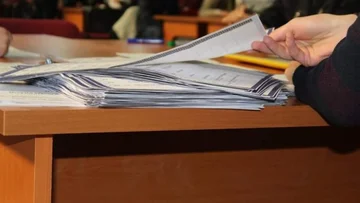
The diaspora vote count is continuing, VV achieves the 53rd term, PDK remains at 22, LDK falls to 18
 6 hours ago
 (7 years ago)
Subjects participating in the 6 October parliamentary elections are warned by the Treaty for Ances and Parastres that they expect fines from the most different if they violate rules during the election process. So far, participating subjects in the election have not signed any common code with which they pledge to race fair and [...]
So far, participating subjects in the elections have not signed any common code with which they pledge a fair and democratic race.
Electoral Panel for Ances and Parashtesa [ The PZAP] expects the political subjects and their candidates during the election process to respect the code of courtesy, and hopes there will be no need to pronounce fines against them.
The head of the Secretariat at the Electoral Panel for Ances and Parastre, Mul Descu, tells Radio Free Europe that PZAP warns political parties that he will not tolerate any political or individual parties if he makes money violations and during the voting process.
<x) So these have been the most frequent violations in past elections”, Descu said.
In the recent elections in Kosovo, the Electoral Panel for Ances and Parastres had fined a total of 15 political subjects worth 257 thousand and 350 euros.
Mul Descu says political parties and their supporters must develop a democratic and correct race and not make mistakes that result in their fine.
For example, in the 2014 parliamentary elections, we had fines imposed on political subjects worth up to 86, 700 euros, while in the 2017 parliamentary elections, there were 348, 900 euros of fines pronounced. Thus, it does not mean that the stated measures do not affect the improvement of election campaigns by political parties. They must have a greater commitment to conscious their supporters, candidates not to commit violations of”, Descu said.
Democracy in Action is a network of 10 member organisations and 38 partner organisations that will monitor the election process, but also the election campaign. This rules of organisations, even in past elections, have made various complaints at PZAP about violations the political parties have committed during the election process.
Florent Spahija from the Kosovo Democratic Institute (which is part of the Democracy Network in Action) tells Radio Free Europe that expectations are that parties will not commit major violations.
“Call on political subjects not to place the different positions or banners in place. Not to place them especially in public trees, traffic lights, communications signs, roads and public buildings, as they damage the environment, and the city also looks pretty ugly with them”, he said.
Nongovernmental organisations in Kosovo, which have expressed their interest in monitoring the October 6th early parliamentary elections, say they are focusing on several issues, which were also counted on past processes as irregularities and violations.
Family delays and pressure on voters are only two of the issues cited as weaknesses following election processes in Kosovo.
The Central Election Commission (KQZ) has certified 25 political subjects which enter the election race to ensure seats in the future composition of the Kosovo Assembly. Based on the candidate lists for MPs of all these political subjects, in the race for 120 seats in the Kosovo Assembly are a total of 1068 candidates. Of the subjects certified for participating in the elections, 20 are political parties, 4 coalitions and an independent candidate.
 8 hours ago
 10 hours ago