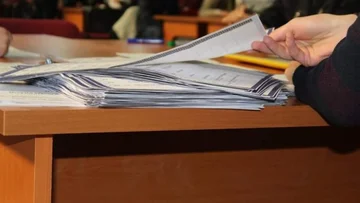
The diaspora vote count is continuing, VV achieves the 53rd term, PDK remains at 22, LDK falls to 18
 5 hours ago
 (7 years ago)
It is constantly called for the respect of gender quotova on election lists. But even in these elections it seems that the Law on Gender Equality has not been observed, meaning that it should be equal representation of 50% women and 50% men. KDI's Blerta Aliu has stressed that in terms of constant calls for representation [...]
But even in these elections it seems that the Law on Gender Equality has not been observed, meaning that it should be equal representation of 50% women and 50% men.
Blerta Aliu from KDI has stressed that, in spite of continued calls for equal representation even in these elections, no such thing has happened.
“The CEC has not yet made public certificate lists and we have not yet known the composition of lists for each political subject. But on the other hand, from what we have seen so far from lists that have made public to political parties, most parties have not included the 50-by-50 system, but most of them have applied this quota of 30 % that is obliged by the law for general elections. The Law on Gender Equality envisions both genders equally represented. Another element that we observe during election campaigns is also the spaces that political subjects give women at electoral gatherings or delegations to the media, usually most speakers are men. During the 2017 election campaign, neither 20 % of the speakers have been women, so the space women are given is minimal” she stressed.
While Luljeta Aliu from the Justice and Equality Initiative ( INJECT) has said that this year, the list of candidates from each political party has managed to include 30% of women, which is also the quota required under the Law for General Elections.
Aliu emphasises that in Kosovo the Law for General Elections is not harmonised with the Law on Gender Equality, which requires equal representation of the two genders.
This year, the candidate list from each political party has managed to include 30% of women, which is also the required quota under the Law for General Elections. It is noteworthy that the Constitution of Kosovo guarantees equal access to each citizen, without any distinction. Above all, Article 22 of the Constitution envisions the direct and priority application of a number of international conventions, including the Convention on Eliminating All Forms of Discrimination Against Women. This means that according to the Constitution, an equal involvement between genders should be targeted, as the Law on Gender Equality requires. But, like many other legal issues that remain uncompatible within the legal framework in Kosovo, the Law for General Elections is not harmonised with the Law on Gender Equality. The Law on Gender Equality in Article 6 stresses that “equal gender representation in all legislative, executive and judicial organs and other public institutions is achieved when a minimum representation of 50% for each gender, including their leading and decision-making bodies”, it said.
Presentation through gender quota, even though it has been a necessary requirement, has not brought about the desired and necessary social change of women's position in society, Aliu stressed.
 7 hours ago
 8 hours ago