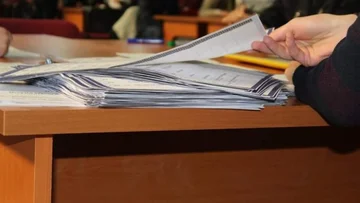
The diaspora vote count is continuing, VV achieves the 53rd term, PDK remains at 22, LDK falls to 18
 5 hours ago
 (7 years ago)
Name of American Mathew Palmer, as special in charge of the Balkans, has added to the rumours that even the EU should appoint a special emissary for Kosovo-Serbia dialogue. Named by the American administration of Mathew Palmer, as in charge of the Western Balkans that will also be extenuating in Kosovo-Serbia dialogue, has added voices that even the European Union [...]
Name of American Mathew Palmer, as special in charge of the Balkans, has added to the rumours that even the EU should appoint a special emissary for Kosovo-Serbia dialogue.
Named by the American administration of Mathew Palmer, as in charge of the Western Balkans that will also be extenuating in the Kosovo-Serbia dialogue, has added rumours that even the European Union is considering the possibility of appointing a special charge for Kosovo-Serbia talks. Diplomatic sources from Brussels say that during October this issue will be discussed among the new EU structures.
The new chief of European diplomacy, Josep Borrell, who succeeds Federika Moghrin, who mediated the Kosovo-Serbia dialogue, comes from Spain, the state that does not recognise Kosovo's independence and, according to analysts in Pristina, makes the situation very delicate, if Mr Borrell can mediate the Kosovo-Serbia dialogue.
That is exactly what has led to more and more talk in EU circles since October, after confirming Spanish Jozep Borrell from the European Parliament as chief of European diplomacy, for him to appoint an EU special envoy for Kosovo-Serbia dialogue. The media in Pristina record that Germany can also appoint a special envoy to the Kosovo-Serbia dialogue, but that has already been rejected by the German Embassy in Pristina, which says this process should be mediated by the European Union, writes DeutcheWelle.
German supports and closely follows dialogue on normalising relations between Kosovo and Serbia under the auspices of the European Union. Germany will continue to do so cordially with the new European Union Commission”, embassy officials have said of local media.
Even Balkan Affairs connoisseur Naim Rashit from the Balkan Policy Institute told DW that he does not think Germany will appoint a special envoy for dialogue because Germany and France want to maintain EU credibility”.
“German is interested in success, a Kosovo- Serbia as a kind of reward for closing Miss Merkel's mandate. Germany will lead the EU in the second part of 2020, and then Germany after 2020, will also head the Security Council, and it is interested in having the Kosovo-Serbia dialogue process take a close-up during those years, when there is an added role of Germany. I think Germany will ask Joseph Borrell, the new chief of European diplomacy to appoint a senior EU representative for Kosovo-Serbia dialogue, while the other issue remains US-EU co-ordination in this” dialogue, says Naim Rashit.
Analyst Rashiti has doubts whether Josep Borreli, may be involved in Kosovo- Serbia for these reasons:
“If the EU chief, Federika Moghrini, Germany, France, Mrs. Merkel and President Macron respectively, failed to resume the Kosovo-Serbia dialogue, it is a little bit reliable that now Jozep Borrell will convince the parties themselves to resume the dialogue, and this for me constitutes scepticism for the next phase of the” dialogue, says Naim Rashi.
Meanwhile, another American expert for the Balkans from the European Policy Analysis Centre, Yanos Bugajski, says that if the European Union appoints special emistar for Kosovo-Serbia dialogue, it must work closely with American Emissar Mathew Palmer, by coordinating the actions and making it impossible for Russia to seek its own mediator in these talks.
If a special EU emissary for the Balkans is appointed he must work closely with Mathe Palmer, be on a line and have the same goal. All agreements in the region have been realised so far precisely for the fact that the Russians have not been involved. Any involvement of them would imply sabotage of the process and any kind of agreement between Kosovo and Serbia. An agreement between the two countries would have to result in mutual recognition”, Janos Bugajski said in an interview for public media in Kosovo.
Kosovo at this stage is in an election period to be held on 6 October. American Loader for the Balkans Methew Palmer, has stated that he will make it clear that his “expectations by Kosovo's future government is a pro dialogue government, ready to suspend taxes on Serbian goods, which are an obstacle to the resumption of the dialogue process, to form a strengthened negotiating team, ready to engage with Serbia at the negotiating table with the seriousness of the goal of reaching an agreement to normalise relations with Serbia<1>, Palmer has declared.
According to him, suspending taxes on Serbia's goods and the end of the Serbian diplomatic campaign for blocking Kosovo recognitions is a good basis for the parties to return to the negotiating table towards reaching a final Kosovo-Serbia agreement.
The dialogue mediated by the European Union was interrupted in November last year when the Kosovo government imposed a 100% tax on Serbian goods. Pristina's move was in response to Serbia's diplomatic campaign against and to attracting Kosovo recognitions. Analysts in Pristina say Matthew's appointment Palmer, as an American in charge of the Western Balkans, clearly shows that the United States wants to be more involved in solving the Kosovo problem- Serbia and this issue are resolved before Donald Trump's administration's mandate ends.
 7 hours ago
 8 hours ago