The diaspora vote count is continuing, VV achieves the 53rd term, PDK remains at 22, LDK falls to 18
 7 hours ago
 (7 years ago)
Within a year in Kosovo, six cases of family murder have been recorded, with women being victims. Four of these cases, the husband killed his wife, in one case, was the suspect's daughter, and in the other case, she was the suspect's son's wife. The last case of [...]
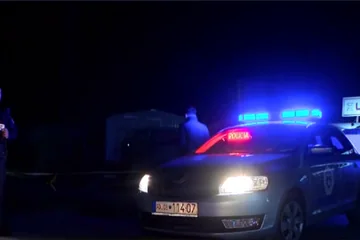
The latest case of domestic violence that ended with fatality was in Prizren on Tuesday, where a woman was killed with firearms, while her husband is the prime suspect.
In addition to the murders that took place this year, 785 cases have been reported on domestic violence, with 620 of them being women, Kosovo Police officials have told Radio Europe freely.
And last year 1533 was the number of cases reported for domestic violence, and in 1229 cases, women were victims.
On the other hand, civil society representatives stress that domestic violence, namely, the killing of women, has become a disturbing and alarming phenomenon for society and competent authorities.
According to them, punitive measures against the perpetrators of these acts have been toughed, but the killings have not stopped.
The Republic of Kosovo's Penal Code, the worst sentence for murder, envisions a life sentence.
Court of Appeals spokesman Arber Jashari, in a response to Radio Free Europe, has said that so far this court has proved two life sentences, but one has turned into retrial.
The Supreme Court of Appeals recently confirmed the prison sentence to perpetuate accused Naser Pajazitaj, who was convicted by the Constitutional Court in Pec for the murder of Donjeta Pajazitaj.
During February of this year, this court also pronounced the sentence of life imprisonment to accused Peter Noecaj because of the murder of Valbona Noecaj and his daughter, Clara Noecaj. This case is back in the retrial, at the Constitutional Court in Gjakova, on the part of Supreme Court”, says Jashar.
The prison sentences of life are performed years ago.
Peter Noecaj, whose case has been turned into a new trial, had killed his wife last year, 40-year-old Valbona Noecaj and their 9-year-old daughter.
Meanwhile, by the end of 2015, Donjeta Pajasitaj's body was found, chief suspect in her murder is N. P, cousin of the Pajasitaj family, who has already been sentenced to life in prison.
Even at the Kosovo Institute for Justice, the institute, which monitors cases in the courts, says only a life sentence has been declared so far.
For six other cases, in the first instance, courts have pronounced life sentences, the same have been changed or turned into years of imprisonment from 22 to 37, while others have become retrials.
Executive director Ehat Miftaraj says severe punishment measures are not reaching the goal so that cases of domestic murder can be prevented.
There are seven cases involving serious murders, of which four cases are women murdered. Of the four cases that we've monitored, in one case, we have an act of formal form which is confirmed by all scales of the court. Meanwhile, in one case, despite the fact that the Court of Appeals has sentenced him to eternal trial, the Supreme Court has turned him into retrial”, Miftaraj tells Radio Free Europe.
Adelina Berisha of the Kosovo Women's Network tells Radio Free Europe, that although recently with the Kosovo Criminal Code, the penalties for such acts have been stiffened, legal changes are still needed. In addition, Berisha says that domestic violence requires a citizen awareness, namely, of men.
There must be a lot of work on awareness of men, because this misuse of power leaves consequences in families and societies. Men in Kosovo are thinking they are as powerful as they can when they want to take the life of a woman, girl or family member. Men should not take advantage of power as a means to humiliate, kill and to keep women in Kosovo being oppressed”, Berisha says.
For preventing and fighting violence against women and domestic violence, Kosovo institutions have initiated legal procedures, which later enable the ratification of the Istanbul Convention.
This world Convention is recognised as the best legal instrument for preventing violence, protecting its victims, while prosecution of offenders is the foundation of the Istanbul Convention.
The convention recognises violence against women as a violation of human rights, and as a form of discrimination, it means that states are responsible if they do not respond properly to this violence.

 9 hours ago

 11 hours ago