The diaspora vote count is continuing, VV achieves the 53rd term, PDK remains at 22, LDK falls to 18
 2 hours ago
 (7 years ago)
On 13 August, the Quint Group, France, Germany, Italy, the United Kingdom and the United States issued a press release urging Serbia and Kosovo to resume EU-led dialogue and stop setting obstacles on the path to normalising their countries' relations. Greater Powers [...]
On 13 August, the Quint Group, France, Germany, Italy, the United Kingdom and the United States issued a press release urging Serbia and Kosovo to resume EU-led dialogue and stop setting obstacles on the path to normalising their countries' relations.
Greater powers spoke in specific ways about these obstacles -- “for Kosovo -- that means suspending the tariffs set for Serbia. For Serbia, it means suspending the diplomatic campaign against recognition against Kosovo.
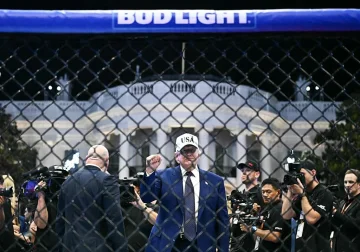
“However, both Belgrade and Pristina have so far ignored that requirement, forcing the Trump Administration to take direct measures. Western Balkan expert Dean Pieles tells “European Western Balkans” that Washington could organise a special summit with Kosovo and Serbia at the White House in the autumn. President Trump is expected to call a summit involving top officials from both countries in the United States, similar to the Camp David summit, called by President Jimmy Carter in 1978. This historic summit of Camp David decades ago resulted in a peace agreement between Egypt and Israel that has provided peace to this day. If Egypt and Israel could reach a stable agreement after armed clashes and long-term hostilities, then there is a reason to hope that Serbia and Kosovo can do the same”, he writes.
“As preconditions, after the summit was called, the new Kosovo government would have to agree to suspend the import fee, and Serbia would have to agree to suspend the campaign against its recognition. According to the analyst, Trump will retaliate sharply if Serbia and Kosovo fail to reach an agreement by February. So this is about Trump's needs, so that he can keep the situation clear for the Balkans when it comes to pre-democratics in the 2020 elections. Trump doesn't care what Thaci and Vucic signed. And if an agreement is not reached by February, it will have a strong answer, as it has done with Mexico, in the night there will be sanctions against one and the other side (Pristine and Belgrade)” he stressed. Kosovo also praises its relations with the Trump administration, as President Hashim Thaci and Haradinaj have repeatedly declared. This dynamic suggests the possibility of a bold and new approach to normalisation.
Perhaps the time has come for the EU to withdraw and let the US take a leading role. Despite its best efforts, the EU has been unsuccessful in restarting dialogue, so perhaps the time has come for a fundamental recalculation. President Trump's interest was aroused in last autumn when he was involved in the discussion, giving both sides the opportunity to take advantage of the historic opportunity to reach a stable agreement on normalisation. And he also offered to invite both Kosovo President Thaci and President Aleksandar Vucic of Serbia to a Rosa Garden ceremony if they were successful this way. But most courageous action by the United States. B.A. is necessary, given the lack of progress of conventional diplomacy, led by the EU.
Given President Trump's evident credibility with Kosovo and Serbia, he must intervene firmly and actively to further the talks, and do so immediately after elections in Kosovo are held and a new government is formed. The goal, of course, would be to strengthen the details of a stable agreement that recognises the legitimate interests of both sides. Pieneles points out: And, if it were successful, the summit would end with a glorious gall of Rose Garden with all the world's vision, as President Trump promised.
Of course, there would be a chorus of non-more speech for such a proposal. Some will wonder why the US should jeopardise its political capital by trying to solve what they see as a European problem. But the U.S. has even been at stake, having spent billions of dollars trying to stabilise the Balkans after the 1990s wars. It is true, as some will argue, that courage as a statesman would have to be shown by Serbia and Kosovo, an idea that has so far been able to fail. But President Trump could be very convincing in this regard, especially on domestic grounds, and could provide incentives for both countries.
The summit may fail, but what if it succeeds? It would represent a large foreign policy coup and heritage for the Trump administration, similar to the Egypt-Israel peace agreement. It can bring lasting peace to the Balkans, something most nations would applaud (such as Russia). This will allow Serbia and Kosovo to advance their integration goals in the larger European community, with all the advantages they will bring. And, most importantly, it would give children of both countries the prospect of a bright future”. /Shekully
 4 hours ago
 6 hours ago