The diaspora vote count is continuing, VV achieves the 53rd term, PDK remains at 22, LDK falls to 18
 3 hours ago
 (7 years ago)
Kosovo's slow and difficult political and economic transition to Kosovo, according to Hajrula Ceku, has been a restrictive factor in tourism development opportunities, especially cultural heritage. In an interview for “Koha Ditore”, Albania's former Deputy Tourism Minister, now part of the Development Solutions, has said society has been challenged by the aggressive business force, [...]
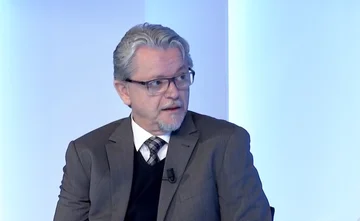
In an interview for the “Koha Ditore”, Albania's former Deputy Tourism Minister, now part of the Development Solutions, has said society has been challenged by the aggressive business force, which only targeted citizens' need for housing and development of business activity.
According to him, it has been built without any consideration for historical values in these 20 years, and in particular to the building heritage.
And in this degradation, Ceku has said they have contributed not only to businesses but also to public investment projects, which, although aimed at rehabilitation of physical and public infrastructure, have damaged the old one to the point of paying off the collective memory of Kosovo citizens.
During the interview, it has said that success in tourism comes not only from being rich in resources and attractions, but, above all, as a result of their identification and research. Ceku was the director of the non-governmental organisation “ec rather than” before being appointed.
KD: Tourism estimates are not limited to certain periods of the year. But from a <x0-traditional view”, attention to growth during the summer season, when the influx of citizens to coastal countries is great. From this point of view, how do you assess the culture of making tourism by Kosovo citizens?
C eku: Any analysis of tourist activity, and in this case on the culture of tourism made by Kosovo citizens, requires reliable statistical data, collection and processing of which is the responsibility of competent state authorities.
One of the structural difficulties of the tourism sector in Kosovo is the lack of data reflecting the movements of foreign citizens in the direction of Kosovo and Kosovars in other states for holiday purposes.
Of course, as alone, even this data is not enough to analyze trends and opportunities, and they should necessarily be compensated with spending levels, contribution to the economy and similar ones.
The only opportunity to create a generalised mirror on the movements of Kosovo citizens in terms of other countries for tourism purposes is the data of operators offering tourist packages to other countries, and the records of destination states for Kosovo citizens. However, even these methods have their limitations, as a considerable part of Kosovo citizens make travel for tourist purposes without the mediation of a operator.
 5 hours ago
 7 hours ago