11 minutes ago
Admiral Foggo: NATO membership is political process

Periskopi(7 years ago)
(7 years ago)Admiral James Foggo, commander of the Joint Allied Forces Command in Naples, has said Kosovo's NATO membership is a political process. As the country prepares for the 20th anniversary of NATO troops' entry into Kosovo, local institutions are adding to commitments that the Kosovo Security Force, which is [...]
As the country is preparing for marking NATO troops' 20th anniversary entry into Kosovo, local institutions are adding commitments to the Kosovo Security Force, which is in the phase of transformation in the military, to upgrade to capacity and standards that will be in full compliance and interaction with NATO.
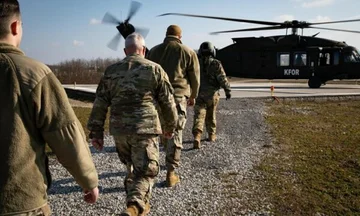
Admiral James Foggo, commander of the Joint Allied Force Command in Naples present at a KFOR ceremony, during a news conference Tuesday, questioned by reporters that when Kosovo may be a member of NATO, the policy said this is defined.
“When there is a application for membership, from a state, from an ally state, or from a future ally like Northern Macedonia, it is a political process and that is one thing to be discussed among governments. So I do not know the answer to that question. I think that's why politics will determine”, Foggo said, reports the REL.
Meanwhile, as for the future of Kosovo and the Balkan states, Commander Foggo stressed that it is a bright future, looking towards Euro-Atlantic integrations that is peace and prosperity and a market that would bring good to this economy and a better economy in the Balkan region.
The Kosovo Security Force was established in 2009 under the Ahtisaari Plan, a document leading to Kosovo's independence.
The KSF transition from a civil emergency force in the Army was a long process that was finalised at the end of 2018, following the support Kosovo received from the United States of America.
Currently, this force is in the phase of transformation into the Army, which is projected to last for 7 years.
This force has been established under NATO supervision, but its mission and capacities did not coincide with the ambition of institutions, for Kosovo to have its Army.
The KSF, currently numbers 2,500 regular members and 800 reserve. This number after the change of mandate will double. With the new mandate, there are 5,000 active soldiers and 3,000 reserve members.
One of the important components of the KSF is also the preservation of multi-ethnicity. Last year, this force has faced this challenge, because Belgrade has invited Serb KSF members to abandon it, suggesting that Serbia will not recognise either the state of Kosovo or its army.