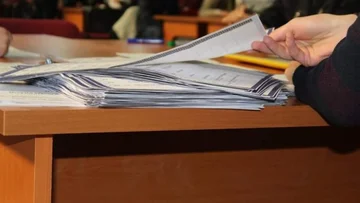
The diaspora vote count is continuing, VV achieves the 53rd term, PDK remains at 22, LDK falls to 18
 6 hours ago
 (7 years ago)
Violence against women is on the rise compared to all other years, said Centre Director Safe House in Gjakova. Valbona Ndolay's case and the life sentence for her killer, shows that change in court has begun. So says the head of the Safe House Centre” in Gjakova, Sakibe [...]
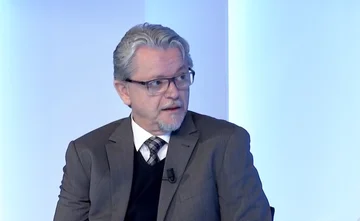
Violence against women is on the rise compared to all other years, said Centre Director Safe House in Gjakova. Valbona Ndolay's case and the life sentence for her killer, shows that change in court has begun. So says the head of the Safe House in Gjakova, Sakibe Dolly. In an interview given to Periscope, the director of this centre speaks of violence related to women in Kosovo families and conditions that the centre offers to the” Safe house” for their protection. The main reason for the exercise of this violence is that we Albanians are still patriarchal societies that justify violence against women, then the serious economic situation has a lot of impact that violence still happens in Kosovo families”, it has said.
1. When the center is opened” Safe house”?
- Centre” Safe house” in Gjakova opened in 2000.
2. Whose initiative was it to open up?
- During the war, a group of women dealt with victims of war violence. The women I was telling you men were killed by Serbian police. Then, we gained an experience there, took refuge in a house with 6 women and 25 children, and this experience then served to deal with postwar victims.
Women quickly gained confidence in the police and announced the violence, not that violence was pronounced before, but trust was created so much in U n NMIC and the institutions and the women went to announce the violence. We working as the women's association, politics brought the opportunity to the association. At first, we had no shelter or permission. First I took some of the women to my house, a colleague of mine at her house, then we talked to women's rights activist Vjosa Dobruna and she helped us make the project and found the donation to buy the house. Today we have our object.
3. What are the conditions you offer these women as” Safe House”?
“Login The safe house in Gjakova is the open-type shelter, because the woman after the emergency phase passes begins treatment for reabsalging and reintegration.
Along with the social work manager, we plan action for each woman. Set specific tasks that my wife and I try to perform.
The woman during her accommodations receives psychological, legal, and health counseling. To overcome stress and trauma, to teach her the rights of her law and to improve her health. And a woman in shelter can build and increase her capacities by means of courses that develop within the shelter - the computer, the English language, the flour cooking, because we own a minifur. In shelters, they also produce crepes, farm livestock, and almost all types of laborers. There are also those who teach reading in shelters, so we hire them as caregivers or cleaning women. They save all the benefits for the reintegration phase.
4. How long are victims allowed to stay in your center?
It's only six months to a year but we repeat the contract depending on the situation, so we can stay longer.
5. What about six months or a year from where these women go?
Part of it begins an independent life, part of the family of origin.
Are there six who agree to return to the bully?
- Unfortunately, the largest percentage agree to return to the bully, who is very difficult and painful for them.
7. How many women who have experienced violence have been able to create a new life after leaving this center?
- It's not a large percentage, but there are times. We've had a project to integrate these cases. It's mothers and children who started life without violence, allowing them to pay rent, water and electricity. Mothers work with us and take the money, the goods, and we help them create life without the bully, there are mothers who, without our help, can.
8. How many women actually live in your center?
- We have the capacity of 15 beds but it's always more than 20 to 25 people are currently, not that we want it because it creates problems that there are many, but we can't overlook the demands of women who need protection from the bully.
9. How much family support do these victims have?
- They have support. I'm talking about the town of Gjakova, the cases are more frequent that have greater support from the family of origin. If violence has occurred, they go to the family of origin and live there. Perhaps the most frequent cases come from villages because the family of origin does not support them and is asked either to leave their children and return to the parents' family, and women naturally refuse and take refuge in us
10. Do they have institutional support?
- Since 2007 we've had support from the Ministry of Labour and Social Goodness, meaning only 50 percent of direct assistance, food, hygiene, media and travel expenses. This amount is not enough considering that their number can reach as much as 25 within the month. We're always looking forward to this amount being at least stable, without interruption, because the police refer to the cases every moment and you can't keep it without a donation. Fortunately, we also have foreign donors, who support other budgetary lines, 50 per cent of other government-discovered salaries, awareness, prevention, raising staff chapters, etc.
11. Are you going up or reducing the number of cases from the opening of this center?
- When the centre was opened, in the second year of its work it was the only refuge in Kosovo. We've had inflows of cases because people were notified, they got the information, and back in 2014 we had a huge number, in 2015 and 2016 was 10% less than in 2014, but it's still growing compared to all other years. This year, the number of women in shelters has increased by 12%
Twelve. Has the number of women who have experienced domestic violence increased or diminished compared with last year?
A year ago there were 12 per cent fewer women in shelters. So, you're going up the number of cases by 12 percent compared to last year of the same period.
13. What has affected the increase in the number of these victims?
Many factors, such as heritage, learning lessons, and inequality, affect.
The main reason for exercising this violence is that we Albanians are still patriarchal societies that justify violence against women, then the serious economic situation has a lot of impact that violence still happens in Kosovo families
The co-ordinating mechanism for protection from domestic violence is functioning in Gjakova, where all activists participate. The members of the mechanism are active in the community and the victims receive proper information and feel safe to report the violence.
Another cause is the last murder in Gjakova, mother and daughter, other women fear that it will happen to them, so they report more now.
14. Which age do they come to present to you?
It's the highest rate, but it doesn't rule out all the ages until we're 80. So between 25 and 80 years of age
15. The basic court in Gjakova, sentenced him to life in prison, Peter Rudegane, how do you see this court ruling?
I think the change in justice is starting with Valbonne.
She and her daughter were severely deprived of this life, so punishment is deserved, the law is starting to work.
I hope this will educate others who plan to commit such crimes.
16. What do you suggest to women who experience domestic violence and do not present cases?
- All women who experience violence and don't present cases I'd say their lives don't depend on anyone else. God makes it individually so he deserves to live like each one. Alert the cases and denouncing the bully because you can live better and happier lives away from the bullys. /Periscope.
 8 hours ago
 10 hours ago