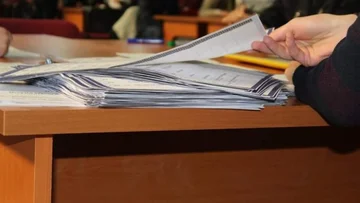
The diaspora vote count is continuing, VV achieves the 53rd term, PDK remains at 22, LDK falls to 18
 8 hours ago
 (7 years ago)
In at least three cases of identifying mortar waste, the EULEX mission has failed to carry out its task responsibly. Based on some documents that Kohavision has provided, the European Law Rule Mission, in one case, has placed the mortore remains of Serbs under mass cemeteries codes, with Albanians [...]
Based on some documents that Kohavision has provided, the European Law Rule Mission, in one case, has placed the mortore remains of Serbs under mass cemeteries codes, with Albanians found in Serbia, KTV reports.
Serb mortar remains with P.D. initials, found in a cemetery in Malisheva, in reports of EULEX experts have been placed under the DSK1 code - RCAL3, this code of mortories identification coming from Perucaci.
This fact has concerned local workers of the Institute of Medicine in Pristina, who have asked EULEX for change and improvement of codes because such a thing could create peace situations, since, according to them, the remains of Albanians killed by the Serbian military and police had been sent to Peruc.
Even though their request was made in November last year, EULEX has not improved mistakes.
Along with this case, EULEX had also called for the closure of two other cases without turning in any report on autopsy and anthropological report.
On another occasion, EULEX had failed to identify which of the three Albanian brothers killed during the war in Kosovo belonged to mortar remains. So has the H.G. Mortore remains.
EULEX has not provided clarifications and in their response it has removed responsibility from itself, saying they are only the aid of the Institute since 15 June this year.
On the other hand, the director of this institute, Edsim Gerjaliu, director of the Institute of Legal Medicine, has acknowledged that there has been a concern by local workers.
Kosovo does not yet have anthropologists, and most of the services have been performed by foreign experts within the framework of various missions that have worked in Kosovo.
The first local anthropologist will start working in June of this year.
During 99-2000, 4 thousand and 19 people have been buried in Kosovo without DNA tests with the classic method done by The Hague Tribunal.
In the years that followed, 2002-2008, much of the found has been identified as coming from three mass graveyards in Serbia, Perucac, Batajnica and Bajnabatta, respectively.
From 2008 to June 2018, this process has been led by EULEX. During this time 53 troops have returned from Rudnica.
The family had buried some 2,000 people without any analysis. Of the 6 thousand people buried without DNA tests, 20 percent of them are believed to have been buried by mistake.
 10 hours ago

 12 hours ago