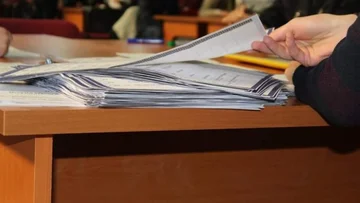
The diaspora vote count is continuing, VV achieves the 53rd term, PDK remains at 22, LDK falls to 18
 7 hours ago
 (7 years ago)
20 years from the end of the 98-99 war in Kosovo, the number of missing continues to be high. According to data from the Kosovo government Commission on Missing Persons, there is still no known about the fate of 1 thousand and 643 people. The chairman of this commission says pressure is needed from the international community, which [...]
20 years from the end of the 98-99 war in Kosovo, the number of missing continues to be high. According to data from the Kosovo government Commission on Missing Persons, there is still no known about the fate of 1 thousand and 643 people.
The chairman of this commission says pressure is needed from the international community, for Serbia to provide information related to mass cemetery, while the co-ordinator for Kosovo on the Serbian commission says co-operation has increased, though he acknowledges it can be done more.
The chairman of the Kosovo Government Commission for Missing Persons, Prenk Lokaj, asked Serbia to give information about the missing during the 98-99 war.
“The issue of missing persons holds political issues hostage. We in Kosovo think that Serbia, with precise data and information, has the location of the mass cemetery. Perhaps for individual and special cases no, but for all the mass killings there are data because it has been working on the system and with the” programme, he said.
Co-ordinator for Kosovo on the Serbian government commission for the disappearances, Vesna Boskovic told Voice of America that they are doing everything possible to provide information, though he acknowledges that more needs to be done.
There are possibilities and co-operation mechanisms, because we see this as a humanitarian and non-political issue. Throughout these years, all charges are made at Serbia's address, which should open police and military archives. Since 2005, when the working group exists, we have handed over Pristina through the International Committee of the Red Cross, more than 2 thousand and 500 documents dealing with graveyards, maps and sketches that can help. According to those documents, many sites have been exhumed and many bodies found. Of course, more can always be done, and we agree that not all archives have been opened. But, we are on a good track and only more will is needed from both sides”, said Vesna Boskovic from the Missing Commission in Serbia.
The number of missing persons is 10,000 and 643. Mr. Lone said that the large number shows that it's not done enough to detect cases. Therefore, it requires greater international community commitment.
“It takes great pressure from the international community to force Serbia first to point out the whereabouts of all those missing and then for further steps. Because you can't get over this pain, over this nightmare. Neither institutions nor we as a society can make accounts and accounts as the people say on the back and on the pain of others”, Mr. Loj said of the Voice of America.
These comments were made during the visit of representatives of the countries of the former Yugoslavia to the United States, this programme funded by the US State Department.
The experience received here helps Western Balkan countries learn from American practices, new ways of discovering mass cemetery and identifying persons.
 9 hours ago

 10 hours ago