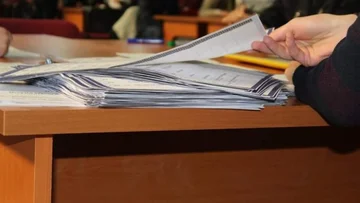
The diaspora vote count is continuing, VV achieves the 53rd term, PDK remains at 22, LDK falls to 18
 7 minutes ago
 (7 years ago)
French President Emmanuel Macron's veto against the opening of membership negotiations with Albania and Northern Macedonia last week could be remembered as a historic mistake, weakening Europe and undermining its aspirations to become a geopolitical power. So writes prestige “Financial Times” in an article about [...]
“In an act of stubbornness, the French president blocked EU enlargement policy, deprived the bloc of one of the key instruments of his foreign policy, undermined confidence in his promises and destabilised the Balkan region. Not bad for a night's work.
And all of this by a leader who claims to be the example of the European spirit of solidarity and cooperation.
Northern Macedonia and its Balkan neighbour, Albania, were approved the launch of membership talks in June last year, but with a one-year delay. Four months ago, the EU again suspended the decision on promise to give the green light at last week's summit in Brussels, but the two candidate countries faced “Jo” in French.
The two Balkan countries have traveled a very long way to get to this point. Albania obeyed EU pressure to verify all its judges from an independent panel, while allowing the European border agency Frontex to have access to Albanian police operations. Northern Macedonia has gone even further than that, agreeing to change the country's name to resolve a two-decade dispute with Greece so it can pave the way towards the EU. Prime Minister Zoran Zaev, a true reformer, demonstrated strong courage and invested many political capital with accepting this agreement. He could fall from power now that the EU did not keep its word on this agreement.
Mr. Macron gave two arguments about his decision. First, that the EU needs to strengthen its existing policies and institutions before accepting new members. The second argument is that the membership process itself has defects, as it offers new member states full benefits from the start, with no possibility to correct later mistakes. These are clear signs.
The EU must simplify decision-making, strengthen the eurozone and many other things. It also needs new mechanisms to hold accountable to members who do not respect democratic standards. It should show that membership has less to do with technical compatibility and more with substantial change in the culture of pluralism, accountability and rule of law. But there is no reason why these issues will not be addressed after the opening of formal membership negotiations with Northern Macedonia and Albania, a process that will probably last a decade.
There are also deep concerns about organised crime, corruption and rule of law, especially in Albania, whose mafia has been empowered in some EU countries. Denmark and the Netherlands also rejected Tirana's bid. Rejecting Skopje, France indicated it does not want enlargement at all. It is hard to imagine that Mr. Macro will change his mind and firmly position himself in this case before the 2022 elections.
By closing the door of enlargement, France leaves the EU without a reliable framework for relations with its neighbours, not only the entire Western Balkans, but also countries like Moldova, Ukraine and Georgia, for which membership is still a proposal, though distant. If the EU cannot withdraw its border lands under a stable orbit, it will find it very difficult to guarantee an autonomous foreign policy far from its country, which is thought to be a key goal for Paris. If Zaev is replaced by extreme nationalists in northern Macedonia, who will then oppose the name agreement with Greece and stir up multi-Albanian sentiments throughout the region, the Balkans risk returning to dark days”, writes the Financial Times.
43 minutes agoan hour ago
 2 hours ago
 4 hours ago