6 minutes ago
Following the quake, seismic assessment of dams, schools and hospitals is urgently required

Periskopi(7 years ago)
(7 years ago)The 5.8 magnitude quake, with intensity above 6-7, that hit the Tirana-Durra region on September 21st, was the strongest since Tirana was declared capital in 1920. Engineers claim that this earthquake should serve as a lecture to institutions. Seismic assessment of dams, schools, hospitals and institutions [...] should be done urgently.
The 5.8 magnitude quake, with intensity above 6-7, that hit the Tirana-Durra region on September 21st, was the strongest since Tirana was declared capital in 1920. Engineers claim that this earthquake should serve as a lecture to institutions.
The seismic assessment of dams, schools, hospitals and institutions that serve as collective centres should be done urgently. Seismic maps and Eurocode design codes should be renovated. Construction permits legislation must be revised, security schemes should be established and curriculums in schools should be changed.
Experts diagnose the earthquake and offer suggestions.
Albanians, when buying a car, think 100 times. They see one for the details. How many miles he's made, how much he spends, what options he's got, it's taken to two-three service services to test security, etc., etc. They do likewise when they buy a refrigerator or another home appliances. After checking all the sales units and testing the price rate, they're interested in detail if it's AAA+ (with maximum energy savings), do you combine colors, have the door on the right arm and dozens of other estimates of this nature. But when it comes to the home, the investment in life, it all gets simplified. Those who build themselves just have money.
They prefer to build themselves without permission, not an inch of safety - engineering itself, the architect himself. The price, area, urbanization, but never the security that the object offers - in many cases - is of importance to others who buy. But, the September 21st earthquake of 16:15 with a 5.8 magnitude, more powerful than 6 forehead, the strongest recorded since Tirana was declared capital in 1920, which unfortunately fell on a suitable day and clock that paid off the damage, must permanently shake people's minds to pay due attention to the safety of the residence.
Experts explain that the magnitude is a size that determines the earthquake in its centre, while the intensity on the forehead determines the effect of the earthquake on a certain location.
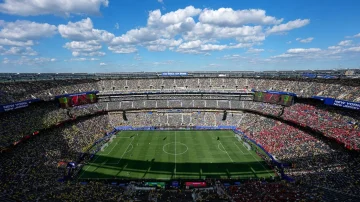
Many have been surprised by the slight damage of severe shocks that lasted about 20 seconds. Constructions in Tirana resisted more than most expected, even the engineers themselves who designed them, but it is time for reflection. Construction engineer Agim Serani, Zv.dekan at the Faculty of Construction Engineering, said the earthquake was an experiment that gave a valuable lesson for all. Even for Mr. Seran, it is surprising that there was no damage, but now is the time to learn lessons from the balance of the earthquake, which include a new assessment of the seismic safety of high-profile public residences, such as dams, schools, hospitals, stadiums, etc.
The state and institutions must be included in a deep analysis of the legislation in terms of seismic security, construction codes and seismic maps must be renewed, flood insurance products should be massiveised and society should be prepared for how to respond to these situations.
The latest Civil Emergency Operational Report reported 1528 damaged items, of which 50 residences -- mainly in rural areas -- have been cracked up to 160 palaces, a health centre, 34 schools, 13 public universities. The biggest injuries have occurred in the villages of Durres, but also Tirana's Rudolqi, Vora, Maminas, where dwellings have been destroyed. As a result of seismic tremors, at least 105 people remained hurt.
The engineer Seran claims that engineering is more difficult to repair a broken building than to design a new one.
Seismic assessment of dams, schools, hospitals, government buildings
The continent we live in repeatedly makes an assessment of the seismic safety of objects of strategic public importance, such as dams, schools, hospitals, etc., so that their security is also guaranteed for earthquakes that drop once every hundreds of years. Engineer Agim Serani says that after the 21 September quakes, a working group must quickly assess the situation in which dams are located in the Tirana region of Durres. The assessment should also be extended to all school and hospital facilities.
According to data from the National Committee of Great Dams, there are currently about 630 dam reservoir systems in Albania, of which 307 are considered either high dams at 15 meters, or large reservoirs. Population movements and urban expansion have led to increased population concentration and material values in lower river flows.
The explosion of eight major dams, in Albania's central area, is estimated to affect the entire city of Elbasan, Lusnja and Divjaca (respectably over 100,000, 38 thousand and 10,000 people). The large dams, especially in the Drini cascad, are designed to withstand a 9 - magnitude earthquake, and dams are generally designed to withstand earthquakes of up to 9 with expectations, not less than 1,000 years. All dams built in Albania across the country are designed to cope with more than 8 of them. Construction engineers claim that after each shake, such works must be turned into seismic reevaluation because their age is more than 20 years old.
Engineering Seran advises a re-evaluation for seismic safety of schools and hospitals. If the September 21st earthquake was on a week's day and in a school period at the Faculty of Geology, Mining could have been victims. If it were a day of learning, there would be many injuries trying to escape. The engineer claims that re-evaluating objects should be made urgently to assess in time the damage to the September 21st earthquake so that the needed repairs and reinforcements will be made very soon. This is not the biggest earthquake the country expects.
Government buildings must also pass through a new seismic assessment, and all hospitals must also pass. Seran claims that information objects that are in the process of legalisation should be assessed in this regard.
About 500 thousand information facilities built after the 1990s should be assessed because they have been set up on terrain without considering natural risks such as earthquakes, floods, and slides. Seismic re-evaluation of objects requires expertise and funding, but this process must be carried out urgently in dams and collective objects.
Here's what Albanian Code 1989 predicts
The technical condition of the design, published in 1989, was the last legally approved update of our technical design codes, which was associated with the seismic map. According to the KTP 1989, seismic requirements that must be implemented are primarily given for construction sites with seismic intensity over VI.
Calculating the construction of seismic action is given on the basis of seismic parameters of construction squares with intensity of VI 1092 to IX. This technical code provides definitions of the design of structures on the terrain with seismic intensity up to IX, for areas with greater intensity, this condition cannot be taken as reference.
The KTP-89 recommends that the works be conceived in structural order in the plan and at the height of content and symmetry, ensuring this purpose:
Such distribution of measures so that they do not change very much at altitude
Non-high and Plan Breakup
When a building's plans or altitudes are highlighted, as well as when nearby building parts have interlocks at different levels, antisismic fuel division is recommended to ensure structural orderliness. Antisism campaigns must also be realized when the structure is long - range, whether they have structural orderliness or not. The use of light building materials is recommended to reduce the weight of construction (and therefore the seismic force operating in the structure).
Aimed to ensure spatial work of supporting constructions during seismic action, as well as to create conditions for developing plastic deformities.
The goal of KTP 1989 is that, in case of earthquakes, people's lives will be protected, damage limit. Construction structures that are important for civil protection will remain functional.
Under this condition, the construction count is made by assessing the seismic risk of the forehead (Marcal century). According to Albanian codes for ordinary buildings, the occurrence of a powerful earthquake in 100 years is considered.
According to Eurokod, it should be built this way
Construction engineer Altin Serani explains that, in European Standard Practice (EC8), the recommended value for frequenting the seismic action of higher design or design earthquake, 475 years are given. This means that when built, the object is considered to face an earthquake that occurs once every 450 years.
Seran says that European technical literature also handles the possibility of a very large, extraordinary seismic action, of the possible “maxymal”> earthquake. This, of course, is considered much less than “the design rate”. According to some indicators, the maximum possible earthquake may be considered an earthquake of 1,000 years. There are also recommendations to select it twice as strongly as the design earthquake.
Eurocodi (EC8) for this earthquake, as well as for the relevant design criteria, there are no specific definitions. It may be considered that respecting the specific additional constructive measures contained by this Eurokod helps to meet such a evental earthquake, but since it is unlikely to happen. The structures in seismic regions according to Eurokod 8 must be built such to meet the following criteria:
Seismic maps and outdated codes must be renovated
Objects currently built in Albania are obliged to consider the seismic security criteria defined in the Technical Design Code (KTP) in 1989. This code is applied by considering an even older earthquake carton map dating back to 1979. This map is designated for the design of common buildings as high as 6 floors. For other structures, the law provisions require processing detailed documentation for quantitative assessments of the country's seismic-dependent design parameters.
Construction engineers claim that there are currently three kinds of maps of seismic zoning, worked by the authors of the field, but none of them have been formalized and therefore no legal form. Meanwhile, Albanian engineers, when designing, are free to choose the application of European standards in design. European standards for construction are not binding, but they apply mostly from popular construction companies in Tirana and experienced in the market.
Restriction Request
Frequent earthquakes with relatively low intensity in the impacts of the terrain should not disrupt the exploitation of the object after their event. This level corresponds to the situation when structural damage is limited and the main resistance system of vertical and horizontal forces has largely the same characteristics and capacities as opposed to the earthquake. The structure does not need any reinforcement measures.
It can be exploited immediately. Thus, for ordinary buildings, this requirement must be met for seismic action by 10% the probability of happening in 10 years or the repetitious period of 95 years.
The request of no collapse
It corresponds to the situation when there are significant injuries in the building, but there are still structural reserves, compared to the state of a complete or partial collapse. The structure has been significantly damaged, with the solidity and rigidity remaining relatively low, and vertical elements are still capable of carrying vertical loads. Infrastructural elements have suffered damage, yet the partitioning and filler walls cannot have emerged from their function. The relatively permanent average shift is present. These injuries can cause human injuries, but the risk of life - threatening injuries is low. The structure must cope (with) the post-implore earthquake with moderate intensity. The facility has high repair costs or is likely inefficient to be repaired. Thus, for ordinary buildings, this requirement must be met for seismic action by 10% the probability of occurring in 50 years or the repeat period of the 475 years.
Structural Attitudes
It corresponds to the situation when there are such substantial structural damage leading to the structural system on the verge of structural collapse and possible injuries. The facility has been severely damaged, with solidity and horizontal rigidity. Most of the infrastructure elements have collapsed. The relatively large permanent movements are present. The structure is on the verge of collapse and is likely not resistant to another earthquake, even an earthquake with moderate intensity. This facility is impossible to repair. Thus, for ordinary buildings, this requirement must be met for action that is even higher than the design earthquake. The earthquake repeat period is once in 2000.
Eurokodi applies in Albania on occasion
Seran says that in recent years efforts have been made to conduct a number of studies that will provide the basis for the application of modern antisism design codes (Eurocodi 8).
Thus, for example, a new map of seismic danger based on pro - Babylonian methods was designed, earthquake catalogation, earthquake - source areas were determined, several models were studied on extinctions and amplification parameters in a variety of areas, as we do not have direct measurements, etc. Based on studies done, it has been concluded that across the “Sismogen area” Ionian-Adriatic earthquakes can occur with maximum expected magnides.
In the direction of Tirana, in the east, earthquakes could occur with M = 5.5 ʹ 6. According to studies, in Albania alone, the period of repeating an earthquake of M = 5.0 is 3.6 years, and an earthquake with M = 6.0 is 29.1 years, and an earthquake with M = 6.5 is 93.9 years, and an earthquake with M = 7.0 is 505.6 years.
Professor Altin Seran says that for the creation of a complete and precise design code, there should be a full study of seismology and an exact micro-zoning of the entire territory in order to design accurate maps for the projected intensity of maximum earthquakes expected for specific areas. Experts claim that adopting Eurocodes in Albanian legislation increases the cost of construction by 5%, but builders and engineers have chosen to apply these standards to many of the facilities built after 1990.
Laws and responsibilities Must Be Accurate
Construction engineers require that demand for construction permits should pay more attention to the geological aspect than the content of the structure. Currently, the criteria for permits estimate the most aspect of the volume of the structure, while more time and conditions must be devoted to verifying the geological aspect in which the object and seismological criteria are set. Engineers urgently seek the application of new seismological maps and Eurokodi's application to domestic legislation. Engineer Agim Serani says that he should focus responsibility on a person during the construction of an object. Currently, if an object collapses, responsibility is difficult to find, as each one of the people who has participated since the designers, architects, enforcement engineers bears individual responsibilities. There is a special profession in the EU that oversees all processes, and it is responsible if the object is destroyed or damaged.
The security system must be activated
The 2014 Law on Planning and Development of the Territor, Article 42, forces workers to hand over a ten - year - long security policy to their buyers and to the effect of completing the work date, which covers the damage to the building, including damage to the thirds, which flow when, because of land or construction defect, the construction collapses entirely or in part, or poses obvious damage or other serious defects, in the wake of the contract.
This provision of this law, even today after four years, is not effective because the VKM is missing that should determine the security and specific tariffs of this nature. Sector Experts and sources from security companies claim the VKM has been hampered by construction lobes.
Although the intensity of natural disasters has increased greatly in recent years, especially from floods, there is still no national security scheme to ease the effects of disasters. The World Bank has assisted the following Financial Supervisory Authority, but there are still no results. The establishment of a national security scheme has been proposed, where a special security fund for this purpose is envisioned.
Avni Pontar, manager of the SIGAL insurance company, said the issue of preventing financial damage from natural disasters is resolved in two ways. The first, through the institutional road, where a law should be drafted and passed through which to make mandatory provision for natural disasters. There is a several-year effort in this regard, Pontar said, but the legal solution has not yet been given. For the security scheme to work, the government's support for establishing a special fund is to be an income for companies with a destination to compensate for the damage generated by floods and earthquakes.
Meanwhile, awareness has been raised in high risk areas from natural disasters for security. Currently, the price for this insurance ranges from 0.05% to 1.5% of the amount provided, depending on the object as well as the types of risks that will be provided. Similar solutions have been made by countries in the region, where the state has established a special fund that supports insurance companies, especially for compensation for the damage that can be caused by floods.
But will Albanian insurance companies be able to cope with damage write-offs if earthquakes destroy en masse. An assessment this year of the International Monetary Fund notes that Albania is very sensitive to natural disasters and climate change. But, meanwhile, there is a considerable accusation of risk from the earthquake in the provider balances, much of it comes from securing properties used as collateral loans by banks. Through this coverage, in case of devastating earthquake, security companies must compensate about 380m euros mainly in Tirana.
According to data from the Financial Supervision Authority, in the fire and natural forces security portfolio, during the January 2019 period, a 26.41% decrease in the volume of grossly written collections of this portfolio and an increase of 6.18% in the number of security contracts, compared to the January period March 2018.
380m euros in compensation if devastating earthquake occurs in Tirana
An assessment this year of the International Monetary Fund notes that Albania is very sensitive to natural disasters and climate change. But, meanwhile, there is a considerable accusation of risk from the earthquake in the provider balances, much of it comes from securing properties used as collateral loans by banks. Through this coverage, in case of devastating earthquake, security companies must compensate about 380m euros mainly in Tirana.
Awareness Must Be Raised
Albania is in the high risk zone for earthquakes and floods, but the country has not developed institutions and curriculums to protect against disasters.
FAO (The Food and Agriculture Organization, part of the United Nations) has recently conducted a comprehensive analysis of disaster risk reduction and agriculture management system in Albania. The analysis writes that, currently, in Albania, there is no agency involved or connected to raising awareness of disaster risks.
Although there is a research program for <x0 civil protection and rescue”, offered by private universities, there is no curriculum that integrates RRF (Fascal Risk Reduction) into basic and middle education. With the support of donors, seminars, trainings and a roundtable for the RRF are organized each year, focusing on protection and rescue. However, general efforts at raising awareness have only been limited to distributing leaflets, brochures, posters.
NGOs, such as the <x0). The Albanian Red Cross” and “Save the Children”, are involved in organising the periodic national campaigns for awareness issues for vulnerable communities, although such efforts have not yet reached communities in need and remain formal and unsystemic.
The UN study says Albania is exposed to numerous natural risks, including, but without being limited to those of hydrometerological and geology origin, such as earthquakes, floods, droughts, forest fires and landslides.
According to data from Desventar, a disaster management system has occurred from 1852 to 2013 in Albania about 4,000 cases of disasters.
Responsibilities Lack
In a study the Colonel Foto Duro has conducted for the Centre for European and Security Affairs, says that response capacities to emergency situations are provided by various institutions, among which the main part is a contribution to the military. For vital services, 16 trucks, 17 helicopters and about 65 small boats are available for evacuation. Tents for 17 thousand are available for housing, only by the army plus tents provided by other institutions. For medical evacuation, there are about 200 ambulances (from the Health Ministry in 36 counties, including hospitals, 11 of them in Tirana) plus 12 ambulances are available by the military.
There are two food production units available for 2400 pounds per day and 12 kitchens per day for up to 3,000 meals. 7 Autobots are available for drinking water, totaling 67 tons, 11 pumps. Two units are for water cleaning and two shower facilities that face 200 people a day that can be built outside the affected area 72 hours after the emergency proclamation. Six units are available for earthquake situations, floods, fires, two helicopters from the military are for air accidents or at sea and four ships from the army for sea accidents.
Comparing Albania and Estonia, it is found that a fire vehicle serves 37 thousand people (Albania) and 6 thousand people (Eston) respectively, while in their capitals, these figures are 52 thousand and 33 thousand, respectively. Taking into consideration medical assistance, the country's ranking, an ambulance serves 17800 people in Albania, respectively, and 12,700 people in Estonia.
Another problem related to these capacities is the relatively low level of technical readiness of vehicles, aggressors and equipment, which in general estimates total more than 60-70%.
High - Exposed Objects
A study of seismology experts shows that earthquakes pose the greatest national threat to a natural disaster in Albania.
The damage that can be created in residences will include objects that have been built with materials, that do not withstand earthquakes above 6 and old buildings, mainly those prior to 1960. According to the study, prefabric, brick, stone, and concrete facilities and structural systems with supporting walls are more threatened with earthquakes than magnitude 6. The facilities built before 1960 have no resistance to earthquakes, those built between 1960-1990 have low seismic protections, while buildings after 1990 have insufficient protection, since in many of the facilities built at this time have been abused by the number of floors in relation to the sustainability of the foundations.
The study shows that the biggest demands for the national civil emergency system would emerge from earthquakes occurring in Durres, Elbasan, Berat, or Vlora, as low-influential seismic resources are capable of causing structural damage and collapses ranging from 1.9 to 5.2% of the national housing fund. In the event of high - impact earthquakes, which could occur once every 500 years, the power potential released is capable of causing a national construction catastrophe.
But the population shift process has lowered the impact of strong earthquakes in earthquake hearths in the country's north and south, but has markedly increased exposure to Tirana, Durres and other cities that are affected by earthquake stem areas in the coastal area, writes Mountytor.
It is estimated that Albania is characterised by intense small and medium-sized earthquakes. However, in the area where Albania lies, several catastrophic earthquakes have occurred over the centuries, which have destroyed as many as entire cities have wiped out. Because of this fact, since early times, the Albanian community has created several rules and advice to have slightly stronger housing. In time (especially during the past century), these empirical rules and experiences were transformed into full legal building codes, which have been steadily increased through significant changes and improvements that have been reflected to the final design code.