5 hours ago
The day Britain and Albania agreed to Corfu incident, early manifestation of the Cold War

Periskopi(7 years ago)
(7 years ago)Britain and Albania agreed on October 29th 1996 that Tirana will pay London $2m in compensation for the incident at Corfu Canal, and Britain will grant Albania $18m from the value of blocked gold. The incident in Corfu refers to three different events that took place in 1946, where Britain and [...]
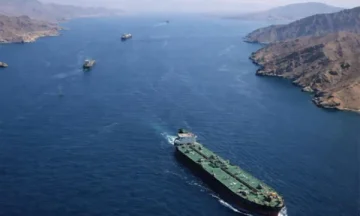
The incident in Corfu refers to three different events that took place in 1946, where Great Britain violated Albania's sovereignty through a deliberate military operation and with visible threatening characteristics, entering Albania's internal and territorial sea.
These three incidents are considered an early manifestation of the Cold War.
Albanian version
On May 15, 1946, two warships sailing without a flag or other identification signs enter Albanian territorial waters in the vicinity of Saranda. Coastal artillery battery signals warships to change course. After the ships continue to follow the same course, the battery opens warning fire. Warships raise the English flag and are drawn to Albanian territorial waters.
On October 22, 1946, four warships (1crosser and 3 deserters) from the Port of Corfu, cross the canal into our territorial waters, approaching between the War Head and the Caspian Head. In the vicinity of the War Head, two deserters fell into the remaining mines of World War II, being damaged in construction and people.
On May 15, 1946, a small fishing vessel of armed people came to us and asked to leave their waters without any help whatsoever, and then left.
English Version
On October 22, 1946, in the vicinity of the Varje Head, two of our debtors fell into mines imposed by Albanians. Our two destroyers fell into mines, getting damaged and sunk, where some of our sailors lost their lives. (From the journal of the English flagship, presented at The Hague trial).
Although the court acknowledged the fact that in November 12, 1946 and November 13, 1946, the introduction of English warships into Albanian waters, where the incident occurred, was a violation of Albania's sovereignty, the final decision blamed Albania for the incident, and issued a decision under which Albania was to pay $844,000 to the United Kingdom.
The Albanian government rejected recognition of the International Court's decision in The Hague. The British government demanded the deadlock of gold found in Germany after the end of World War II and which would be distributed proportionally to countries to which Germany had robbed the treasures of national banks.