18 minutes ago
Blerim Latifi tells us if he's gonna drop tear gas. PDK

Periskopi(7 years ago)
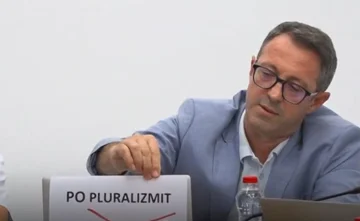
(7 years ago)Political Philosophy Professor and Candidate The PDK for MP, Blerim Latifi, has made a long Facebook status for the October 6th snap elections and the consequences of their results. He's taken care of all political parties, deciding LDK in the most comfortable position. According to him, PDK and Vetevendosje will [...]
He's taken care of all political parties, deciding LDK in the most comfortable position. According to him, The PDK and Vetevendosje will pass psychopolitical consequences, since the first one was used to making opposition, while the second was not accustomed to being in power.
Latifi has said Ramush Haradinaj was left with trauma along with his party in these elections.
“The AAK, meanwhile, will need a time to be rehabilitated by the big blow it took in the 6 October elections. The recent drop from intense enthusiasm to intense disappointment has traumatic consequences, and one of them may be Ramush's resignation from the MP's mandate. ”
Further, he analyzed The PDK, saying this political party should decide whether it wants to make retaliatory opposition like that of Vetevendosje or cautious opposition like that of the LDK. According to him, this party will follow an intermediate path.
This is his full status on Facebook:
AFFECTS PSICOPOLIC AFTER 6 TETOR
The major Activation of Western diplomats, yet the new Kosovo government, is clearly meant to impose the first agenda, with which this government will be taken. At the heart of this agenda is dialogue with Serbia. All those things that political parties have promised during the election campaign, necessarily, have to be put aside for a certain period. The West, particularly the US, is rushing too fast to find a final solution between Kosovo and Serbia. The first barrier this rush will face is the conflicting political climate in Kosovo. In the past five years, this climate has seriously damaged Kosovo's international position. From 2017 until the fall of Haradinaj Government, Kosovo has gone through an absurd situation on the level of foreign policy. We haven't had unique foreign policy. We've had foreign policies as much as we have political parties. Moreover, the ruling coalition itself has been divided into three different positions all the time -- otherwise the president, otherwise the prime minister, and the chairman of the Assembly. Meanwhile, the effort to overcome differences by means of a joint team for dialogue turned out to be as ridiculous, even contrary to the constitution.
In view of all of this, the first problem parliamentary parties must overcome is finding a formula to pursue a unified foreign policy. The original message to be delivered, if this is achieved, would be the message that Kosovo is a serious state, not a party conglomerate. For this, among other things, psychopolitical transformations of political parties and their leaders are also necessary.
What do I have in mind with this term?
Every political position carries on equally psychology, and this psychology becomes more powerful, the longer the political position lasts.
So, for example. Vetevendosje Movement! has a 14-year period as an opposition subject. It is incarnated with the logic of rejecting the policies of power. Now they have to change psychopolitically. Kurt himself has to make his big personal difference. As opposition leader, he felt comfortable in legalising his moralist and populist, while now, as soon as he took over the prime minister's post, on his first day of work, he would face the bitter truth that politics is not self-resisting, but a annoying art of negotiating and compromising interests of ideas. Once he accepts that truth, he will be forced to disappoint idealists who expect from him either miracles or vengeance for past suffering.
The new option, on the other hand, should also be introduced into the process of psychopolitical transformations. Being in power for a long time, The PDK is incarnated with it and has forgotten how the opposition becomes. The PDK will take time to find the opposition questions, and to leave behind the legacy of the main question that has been spread within it, now and many years: Who, what, does it take? It, now, is ahead of two options of political action: to make a retaliatory opposition, or a cautious opposition, within the national consensus for resolving Kosovo's problem with Serbia. It's likely to be tested with an intermediate formula. In this context, the LDK has the most comfortable position, because in the past two years it has played double games, trying to preserve the image of a constructive party, but also that of a party that makes effective opposition. The AAK, meanwhile, will need a time to be rehabilitated by the big blow it took in the 6 October elections. The recent drop from intense enthusiasm to intense disappointment has traumatic consequences, and one of them may be Ramush's resignation from the MP's mandate.
What About the Initiative?
Its identity concept as a small but necessary party in building governments has received a fatal blow in the 6 October elections. Limaj will have to think about a new concept, if he plans to continue dealing with politics. Even if it happens to pass through the threshold and enter the new government. His pre-election partner, Pacolli, seems to have come to the end of his political career. It remains a typical example of incapacity for economic power to transform into political authority. Lenin's famous statement about politics as a condensed economy, in this case, seems to be completely wrong.