3 minutes ago
Commissioner Hahn has advice for Kosovo, Serbia about dialogue

Periskopi(8 years ago)
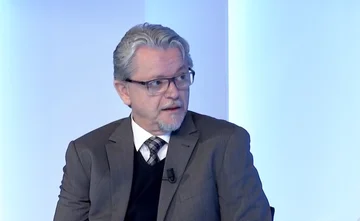
(8 years ago)European Commissioner for Enlargement Johannes Hahn delivers messages in an interview with DIE on the eve of the referendum in Macedonia. Citizens must give their vote free and after receiving independent information. Deutsche Walle: Commissioner Hahn, today the second Media Conference, organised by the European Union here in Skopje. Do you see development [...]
European Commissioner for Enlargement Johannes Hahn delivers messages in an interview with DIE on the eve of the referendum in Macedonia. Citizens must give their vote free and after receiving independent information.
Deutsche Walle: Commissioner Hahn, today the second Media Conference, organised by the European Union here in Skopje. Do you see positive media development since last year? Are you satisfied with media freedom in the region?
Not yet. I see attention is focused more, but to be honest, I would like to see faster progress, greater stability and more inclusive. In this context it is important to meet each other once a year in the region to discuss all aspects. I think it's good to hear representatives from the media business sector talking about their obligations and challenges, hear from journalists talking about their experiences, obligations and criticism.
Deutsche Walle: We have seen enormous support for Macedonia before the referendum. European and world leaders have come, politicians as well. You're here today to support the referendum, I think. Why is the referendum so important for the European Union and for the European Commission, for the referendum to succeed?
Hahn: The first, resolving this conflict was one of many UN-led negotiations, and there are no concrete solutions in many of them. Of these multi-year conflicts, called “conflicts frozen”, none have been resolved. In this context it was an unexpected event that leaders finally agreed on. And this is seen as the right path for the entire region, to join sooner or later, I hope, the European Union. So it's crucial, it's something to know, that needs to be commented on. That's why the European Union, but other international representatives are here and that's normal, it's normal for them to be here and show their commitment.
Deutsche Walle: You met today with opposition leader Mickovski, and you are going to Stip. What did you talk to Mickovski, and what will you tell citizens in Stip, or in general, citizens of Macedonia?
Hahn: Wherever there are elections and referenda, everyone should use democratic rights, participate in the vote, in the elections. As you recently saw in the United Kingdom, each vote has its own value. The future of the country, the new generation and the middle generation must have great interest in a future, in developing their country. They have to release the vote, make the decision by taking serious information, distributed by independent media.
Deutsche Walle. What are the consequences if the referendum fails?
Hahn: If the referendum is unsuccessful, the status that the referendum has is consultative, the latest decision is made by parliament in Skopje. The referendum is certainly an indicator. I think people should be aware of the coincidences. The country has been stuck more than ten years for the start of negotiations. Political parties have repeatedly spoken of the country's commitment to the Euro-Atlantic Alliance. In theory, I hope there is also a unanimous support of all policymakers. Of course one element or another can be discussed. But now we're dealing with the perspective in general. Part of democracy is making a good deal. A good deal is a compromise, each of which must give up something in order to benefit much more. This is what has been achieved. Now it's the citizens' turn, they're the Soviets, they have to make the decision. My only request is that they exploit this opportunity.
Deutsche Walle: Last question. Kosovo is recently open in negotiations between Pristina and Belgrade. Is the European Commission willing to support territorial exchanges, as spoken by the presidents Thaci and Vucic, if this would bring about the final solution of the crisis?
Hahn: As I've said several times in the last few weeks, it's too early to say something about this matter. My request was and it's „let them talk”. They are now aware that this idea was made public and what are obligations, not only from citizens but also from the international community. Clearly, everyone is seeing a solution. But everyone is clear and has expressed that the solution should contribute to more stability in the region, not to the contrary.