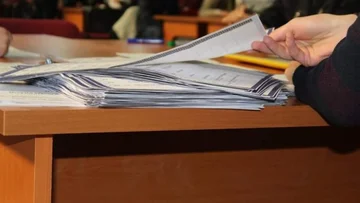
The diaspora vote count is continuing, VV achieves the 53rd term, PDK remains at 22, LDK falls to 18
 2 hours ago
 (8 years ago)
Two American analysts have expressed opposition to the idea of exchanging territories as the right solution to normalising relations between Kosovo and Serbia. They stress this could foster new conflicts and destabilise the region. Kosovo President Hashim Thaci and Serbia's Aleksandar Vucic meet in Brussels on Friday in [...]
Two American analysts have expressed opposition to the idea of exchanging territories as the right solution to normalising relations between Kosovo and Serbia. They stress this could foster new conflicts and destabilise the region.
Kosovo President Hashim Thaci and Serbia's Aleksandar Vucic meet in Brussels on Friday under dialogue for normalising relations between the two countries. The idea of redressing borders or exchanging territories has given particular importance to this meeting, which will be mediated by EU foreign policy chief Frederica Moghrini.
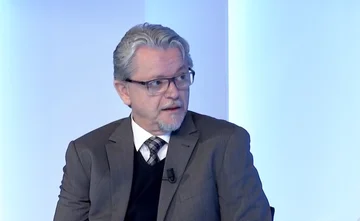
David Philips, director of the Peace Institute at Columbia University in New York, told the Voice of America that the idea of the rock of the border is dangerous.
“Change of borders would be dangerous and destabilizing. In the Kosovo-Serbia dialogue facilitated by the European Union, Thaci Presidents and Vucic are at a crossroads. They could choose partition or a negotiated solution that would grant more rights to Kosovo Serbs in line with the agreements reached. This would then have to lead to the recognition of Kosovo as an independent and sovereign state from Serbia. This is a more prudent and realistic way than a reckless choice of split”.
Balkan Affairs analyst Daniel Cerwer also opposes the idea of exchanging territories for ethnic motives.
There is no legal problem for Kosovo and Serbia to do so, if they know each other and establish diplomatic relations. I am against exchange if the motive is not the exchange of territory, but the exchange of populations in an attempt to homogenize their countries. This is contrary to liberal democratic principles and is a wrong direction for Serbia and Kosovo”.
According to Philips, to avoid a return to the conflicts of the 1990s in the former Yugoslavia, it is in Serbia's interest to focus more on improving the Serb situation in Kosovo than on the idea of dividing it.
The best way to secure its national interests (for Serbia) is to promote the interests of Kosovo Serbs that can be achieved in Kosovo with better governance and respect for minority rights based on the principles of the Ahtisaari Plan and the Kosovo constitution. Change of borders does not stabilise the situation, but will make it more uncertain”.
Serwer agrees with analyst David Philips that the best option is reaching an agreement that does not affect current borders and focuses on improving minority rights.
The exchange of territories does not reflect concern for the treatment of Serbs and other minorities in Kosovo. I think this should be the main concern for Kosovars today because their ability to integrate in the European Union and NATO depends on how they will deal with Serbs and other minorities. The exchange of territories would provoke violent acts against Albanians living in several villages north of Kosovo and Serbs south of the Iber River. ”
Analysts say improving minority rights and finding a solution without touching existing borders would accelerate Kosovo and Serbia's efforts for membership in the European Union.
 4 hours ago
 6 hours ago