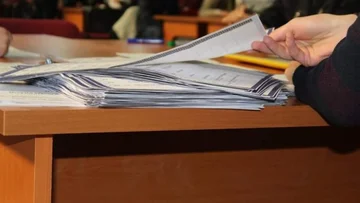
The diaspora vote count is continuing, VV achieves the 53rd term, PDK remains at 22, LDK falls to 18
 6 hours ago
 (8 years ago)
Serbia's President Vuciq spoke for the first time about the possibility of demarcation with Albanians [Kosovo]. In Belgrade, they don't know what that really means. Many oppose the idea. It's also about referendum. The world of TV newspapers in Serbia was in order until the beginning of last week. [...]
The world of TV newspapers in Serbia was in order until the beginning of last week. News of prominent gossip, little incentive and hatred towards Kosovo Albanians, little to Croats and the opposition in Serbia -- business as a military.
But last Thursday things changed: Serbia's President Aleksandar Vuciq ʹ, whom many consider as the editor-in-chief of all relevant media, used for the first time the principal word “definition” with Albanians. It was this first time that the Serbian autocrat ridiculed even the possibility of recognizing what is called Serbia's southern “Vuture”.
Although the word “definition “has not been explained to the end, many believe that they know what Vuciqi thinks.
Serbia would have to take up the northern part of Kosovo, inhabited by Serbs only, perhaps in exchange for predominantly Albanian municipalities in Presevo and Bujanoc. The media machine close to the Vuciki regime is now at odds: How do you explain to Serbs that this is a good solution?
Vuciqi's favourite argument is that Serbia must either now define borders with Albanians, or Albanians through the nightiness and land buying within decades will reach Vranje and Nis.
Serbian boecvardeske newspaper “Srpski telegraf” has published a news bomb at the weekend: Vucinqi will resign because his people, opposition and the Serbian Church have no understanding of his idea of resolving the Kosovo issue. The melodrama therefore remains the style of the Vuciki government!
The Most Important Theme
“Kosovo is not a vital topic in Serbia, but the government and opposition are turning this into an important subject for life”, noted Serbian writer Philip David says of Deutsche Welle. “They have long explained that losing Kosovo means losing everything. Everyone knows this is just a rhetorical game, but no one's going to open it to”.
Recent polls give David justice. Asked what are the most important problems in Serbia, respondents say they are the economy, unemployment, poverty and corruption in the first place. Kosovo is mentioned among the smaller problems only by a small percentage. But this is still an emotional theme often used by the media to publish titles on the headlines.
In the Institute for European Affairs survey, conducted in March of this year, only 45% of Serbs believed that Kosovo has not been lost. Yet 81% of respondents refuse recognition of Kosovo, not even if it is a condition for EU membership. Most (56 %) are also against partitioning Kosovo.
The opposition is trying to take advantage of this situation. Finally, there has been a <x0W Alliance for Serbia”, which has gathered around the right and left parties, citizens and nationalists. One of its leaders is former Foreign Minister and UN General Assembly leader Vuk Jeremic, who is currently travelling through Serbia and is seeking support in rejecting the agreement to normalise reports between Pristina and Belgrade.
As if there was nothing else to criticize in the state of Vuciqi, such as the situation in the media, justice, misuse in the economy or mixing the regime with the mafia. The “The opposition will probably manage to bring down the government on the Kosovo issue. But the situation in Serbia will not improve with so much”, says politicologist Milan Nikolic, in conversation with DW.
U.S. hopes
But it is currently not clear how the idea of “definition” will be realised, and whether this is realistic. Serbian media speculate about the possibility that Trump's administrat no longer considers changing borders in the Balkans as taboo. The debates have prompted a statement by US Ambassador to Belgrade, Kyle Scott, who said last week, that leaders in Belgrade and Pristina should be the courageous, flexible and creative “.
In Europe, change of borders would reportedly open Pandora's Box. But Foreign Minister Ivica Dacic opposes these rumours: “They have changed our borders, and now they say that borders cannot be changed. How ashamed are you? ”
Against partitioning Kosovo are not only nationalist circles and opposition in Serbia. Even the liberal bloc and nongovernmental organisations have been declared against it. “The current scenario reminds you of the pre-game in the former Yugoslavia, when many sought to create states on ethnic grounds. So we're afraid that this can happen again so that we can still have violent territorial exchanges and displacement of the country”, says Jelena Krstiq, in conversation with DW.
A heated debate has also opened up on the possibility of changing the Constitution in Serbia, because Vucinqi will one day be forced to bring the issue up in the referendum. But Vuciqi himself willingly says that we are still far from solving the Kosovo issue, because Kosovo's “Albanians are not ready for compromise”. “To tango two people are needed”, he says often. / DW/
 8 hours ago
 10 hours ago