The diaspora vote count is continuing, VV achieves the 53rd term, PDK remains at 22, LDK falls to 18
 5 minutes ago
 (8 years ago)
In just six months of this year, Kosovo Police have reported over 250 cases of counterfeit money, until last year there have been nearly 800 cases. According to Kosovo Police data, in just one case in 2017, over 2m euros of counterfeit money had been confiscated. [...]
According to Kosovo Police data, in just one case in 2017, over 2m euros of counterfeit money had been confiscated.
In terms of measures against counterfeiting, the Kosovo Central Bank (BQK) continues to co-operate with authorities for advancing the reporting of the alleged cash as a fake.
Defeit Ahmeti spokesman at the CEC in a proposal for Radio Free Europe says the fight against counterfeit money is a daily activity of all responsible institutions, including the financial institutions licensed by the Central Bank operating in Kosovo.
“Based by reports received by the Kosovo Agency for Forenzice, in 2017 we had an increase of 89 percent of the counterfeit money attracted from circulation. The number of these bills was 1,557, while their sum was over 100 thousand euros”, Ahmeti says.
He adds that most of these bank notes have been confiscated by financial institutions during their regular activity. And according to him, the best forged currency in 2017 has been the 100 - dollar sentencing bill.
Various from the previous years, where the most counterfeit bills have been bank notes of 50 euros and 20 euros, during 2017 the most counterfeit bills have been bills in 100 euros and 50 euros. Deniminations worth 20 euros made up about 13 percent of the entire number of counterfeit bills during 2017. The rest of the sentences were mainly of 10 euros' and5 euros” sentences, Ahmeti suggested.
Under the Law for the Central Bank of the Republic of Kosovo, the bank notes and coins submitted to financial institutions, allegedly to be fake, must be removed from circulation and immediately sent to certain authorities.
Meanwhile, according to economic experts, putting counterfeit money into circulation has negative effects on a country's economy.
But to escape counterfeit money, financial affairs expert Milazim Abazi tells Radio Free Europe that citizens must reduce cash transactions and do everything through bank cards.
The counterfeit money on the market creates the citizens' uncertainty and however it is harmful to a country's economy. This should alert citizens to the least use cash and other means of payment, such as bank cards. This is good multiple and it's safer and it helps combat informality and crime done through money”, Abazi says.
By contrast, since January 2012, Kosovo had converted currency from German brand currency to euro currency.
At the time, the Kosovo Central Bank in co-operation with the Police makes special commitments in the field of education and combating fake money, as well as founded the National Committee for Combating False Money.
41 minutes agoan hour ago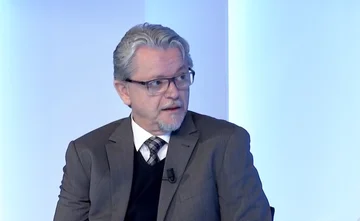
 2 hours ago
 4 hours ago