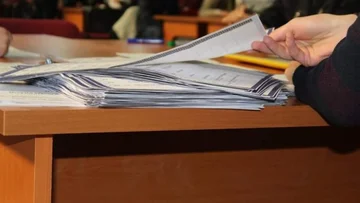
The diaspora vote count is continuing, VV achieves the 53rd term, PDK remains at 22, LDK falls to 18
 4 minutes ago
 (8 years ago)
The demarcation or demarcation of the border line between Kosovo and Serbia will be a necessary process for both countries. In addition to the need for normalisation of reports, demarcation is expected to be a condition of the EU as well as integration processes for Kosovo and Serbia. The European Union has made it clear to all Balkan countries [...]
The European Union has made clear to all Western Balkan countries the new strategy of enlargement that they cannot bear their problems and conflicts within the EU, and that they must resolve before claiming membership in the coming years.
The head of the State Commission for Kosovo's Mark and Control of the Border, Speed Bulqi, told Radio Free Europe that Kosovo has enough potential to approach the issue of demarcation of the border with the state of Serbia.
“There needs to be institutional support and a real inter-institute co-operation because the team, which will be part of these talks, certainly needs various data and graphic materials that will help with the successful crowning of this work”, Bulqi said.
According to experts, Kosovo until December 1988 has had administrative boundaries, borders that have also recognised President Ahtisaari's plan, under which independence was declared for Kosovo, which respected the limits of the 1974 Constitution (when Kosovo was an autonomous province under the former Yugoslavia).
Speed Bulqi, stresses that the issue of border demarcation, should be resolved after discussions, which should be brought by relevant Kosovo and Serbia commissions.
He says there are sufficient data to work around extending border lines between the two countries.
Kosovo must maintain the former administrative border and I believe this process would have been completed in the best form if this administrative border, which has existed, is achieved. It is a big fate that even some changes that have taken place on the administrative line between Kosovo and Serbia in certain periods of time, all are covered with clear political decisions of the periods and the appointed time, and therefore I don't think there was supposed to be any conflict and no problem in understanding the definition of the” border line, Bulqi said.
Former Deputy Minister of Local Power Management Bajram Gecaj, from the Democratic League of Kosovo, told Radio Free Europe that on the basis of cadastral issues with which it has been working on marking the border lines with other states, Kosovo must act equally for marking the border with Serbia.
“We have all the cadastral data as if we had it with Macedonia, with Montenegro, and with Serbia. So, we have to focus on the cadastral element. If we do, I believe there will be no problem at all”, Gecaj said.
Determining the borders is an important issue of state sovereignty, says Gecaj, who, according to him, should a final agreement be reached between Kosovo and Serbia, even the borderline issue should be regulated with that agreement.
I believe the problem with Serbia is more political. So, the fact that Serbia does not recognise the reality created in Kosovo is what the technical problem is. I think there will be no problem of technicality, if they agree that in these final discussions they will recognise the reality of the state of Kosovo”, Gecaj said.
Following the ratification of the Agreement on the border with Montenegro, this process, which had lasted three years, now Kosovo remains to round even the mark of the border line with Serbia.
41 minutes agoan hour ago
 2 hours ago
 4 hours ago