8 minutes ago
Clark strikes Kosovo politicians: If you want a home in Monaco, do business

Periskopi(8 years ago)
(8 years ago)Former Supreme Commander NATO, General Wesley Clark, who led the NATO bombing campaign against Serbian forces in 1999, said today in Pristina that NATO must stay in Kosovo for a long time. In an interview for Voice of America, he said this is not the right time for [...]
Former Supreme Commander NATO, General Wesley Clark, who led the NATO bombing campaign against Serbian forces in 1999, said today in Pristina that NATO must stay in Kosovo for a long time. In an interview for Voice of America, he said this is not the right time for the formation of the Kosovo Army and that such a step should be taken only after the full normalisation of relations with Serbia.
Voice of America: Mr. Clark, Kosovo still does not have its own army because of the Belgrade-inflicted Kosovo Serbs' disagreement, who do not want to vote on constitutional changes. From your point of view, what course should Kosovo pursue to become an army?
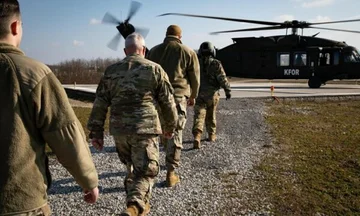
Wesley Clark: A time will come when Kosovo will need its army, but this time should come only after everything normalises with Serbia. And NATO should stay here with KFOR until that period, and this gives Kosovo time for full economic development, spending money on economic resources and infrastructure, energy, roads and other developments that will make Kosovo an even more attractive country for foreign investment.
Voice of America: What are the main threats for Kosovo and does Serbia pose a threat to it?
Wesley Clark: I think that threats to Kosovo are partially external and partially internal. I think people here have to fight to establish democracy, voting is just part of democracy. Deeper part of democracy is the ethics of the public service, the idea that when you get a job is with the only mission to increase common good, almost like being on a religious order where you get enough money to live but you'll never be rich, and you do this for a certain time and then go back to the private sector and then you can try yourself in business and get rich. It's a legacy of communism for people in power to have economic privileges, that was the old nomenclature system, and it was ironic because Communism said that the government belongs to everyone, but in Communism people in power held government and economy and all privileges. And democracy is to take care of everyone. In administration, as a humble servant in a democracy, you must have the will to live modestly. If you want a house in Monaco, a quick ship, a second house on the mountain, a month-long ski break, don't go into government, but start a business, make your money, do it the right way. I think this is the most important thing to achieve today in Kosovo, pride in the public sector, pride in sacrificing being in public service.
Voice of America: One of the concerns for the region is Russian intervention, since Moscow no longer sees the region's integration process. From your point of view, is the sunset prepared to counter this intervention?
Wesley Clark: I think the West is learning he has to face this. Our European allies have recently organised conferences on this issue, their intelligence agencies have spoken, and they recognize this reality of this <x0] hybrid war”, that there will be false news, incorrect information, cyber attacks and corruption attempts with Russian money, and all of this could include military action. Therefore, the United States and our European allies must address this issue on multiple fronts. Of course we have to keep a strong army, but that's not enough, we have to address the issue of false news, fight corruption, and that means having strong public service ethics.
Voice of America: One of the ways Moscow's involvement in the Balkans is the issue of relations between Kosovo and Serbia. The two countries are in a process of talks on normalising relations. How do you view this process?
Wesley Clark: I think what we need is a full-time mediator, someone who has the only mission in life to approach these two countries and normalize their reports. This can and must be done.
Voice of America: Who could this mediator be?
Wesley Clark: I think it could be an American, or even a European, wherever support is greater. But ultimately since both Kosovo and Serbia want to be part of the European Union, it should be a European, or ideal would be an American and European group.
Voice of America: How much danger is there of renewed conflicts in the Balkan region, including Kosovo and Serbia?
Wesley Clark: I don't think it's possible that something like that will happen in the near future, although sometimes it's sounded like a threat. I think what we need to do in politics is have security and then look to the future with hope, and we need to avoid using fear as political incentives. It is a difficult way through which political and administrative leaders must pass, but they must offer hope for the future as a motivating force rather than fear of what can happen.