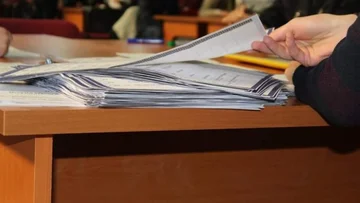
The diaspora vote count is continuing, VV achieves the 53rd term, PDK remains at 22, LDK falls to 18
 4 hours ago
 (8 years ago)
Presenting the European Commission's new strategy for the Balkans has been leading the German press's attention to the region. The German newspaper “Frankfurter Allgemeine Zeitung” under the title “Western Balkans receive billions from the EU”, underscores that the new strategy for the Balkans provides a clear time plan and will cost the union very much. “Commission [...]
Presenting the European Commission's new strategy for the Balkans has been leading the German press's attention to the region.
The German newspaper “Frankfurter Allgemeine Zeitung” under the title “Western Balkans receive billions from the EU”, underscores that the new strategy for the Balkans provides a clear time plan and will cost the union very much. The “Commission proposes increasing membership and gasp assistance with the EU by 2020. It remains unclear what the sum is all about. So far were planned for the Western Ballani from the 2018-2020.7 billion euros. The strategic document refers to 1.07 billion being planned only for 2018, so that now only the amounts of the 600m euros remaining for 2019 and 2020 remain. ”
The FAZ looks critically at the money the EU spills into the Balkans. That's how much money flows into the Western Balkans to strengthen administration, rule of law, stable economy and democracy and governance. But there are these very areas, where the Commission sees the biggest deficits, despite billions of years of aid. ”
While the German newspaper “TagesZeitung” pays attention to Serbia's clearest EU integration perspective. TAZ stresses that Brussels and Berlin think Serbia is a factor of stability in the Balkans, but the opposite is true. ” Serbia and Montenegro will be eligible in 2025. But why are the very countries where the word is held by the EU and international institutions in line? In Kosovo and Bosnia there is an international administration, international police, legal state missions, international troops. As these states are last in line and Kosovars still have to obtain a visa for the EU, it is an unprecedented failure. ”
Taz highlights that the fight against corruption has not won anyone, and that educated young people leave the Balkans to build a new life in Germany, Austria, Scandinavian countries and ask the question that “why does Chancellor Merkel honour Serbia's strong man, Aleksandar Vuciq, who has turned Serbia into a <x1-democrated <x1x2>, who refuses to face the bloody crimes of the 90s? “But from Milosevic's time in 1991 it had to be known, meanwhile, that the opposite is true. Serbia has not given up on the re-profit of Kosovo, and the division of Bosnia and Herzegovina along the 1995 front line...”
While the Swiss newspaper, under the title “New sheriffs for Kosovo's wild north” underlines that in the country's Serbian-speaking part, Belgrade has put politicians under control and uses this suspicious partner. “President Vuciq is committed to the normalisation process and hand over this region to the Kosovo system. But that does not mean the end of Serbian influence - in contrast. Through the Belgrade-controlled Unity Party, he controls all regions with Serbs. Instead of remaining dependent on the Serbian state, the subsidy will take place on the basis of Kosovo law through the association of Serb municipalities, which Belgrade finances. ”
 6 hours ago
 8 hours ago