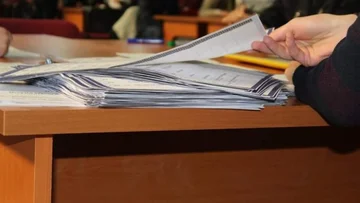
The diaspora vote count is continuing, VV achieves the 53rd term, PDK remains at 22, LDK falls to 18
 4 hours ago
 (7 years ago)
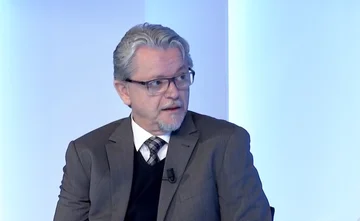
Former British Government Minister during the war in Kosovo Paddy Ashdown has died at the age of 77. Ashdown, who led the Liberal Democratic Party in Britain from 1988 to 1999, died Saturday evening, a party spokesman indicated. Vince Cable, the party's current leader, said that “is a very day [...]
Ashdown, who led the Liberal Democratic Party in Britain from 1988 to 1999, died Saturday evening, a party spokesman indicated.
Vince Cable, the party's current leader, said that “is a very sad day” for the party and for all policy “having love and respect for Paddy”.
“was known for his policies, but his talents were much broader. He was a complete author and had spent many years serving the country before entering politics. Few people know how hard it worked to get into politics after his military and diplomatic service”, said Cable, broadcast Koha.net.
Ashdown had served as an emissary of the British government during the war in Kosovo in 1998 and 1999, while he was one of the biggest supporters of NATO military intervention in Kosovo.
He was among the first representatives of the international community to have warned Slobodan Milosevic of the crimes he was committing in Kosovo. His testimony at The Hague Tribunal to Milosevic helped the prosecution demonstrate that Milosevic was aware of the crimes being committed under his command against Kosovo Albanians, which was one of the legal elements needed to make him responsible for the actions of his subordinates.
Paddy Ashdown, until he was invited to testify against Milosevic at The Hague, had remembered the meeting he had had with him on 29 September 1998 in Belgrade about the crimes he had seen being committed in Kosovo.
Mr. Vice President, you've been very generous with your time, and if I may say so, you also allowed me to come to your country. I have to say some serious words about what I've seen [in Kosovo], but I love the Serbian people and I don't believe you can punish a nation. I have to tell you that the international community will act if you don't stop. You, in my view, are implementing a policy that is completely contradictory and allowing the good name of the Serbian people to be destroyed. I beg you to stop these actions that polluted your country's representation”, had reminded Ashdown Milosevic of what he had said in 1998.
Meanwhile, Britain's powerful newspaper, “The Guardian”, in its article on Ashdown's testimony to The Hague on March 16, 2002, had seized an emotional moment where the British had barely stopped weeping when he spoke about the war in Kosovo.
At one point, Lord Ashdovn struggled with tears as he described images he had seen of a Kosovo Albanian convoy of refugees who, as he said, were fleeing from the Yugoslav armed forces after they were mercilessly attacked with mortars and were burned down by the basic “The Guardian”.
While the court had seen a video showing Lord Ashdown listening to the refugee stories, the former Liberal-Democratic Freedom made an emotional comment as he struggled with tears.
“I had a very difficult time agreeing to that at the time”, he said. “They were very scared and I found it a deeply terrible view. [They were] in tractor trailers taking refuge from the rain under plastic shields. They were old men, women, children, and babies. They were scared to the point of”, Ashdown said in his testimony against Milosevic.
You said you would end up in this court [if you don't stop ethnic cleansing] and here you are”, Ashdown told Milosevic.
Months earlier, Ashdown had issued a statement on the issue of changing Kosovo's borders as possible agreement with Serbia. He had said that changing the Kosovo-Serbia border would follow similar demands from other former Yugoslav states.
 6 hours ago
 7 hours ago