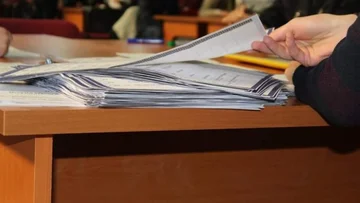
The diaspora vote count is continuing, VV achieves the 53rd term, PDK remains at 22, LDK falls to 18
 4 hours ago
 (8 years ago)
The Republic of Kosovo must renegotiate the Free Trade Agreement with Western Balkan countries, known as CEFTA, since its signing, Kosovo has not been treated equally with member states of this agreement, former Government officials say Kosovo and experts on economic issues. According to them, this agreement has been signed [...]
According to them, this agreement has been signed in poor time and, in most cases, this agreement has damaged Kosovo's economy.
The results of the deal at the time have only been political, not economic. As for Kosovo's trade exchange with the CEFTA bloc, Kosovo has a poor report between export and import.
The Kosovo Statistics Agency's data shows that last year the import of goods from CEFTA member states has been more than 856m euros, while the export of Kosovo goods to member states of the deal has been 183m euros this year.
In this mechanism, other than Kosovo members are: Albania, Macedonia, Serbia, Montenegro, Bosnia and Herzegovina and Moldova.
Former Trade and Industry Minister Bajram Hasani told Radio Free Europe that the current situation is very favourable for Kosovo to withdraw from this mechanism and then renegotiate. The reason for this, according to the former minister, is that Kosovo in this mechanism is still represented as UNMIK, not the Republic of Kosovo.
I've demanded that this deal be renegotiated. But now after the situation created, after establishing the 100 per cent customs fee for products of origin from Serbia and Bosnia and Herzegovina, it is time for Kosovo to withdraw fully from CEFTA and with a renegotiation possibility that this agreement be signed as the Republic of Kosovo. Other CEFTA member states have committed many violations. Kosovo has been ignored, the agreement has never been implemented by states that have not recognised Kosovo's independence”, Hasani said.
Even Ismet Mulaj, an expert on economic issues, says that for political and economic reasons, Kosovo should renegotiate this agreement.
The first “is economic, because by the time the CEFTA agreement was negotiated, Kosovo has not defended any of its products, because it was 2007 and Kosovo productivity has been in initial steps. The second is political and legal reasons. Kosovo is the only CEFTA member that participates with (economic) U n NMIC at CEFTA's table. Well, officially U n NMIK is a member of CEFTA, while Kosovo is part of its” delegation, Mulaj says.
In this mechanism, the Republic of Kosovo was joined in 2007. Because in that period Kosovo was not eligible for status, the agreement was signed by then chief UNMIK, Joachim Ruecker.
Economically, Bajram Hasani, says the state of Kosovo has benefited more than least from the member states of this mechanization.
“Kosovo does not benefit from this agreement, Kosovo is constantly damaged by this” agreement, Hasani told Radio Free Europe.
Meanwhile, Ismet Mulaj emphasises that this agreement, many times, has made Kosovo producers' business activity difficult.
Taking into account the plight of this sector, products “Made in Kosova” have barely penetrated the regional market, while foreign products have almost covered the country market.
“CEFTA has damaged Kosovo producers. Because regional products come at cheaper prices on the market, as other countries' policies are to subsidize their product export. While Kosovo does not have any policy of subsidy, lawyer or promotion of our exports to the” international arena, Mulaj told Radio Free Europe.
Kosovo institutions pay around 20 thousand euros a year for participation in the CEFTA agreement.
The Kosovo government has repeatedly accused Serbia and Bosnia and Herzegovina of failing to implement the CEFTA agreement or, with difficulty, Kosovo products have entered their markets.
On November 21st, Kosovo has imposed 100 per cent customs duties on products most originating from Serbia and Bosnia and Herzegovina.
The European Union has called on it to immediately lift these tariffs, but Prime Minister Ramush Haradinaj has said that this will happen only when Serbia recognises Kosovo.
 6 hours ago
 7 hours ago