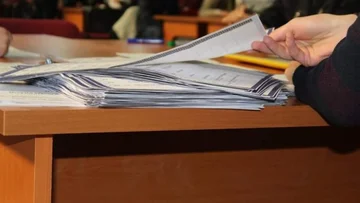
The diaspora vote count is continuing, VV achieves the 53rd term, PDK remains at 22, LDK falls to 18
 3 hours ago
 (7 years ago)
The US State Department has banned Serbian nationals from entering the US as a result of his involvement in several cases of major human rights violations. This order is based on the credital information the State Secretary has on foreign officials who are involved in corrupt relationships or [...]
The US State Department has banned Serbian nationals from entering the US as a result of his involvement in several cases of major human rights violations.
This order is based on the credital information the State Secretary has on foreign officials who are involved in close-to-do corrupts or major human rights violations, and in this case, they and their family members are denied US entry.
“Radsosavlevq was included according to reliable information in the 1999 murder of the Bytyci brothers, three Albanian-American brothers killed in Serbia after the war in Kosovo”, reportedly in the UN report, Koha.net reports.
The law also requires that the State Secretary publicly or even privately announce these decisions. Besides Radosavlevki, The UN has also banned entry for its wife, Svetlana Radosavlevlevic, and his daughter, Anna Radosavlevki.
At the start of the Kosovo war, Radosavqi was Assistant Chief of Special Operations Staff and MUP member in Pristina. Then he became commander of elite units “anti-terrorism” known as Operational Tracking Group (GNO) within the Public Security Department at MUP. At the end of Kosovo's war, Radosavqi was commander of the Police Training Centre in Petrovo Selo, Serbia, and received the rank of subcolonel within the MUP.
Radosavlevqi has acknowledged that he was responsible for the police-military operation in Recak on January 15th 1999, which was later tried as a war crime and a crime against humanity by The Hague Tribunal.
In addition, the GNO units he has been overseeing allegedly killed by dozens of Albanian civilians in the Sicil massacre and are involved in the massacre of 176 prisoners in Dubrava. Several witnesses have confirmed Radosavlevki's direct involvement in these massacres.
The murder of Ilir, Mehmet and Agron Bytyci in 1999 has been a key point for US-Serbia relations as Belgrade seeks to integrate faster with Western countries.
The Bytyci brothers have been American citizens, and Washington has repeatedly sought justice for them.
Their lifeless bodies were found in June 2001 at a mass cemetery in Petrovo Selo in Serbia.
In 2012, a Serbian war crimes court has released two former police officials for their involvement in these murders, with the reasoning of insufficient evidence.
 5 hours ago
 6 hours ago