an hour ago
Mustafa: Haradinaj government faults why Thaci leads dialogue with Serbia

Periskopi(8 years ago)
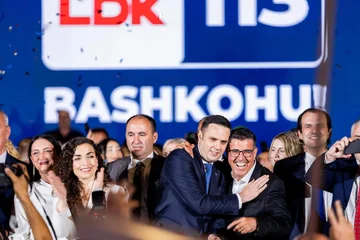
(8 years ago)LDK leader Isa Mustafa has said the government led by Ramush Haradinaj is guilty of allowing Kosovo's president to lead the dialogue process, giving him the chance not to stop his search for border corrections. Mustafa has said the government has withdrawn from the obligation of dialogue, i [...]
Mustafa has said the government has withdrawn from the obligation of dialogue, which under the constitution and the Assembly belongs to it.
According to the LDK chairman, the Haradinaj government is minority, there is no vote, no political power, writes Periscopi.
Mustafa's full reaction:
Reading different opinions wins the impression that there is a race for who is telling the president more and more strongly that he is at fault with the stubborn spread of his highly confused but dangerous theories on restructuring the border with Serbia as a solution to the final agreement. That he's wrong and wrong? He does! But the question is who gave him the chance to get worse.
Government, and no one else!
The government withdrew from the commitment of dialogue (negotiation) that with the Constitution and decision of the Parliament belongs to it. At the beginning of this year, he proposed to the Parliament a platform for Kosovo-Serbia dialogue, without any content, except that (according to the Government), the dialogue should lead Kosovo's president. Were it not for this behavior and government action, we would have no problem with either the president or his theories of great and mild correction of the borders or with the offer to exchange the territory as a final consequence of correction.
In fact, the government was aware that it is minority, that there is neither political vote nor power for such an agreement. This was made clear to the opposition, especially to the LDK and VV. This government has had to resign, not maneuver with dialogue as a survival instrument.
The final agreement with Serbia must take place based on the Constitution of the Republic of Kosovo, given its effects for Kosovo citizenship, but also for the region. The agreement can only be made with a broad compliance of political forces in Kosovo, with political and constitutional legitimacy, following national elections.