5 hours ago
25 accidents between cars and trains in 2018, institutions bear each other's blame

Periskopi(8 years ago)
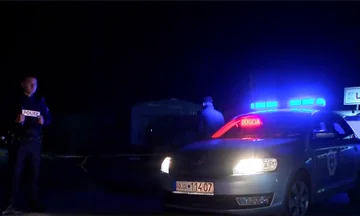
(8 years ago)On September 3rd of this year, three people, including a 5-year-old, have lost their lives in the village of Dush, Kline, where their deaths were due to car accident and train. 25 accidents have occurred in Kosovo since January until now. [...]
In Kosovo from January until now there have been 25 accidents between cars and trains, and among them is the 3 September crash, where 3 people remain dead.
Kosovo police have shown the reasons they have led to accidents between cars and trains.
For the January-August 2018 period, train accidents have been 25, with one being a fatal accident with 3 people dead. The most frequent causers of the total number of accidents for this period of time have been, uncertain vehicle manipulation or carelessness, failure to keep distance, not adapting speed to road conditions, and the uncertain key to the road” have stated by Kosovo Police, the KP reports.
Even in the village of Dush, Kline, to the police accident, it was due to a lack of respect for signs of communication. However, on that railway crossing, apart from the simple signal, there is no shell that closes the road when the train is passing.
Signals at railway crossings across Kosovo are missing. There are only simple signs of communication in which the train passes, and elsewhere there is no such thing.
It's the citizens who say they feel endangered every time they cross the railway crossings. Thus, on the “Berati” road located in Fushe Kosovo has a railway crossing, and this country is not secured by washing, but only with simple signals.
Citizen Fehmi Jashar, who made it known that every day he walks through that section of the road, indicated that he is in danger because of the lack of a washing machine that stops circulation when the train is on its way.
The rrezic is, four times a day, train circulates, vehicles that connect the road to Obilic, Mitrovica. As you can see, they don't have time to deal with larger schools from the head of state to the prime minister, not to tell about the municipality that this is not the case. Unfortunately, people suffer this is reality”, he said.
So does other citizen Moose Baftiu. He says the danger is always every time you go through that section.
The danger here is always open, the danger here is permanent for all passersby who cross this street, this part of the residents who live this side are always in danger. Because there's no rap or protective here and there's times where people have suffered life. This is a kind of irresponsability of railway and institutions which are competent to make the security of this” crossing, he has indicated.
The same situation is the railway crossing on the “Path of Islam” in Fushe Kosovo, even there is no simple sign that the train passes.
In the town of Drenas, however, at the railway crossing is the washing site, but even there, citizens say they feel endangered.
Hajrush Gashi from the village of Lapushnik has said that there are always accidents there even though there are enough signals.
We're at risk for not working on these, the one who follows the signs, I guess he's not endangered. There's been accidents here, and there's no sign there. This is where the heat is and it's now signaled for what you understand”, it's expressed.
Until the railway infrastructure in Kosovo continues to face the most basic shortages, such as signalling railway crossings, institutions blame one another.
Infraco's chief executive chief, Agron Thaci, for Kosovo, has said the company he runs is not responsible for road crossings in railways, but are municipal municipalities, the Ministry of Infrastructure or investors who have invested in that route.
By law, we are not responsible, responsible are municipalities where municipal roads are, while the Ministry of Transport if the road belongs to it. We're doing, we've made plans with the Transport Ministry that on the Drenas-Pej line we put somewhere close to 9 to 10 crossings, but they take time and they're very expensive. We don't pretend that we can immediately secure them with barriers because they haven't been safe since the railway's founding and they're the same checkpoints. But what it looks like now we have huge numbers of vehicles and unfortunately we have no sign respect. We even at a crossroads in the streets if we don't respect them, we may have an accident. Therefore, our appeal as the railway to Kosovo is that all drivers, all those citizens who cross the railway carefully, respect the signs and do not walk on the field railway”, it has been expressed.
Thaci, however, says they will do their best to ensure that these crossings are secured, while the solutions are, not washing, but overpasses and underpasses.
We, like railways, with the ministry, will do our best to eliminate all those black spots. The solution is not to the barriers, to the laundry, because they are breaking down, they may be defective, it is not the solution, because there is also risk. The solution is overpasses or underpasses, so with all municipalities we're talking where there's a possibility to be underpass, and where there's definitely a chance of even crossing the bridge, let's avoid cross-borders to the level because they're dangerous, either without washing or washing. They're marked, with communications rules, but sometimes they're stolen from”, Thaci said.
On the other hand, Fatos Mani, adviser to the minister of Infrastructure, says the responsibility for placing signalistics through railway crossings is the shared responsibility they have with Infracos.
The whole problem under him will be resolved in the early term, but which says the solution is not easy and is not free. He also says that this condition of railway crossings is inherited.
This actually enters within the common responsibilities our ministry has with Infracos. Infracos is known to be directly reported to the Ministry of Economic Development, but since we have joint activity that crosses our roads with railways, for example, we have a responsibility”, he said.
Mani says Infrakos has remained to develop the process of what security growth should look like through railway crossings, and the Ministry of Infrastructure will finance it.
According to data provided by Infrako in 2017, there have been a total of 17 car accidents where three people remain, while 14 accidents have occurred in 2016 where one person has been killed.