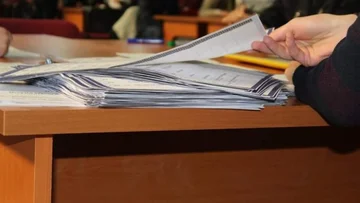
The diaspora vote count is continuing, VV achieves the 53rd term, PDK remains at 22, LDK falls to 18
 7 hours ago
 (8 years ago)
50-year-old Zoran Lacketa from Mostar tells his life story about how overnight he was found on the battlefield. The father and two boys from Mostar have spent the period of aggression in Bosnia and Herzegovina (BiH), wartime, on three warring sides: one in the army of Republika Srpska (VRS), the other in the BiH army [...]
50-year-old Zoran Lacketa from Mostar tells his life story about how overnight he was found on the battlefield. The father and two boys from Mostar have spent the period of aggression in Bosnia and Herzegovina (BiH), wartime, on three warring sides: one in the Republika Srpska army (VRS), the other in the BiH Army, and the third at the Croatian Defence Council (HVO).
These are not part of a well-advised Hollywood movie scenario, but it is the life story of 50-year-old Zoran Lacketa from Mostar, writes Anadolu Agency (AAA.
Zoran was 25 when the war broke out, which practically blocked his youth in his native Mostar. The man who had so many dreams of youth, was found in the battlefield overnight.
He spent the war in Mostar as a member of the Croatian Defence Council (HVO). His brother Gorani fought in the ranks of the Bosnia and Herzegovina Army, while for the paradox to be even bigger, their father Ratko has been part of the Republika Srpska Army (VRS), which also operated on the outskirts of Mostar. Brother Goran had lost his life in August 1993, from a shell fired by HVO members, including his brother Zoran.
It is impossible to hear Zoran's story and not ask if father and two boys could have fought each other in a relatively small town. This story, except it's a family tragedy in itself, is also a clearer example than war, and everything that involved itself, is nothing but a great evil and absurdity.
Sabadud, Zoran or Ranko
My last name is Lacketa. All these names have the same meaning, since all three are born in the morning or Sabah”, Zoran began the conversation.

For the war in the early 1990s, which is known as rural rebellion, Lacketa says it is nothing but a ridiculous war. For that reason, as he points out, he never wanted to tell the tragic confession of life to avoid grieving anyone. However, he says that it is important to convey this account to the whole world so that it never happens to anyone.
Yes, my confession must know the whole world. My brother was in the Army of BiH, I was in HVO, my father was mobilized at the VRS. What, shall he speak of the land, love, and insolence? Were they our ideals? Not”, says Lacketa.
He recalls his pre-war life in Mostar and says he has not passed any Bajram, Christmas or Easter without going to his neighbour or neighbor without visiting him.
I hosted the school as an aviomachanic, hoping that one day I would work in Sokol (Yugoslav aircraft factory in Mostar). From 1992 until now, I am under the Bureau and an unequal citizen of my only Bosnia and Herzegovina. At the time, at the age of 25, I become a soldier, I must hate someone, I have to shoot someone, we're killed in a brotherly war. And here's the fact that I was on one side, my brother on the other, and my father on the third side. All of this happened to my family, my friends, my neighbors, my brothers and sisters. I had only one brother, one father, one mother. They're all unfortunately dead, and I'm alive a little bit.”
Today, a quarter of a century later, he too wonders how it is possible for members of an ordinary working family whose children had happy childhoods, free education, to become part of the conflict.
We're Orthodox in religion, even though I didn't know that until it all started. So, since we're Orthodox, we had to be on the Serbian side. And how could I be on the Serbian side, while there I was looking at Kokkarda (Centian symbol). I'd go to their side if it was a star because I believed in ideals. I believed in brotherhood, that all people are the same, that we all work and live together. Unfortunately, the opposite happened”, recounts the joke.
He tells of May 9th, the crucial moment his story began.
The key element when it all started is the hardest to show. It was a ridiculous fight for me. Can you imagine one morning waking up and not getting back on the streets, because that's a new line on the front, where you can't pass and say your brother and mother are there. There's just a blockade. In 1992, since we met my current wife, who I live with 25 years and have two daughters, from Zallik, located on the so - called left coast of Mostar, I went to the right side of Balinovac, to meet my wife, who was then 23. May 9, 1993, was the time when the war started in Mostar, and I can't go to the other side, into my apartment, and then everything went wrong. It's a hard time to explain. Just wake up and there's a barrier, visible and invisible, that you can't get over to the normal life in the heart of Europe in the 1990s. This is absurd and ridiculous”, values Laketa.
Hide with my brother's best friend
Because he and his brother Goran have not wanted the first clashes in Mostar to be mobilized by force into the army, which was not their Yugoslavia's People's Army (“JNA”), Laketa says they had decided to stay in the mixed part of Mostar. He had gone to his wife in Balinovac, and his brother had stayed with his best friend, Addis Kadric, whom they called Ado, in eastern Mostar.

It all started on May 9th, and we, on May 8, the day before, were in a wedding. A friend of ours was getting married, and I came downtown after my brother and Adds. The brother said that he would not go because he had no money to donate to the newlyweds. He always wanted to respect this, so I went with Adds. My brother didn't show up and this was our last date. So on May 8, afternoon, I saw her for the last time. Addis and I spent the night at the wedding, but after our return we noticed many military vehicles, weapons, an entire arsenal of”, recalls Lacketa.
They had realized that something big was happening, and after Zoran's apartment was closer, they had taken refuge in it to find out what was going on. Then, at an appointed time, people were gathered together. Laketa says that on May 9th, the ethnic cleansing of Mostar began. The neighbor gave the neighbor, the neighbor was following the neighbor as he started gathering people at the pajamas.
“Addis was with me in the apartment, but he couldn't survive and confirm this story. He was with me for about ten days. We shared what we had, cans, some humanitarian aid. Addis was so afraid of me and my family because his wife was pregnant then. He decided to risk his life so that someone wouldn't come and ask who I was hiding. He was an ideal for me because he risked his life to save me and my unborn child. He went off the line and managed to get back to my brother. Fate wanted them both to die in the ten-day difference of”, Laketa said.
The two brothers at the front separated a road
In the question of how he saw him standing in front of the HVO, the fact that on the opposite side is his brother, that in a evental situation he could come into a direct contact and shoot each other, Lake answers that this has caused great trauma.
Imagine, everybody talked about me behind my back, nobody says in the eye. See this Serb has come to us, and his brother's there at the Balely. It was a severe trauma”, Lacketa points out.
He adds further that during his stay in the battle arena, there was constant fear, in terms that there is a brother on the other side of the road and that one day they can face him directly.
What if we had to deal with them, me against them, him against me, we would both be killed. It's my brother, blood doesn't water. We are currently on the path of St. It wasn't those video games, it was tough life. One way apart. Imagine a brother rushing his brother, as he could. Funny. It's hard to tell people and to wear the emotion experienced”, says Laketa.
Brother Goran has suffered from an HVO grenade
Brother Goran was 24, the day he lost his life on August 6, 1993, while he suffered from a grenade thrown from HVO's position on Mount Hum, over Mostar. According to Zoran's words, on that day Goran was beginning to forgive the Garden of his slain warrior Amir Shator.
They were in Carina country, where they had to leave for the Garden. One of my fighters in Hum saw this. I can't blame the man who fired that grenade because he was ordered. I can't hate you. I was on that side. The 120mmm miner grenade massacred them”, says Lacketa.

He learned about his brother's death after seven days through Radio Mostar.
I didn't believe what I was hearing. Friends came to express their condolences, and only then do you become aware. On the other hand, you can't go to brother's funeral, you can't see the teary mother who lost her son, but you keep this in your soul. I didn't know what Mom was like, and that was a real trauma. That night I didn't cry, I made a few silent screams until five in the morning. I found it very hard not to go to my brother's funeral”, says Lacketa.
Zoran says that today, 25 years after the war, new generations come and are taught differently. Today, says Mostar, there are young people who have never seen the old bridge or Partizan cemetery, the city's historic monuments.
He also sent us to the tomb of the martyrs in the old part of town where his brother Goran was buried.
Next to Goran, Adisi is buried, as well as a number of their fighters. By removing the grass from the tomb, Zoran commemorates his brother. Emotions overwhelm him, he started to cry, and when he talks about his brother, you can notice a lot of pain in his words. It seems, however, that the greatest pain is in his silence, in the speechless, when he looks silently at the stone of the tomb, in which his name is inscribed Goran Laketa.
At the end of his confession, Lacketta sends the message: “God forbid that this will ever be repeated”
 9 hours ago
 11 hours ago