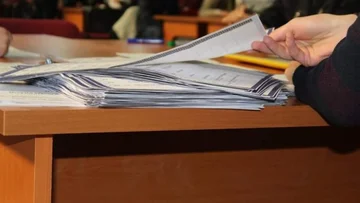
The diaspora vote count is continuing, VV achieves the 53rd term, PDK remains at 22, LDK falls to 18
 4 hours ago
 (8 years ago)
“Russia is not a neutral side on the dialogue issue. She is, I would say, a negative player in reports between Serbia and Kosovo”, says Janusz Bugajski, expert for the Balkans from the Centre for Analysis of European Policy (CEPA), headquartered in Washington. Radio Free Europe: Following the assassination of Kosovo Serb politician Oliver Ivanovic, we [...]
Radio Free Europe: Following the assassination of Kosovo Serb politician Oliver Ivanovic, we have heard some political statements about this tragic incident. On the other hand, official investigations are under way. Do you think those political statements are helpful or not?
Janusz Bugajski: I don't think anything said right now is very useful. I think there must be full investigation, which are currently under way. I think, too, that Pristina needs international co-operation. Before the government is convicted in Kosovo, I think Belgrade should be much more willing to say: we have the will to co-operate.
In fact, it is ironic, but killing itself may be a case for Belgrade and Pristina, to work together against terrorism, against the rowing, against attempted murder, and others, which we have seen in the Balkans before. So I always think that the tragic murder, too, is an opportunity for both sides.
Radio Free Europe: Following Oliver Ivanov's murder, tensions between Kosovo leaders and Serbia are increasing. We have also seen influence in the technical round of dialogue, which was canceled in Brussels. But the presidents of both countries say they are committed to continuing the dialogue on normalisation in the future. How do you see this dialogue for normalisation as a whole?
Janusz Bugajski: The dialogue, which has been delayed for a year, has to restart. There are a number of very important issues to deal with. I would say, not only on small issues, but also on large issues, which we call normalisation in the creation of bilateral reports that allow Kosovo to become a member of the United Nations.
The other fact is that the United States can actually be more useful, more supportive, in moving dialogue forward. So far, the European Union has dealt with small issues. I think it's the United States that would deal with larger issues. I would also say that in connection with the murder, alleged extremists have chosen the critical moment.
In other words, who would like to sabotage conversations between the two capitals? Are they nationalist politicians, are criminal elements within Serbia, within northern Kosovo, or is it some foreign power?
Remember, Russia had tried to sabotage Montenegro's elections. There is no reason, I would say, to doubt that Russia would be happy to sabotage reports between Serbia and Kosovo.
Radio Free Europe: I wish I could go back to the dialogue. You mentioned that it would probably be useful for the United States to get involved in this dialogue. But, Serbs say, in that case, they would ask Russia to be included. What do you think?
Janusz Bugajski: Serbs may demand that Russia be involved, but that does not mean it will necessarily be included. Russia has no presence on the ground in Kosovo. Russia does not support Kosovo's membership in international organisations. Russia is not, say, reliable mediator in this process.
So I don't think Russia would get involved in the talks and I think if the United States takes the leadership together with the European Union, even two other countries, such as China or Turkey, could behave.
Why would Russia have to be involved? Russia is not a neutral party in the matter. She is, I mean, a negative player in the reports between the two countries.
Radio Free Europe: Mr Bugajski, Kosovo leaders and members of the assembly have been criticised by representatives of Western countries for the initiative to withdraw legislation for the Special War Crimes Court. But the situation is still unclear. Some say this is the biggest crisis in reports between Kosovo leaders and Western allies, including the United States. Do you agree with that assessment?
Janusz Bugajski: I wouldn't exaggerate, but I think it's a major problem, which can be developed if the Kosovo government wants to go back in dedication to the Special Court, Special Prosecutor, Special Chambers. That would show that the Kosovo government is hiding something... that it is not willing to co-operate with the international community. This could hinder Kosovo's progress in international institutions. This may also damage reports with the United States. As you know, the United States was the main supporter of Kosovo's independence.
But there are certain human rights issues and rule of law that really need to be addressed. I think this is a good opportunity for Kosovo to say: we have nothing to hide.
There have been liberation movements and, as in any liberation movement, there are always indicators that have committed certain types of crimes. This happened everywhere. That makes Kosovo normal... If you don't participate in this, then it will be, say, isolated and potentially left out.
Radio Free Europe: Kosovo is the only country in the region without visa liberalisation with the European Union. One of the EU's main conditions for Kosovo is ratification of the demarcation agreement with Montenegro. But, again, it seems there is no majority in the Kosovo Assembly for this ratification. How do you see this situation and, according to you, are Kosovars likely to travel without visas to the European Union?
Janusz Bugajski: For visas there is speculation from the EU that the border with Montenegro must be ratified before reprocedure on the visa liberalisation agreement. There are other ways to deal with this, of course, but I think this move has to do with Kosovo reports, not only with the neighbouring country, but also with its relations with NATO.
Remember that Montenegro is now a member of NATO. This country is also on track -- probably faster in the region -- for EU accession.
Therefore, I think that blocking this border agreement does not serve Kosovo's national interest. We're talking about a very small part of the territory and an agreement that had been reached with compliance.
This is the issue of courage in parliament to go according to this agreement with the government, and to move forward and ratify.
 6 hours ago
 8 hours ago