2 days ago
The year our computer beat us in all games

Periskopi(8 years ago)
(8 years ago)Throughout the 20th century, the chess game served as a reference point for artificial intelligence researchers (AI), which as the term appeared in the early 1950s by John McCarty. In 1997, the IBM programme, “Deep Blue”, managed to defeat the world's best chess champion, Garry Kasparov, thus winning [...]
Throughout the 20th century, the chess game served as a reference point for artificial intelligence researchers (AI), which as the term appeared in the early 1950s by John McCarty.
In 1997, the IBM programme, the “Deep Blue”, succeeded in defeating the world's best chess champion, Garry Kasparov, thus winning the first man-made computer victory in a game.
Normally, AI developers continued progress, addressing more complex games to test their sophisticated algorithms. In the past 12 months, AI managed to overcome a high number of borders, beating people at a wide range of games, ranging from the ancient Go game to the paper, dynamic and interactive game, “Texas Hold-Em Poker”.
My ChallengesWgave
In the late 1997 ' s, after a computer finally and eventually defeated the great chess master, a Princeton astrophysicist said that “would probably take 100 years for a computer to beat a man in Go, perhaps even more”.
By taking this challenge seriously, computer scientists focused on the ancient Chinese game of strategy, which is very easy to play, but extremely complex to master fully.
In May 2017, “Alpha Go Master” managed to defeat champion Ke Jie, the best player in the world in Go. But perhaps most surprising was the October show from “Google” of an even more sophisticated product that managed to beat “Alphago Master”. So an angel who beat another AI.
“Alphago Zero”, was a revolutionary algorithm designed to improve entirely by learning from itself. The system simply played against itself constantly and was able to master every game scheduled to play. And in December 2017, an even better version of this system created by the company “DeepMind”, called “AlphaZero”, was able to masterly play every game in just a few hours.
Mastering the blog
While Go is a rich game of complexity, poker ownership was a separate challenge for AI. To win at poker requires skill in the art of deception. To bluff and identify when you are being bluffed are the primary skills that should be mastered to win in this famous card game.
After more than a decade of attempts, in 2017, the Carnegie Mellon University team held a true spectacle in January 2017, where their AI system, “The bookus” spent 20 days playing 120 000 hands “Texas Holdhere” with no limit against four professionals. Bottom “The bookus” had $1.7 million more than any of the four professionals who had lost thousands of dollars in flash.
One of the professionals even said that it looked like I was playing against someone who was cheating, like he was watching my letters. I'm not accusing him of cheating. But I'm just saying how good it was”
Perfection
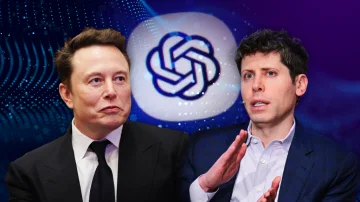
In 2015 Elon Musk and a small group of creators founded a company called “Open Ai” and in August 2017 the team decided to rule the electronics game “Dota 2”, a very popular and complicated game played online and is a serious business in the world of electronic games. After just two weeks of practice, the “Open Ai” system managed to beat some of the best players in version one against one. Now the team is working to make this system play as a team of five players.
But some games are harder for The AI who owns how many others and classics, but extremely difficult, the 1980 “Ms Pac-Man” video game was especially challenging. After many operations the company “Maluba”, purchased by “Google”, created a spring that reached 999 990, that no man or He had ever arrived.
Even a team from the University of “Falmouth” recently created a system algorithm Whoever they claim can dream of their own games so we can play. Called “Angelina”, this system He is improving himself from day to day, even now able to create games using pages of inspiration in newspapers and social media.
DlighthouseW shallW SaysW This?
Perhaps the most significant and most frightening development in 2017 was the progress in improving self - sacrificing systems. These programs can teach themselves how to master fully new skills.
We want to use advanced algorithms like these to help solve all kinds of problems that concern the real world. If similar techniques can be applied to other nature problems such as health, energy consumption reduction, or the search for new revolutionary materials. The results will have the potential to advance human understanding and have a positive impulse in our lives”, notes Demis Hassabis, cofounder and general director of “DeepMind”