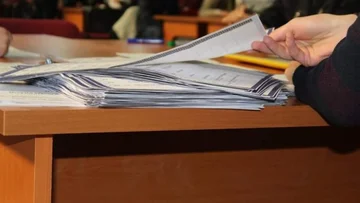
The diaspora vote count is continuing, VV achieves the 53rd term, PDK remains at 22, LDK falls to 18
 3 hours ago
 (9 years ago)
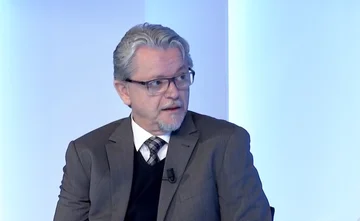
Ambassador James Pardew in the late 1990s was the US special envoy for the Balkans. In 2001, he was the United States' special envoy to the talks that led to the signing of the Ohrid Agreement. Ambassador Pardew has summed up his memories from the region in the book “Peace: The American leadership and the End [...]
Ambassador James Pardew in the late 1990s was the US special envoy for the Balkans. In 2001, he was the United States' special envoy to the talks that led to the signing of the Ohrid Agreement. Ambassador Pardew has summed up his memories from the region in the book “Peace: The American leadership and end of the Genocide in the Balkans”, which will hit the market in January next year.
In an interview for Voice of America, Pardew talks about the challenges facing the region as the Kosovo-Serbia dialogue, implementation of the Ohrid Agreement in Macedonia and Russian influence in the Balkans.
Voice of America: Ambassador Pardew, Kosovo and Serbia in the past five years have been engaged in talks aimed at normalising relations between the two countries. How do you see them?
James Pardew: Talks are always good. But what matters is what is agreed upon and what specifically applies. In their centre is the recognition of Kosovo from Serbia. This would allow the two countries to move towards membership in the European Union and NATO. Serbia must give up provocation to promote ethnic divisions for political purposes and realise that the future of the region is in co-operation and democracy. The future of the region is not strife over sovereignty or other issues. So these talks are essentially about the accession of Bosnia, Kosovo, Serbia, Macedonia to the European Union. Recognition of Kosovo by Serbia is needed to realise this. You can't leave one place outside and accept the other. If the European Union would accept only one of these countries, unresolved issues would be transferred within the EU. All issues between the Balkan countries must be resolved before they are to join the European Union. I have been critical of Serbia, but I think Kosovo has a lot of work to do in meeting the standards of a Western democracy. There is much corruption in Kosovo, I hope the new government will deal with this issue. I am also concerned by the intimidation of the press and problems with rule of law. So all countries have a lot of work to do.
Voice of America: In January, Serbia tried to introduce a Russian-made train with slogans “Kosovo is Serbia” and Orthodox symbols. Some observers have indicated it was a Russia's attempt to destabilise Kosovo through its ally Serbia. Russia has also been blamed for involvement in the failed coup effort last year in Montenegro and for the impact on Macedonia's last government. Are you concerned about Russia's activities in the Balkans?
James Pardew: Absolutely. There is a sharp contrast of Russia in 1995 when Moscow's relations and co-operation with the United States and European countries probably reached the highest level and Russia today after Vladimir Putin's arrival in power. Putin has decided to make the Balkans a strategic centre of the race between the West and Russia. They are very active, not only in the countries of the former Yugoslavia, but throughout the region. But I'm not very surprised by this. Look what the Russians did in the United States. They spread false information, tried to intervene directly in the American presidential election. So it is not surprising that they are doing this in Balkan countries, where there is a lasting impact on the past. But I don't think Putin's Russia is a good model for these countries. Russia is trying to destabilise the region. Putin is promoting ethnic nationalism, he thus achieved power. This strategy has worked for Putin and is implementing it in the region.
Voice of America: In your opinion, can Balkan countries resist Russia's efforts to influence the region through investments and other methods?
James Pardew: I think they might need help. I am sure that European governments and the American government are working with the governments of the region to counter these efforts because it is a big problem. The region does not need another problem, countries that promote extreme ethnic nationalism, as it is already facing many other issues like refugees, economic challenges, corruption and other problems. So it is unfair to add to these new democracies even the Russian intervention. Therefore, I think that the United States and the European Union should help these countries tackle this issue.
Voice of America: Mr. Pardew, let's talk about Macedonia now. Macedonia's Parliament is debating the language use law, one of the main points of the Ohrid Agreement that has not yet been fully implemented. You were the United States' special envoy to the negotiations that led to the signing of the Ohrid Agreement. How do you see the situation today after 16 years?
James Pardew: First, the good news is that most Ohrid Agreement provisions have been implemented. It is not a perfect agreement and some parts of it have not been implemented perfectly. The sensitive issue during negotiations on reaching the agreement has been the use of Albanian. It was the last issue that was resolved, and it was a difficult challenge. But Macedonian and Albanian leaders agreed on using the Albanian language, it is now part of the country's laws. I hope this issue progresses and is properly discussed because extreme right in Macedonia would like a conflict over language. Of course, I think Albanians should not fall into this trap and let the language issue turn into a hostile problem that would allow nationalists to return to power.
Voice of America: Macedonia is facing yet another problem -- the one with Greece over using the name. This problem has blocked membership efforts in the European Union and NATO. What should Macedonia do to address this issue?
James Pardew: I think the current situation with the new government is the best opportunity in recent years to resolve this issue. There are many potential solutions and names that both sides could enjoy if there is political will. I think there is political will in Skopje to resolve this issue. Prime Minister Zaev's government has expressed to Greece the will to talk about it. I think Greece should accept Macedonia's request to resolve this issue. The United States and the UN are willing to help in this direction. Frankly, Greece's deadlock on Macedonia's membership in the European Union and NATO due to its name is unacceptable. Hence, a solution to the name issue is needed. If the parties fail to resolve this, then I would recommend that the United States and the European Union take aggressive diplomatic action to close this issue so that the entire region can move forward. The aggressive negotiations would have to include rewards for reaching a solution and consequences if the parties fail. I think now is the time to settle this case. There was no better time to solve this problem. You shouldn't miss this opportunity.
 5 hours ago
 6 hours ago