8 hours ago
Serbian politician shows when Serbia will accept Kosovo citizenship

Periskopi(9 years ago)
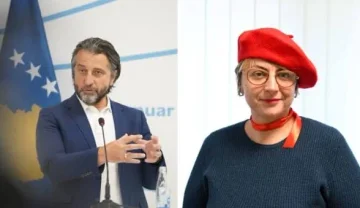
(9 years ago)Serbian Parliament Deputy Speaker Gordana Chomic in an interview for the “Passport” of journalist Arber Hitaj in “T V Scan” talks about Serbia-Albania reports, as well as Kosovo. Regarding integration processes, Mrs. Chemic says Albania and Serbia should build a joint agenda. As for Kosovo, the Serbian Parliament's deputy speaker [...]
Serbian Parliament Deputy Speaker Gordana Chomic in an interview for the “Passport” of journalist Arber Hitaj in “T V Scan” talks about Serbia-Albania reports, as well as Kosovo.
Regarding integration processes, Mrs. Chemic says Albania and Serbia should build a joint agenda.
As far as Kosovo is concerned, the Serbian Parliament's deputy speaker says recognition from Serbia will come, but that according to it will take time.
As for Russia's role in the region, Mrs. Chemic says great powers are playing in the region, while NATO membership still calls it early for her country.
Regarding trade exchanges between Albania and Serbia, the deputy speaker of the Serbian parliament says:
“so that the 100-120m-euro trade exchange rate between us annually increases even more. Because some Albanians who have business in Elbasan will earn revenue, or some Serbs in Krushecac will earn some money. This is also the goal of policies to make it easier for citizens to live better and earn more. If it means a bilateral agreement between us, very well, let's do it”, says Chomic.
Part of the interview
We have a new situation in the Western Balkans under Germany's umbrella with the Berlin Process. How much this initiative has helped the region.
Chemic: Berlin's “Process is an initiative that came at a time of crisis for the European Union. The economic crisis that came in 2008 but also after a crisis of values and identity. After all these problems, it was not easier to talk about EU enlargement, while there are six states in the Western Balkans that I want to be part of the Union. In 2014 the German movement came to gather all the countries in the region, giving us the clear message, you men and girls must go out on your own, but also with our help, until the European Union also resolves its own issues. And so it began, what is a good sign for me is that I see a commitment to integration. But also to co-operate in all sectors, but also to meet those bilateral and multi-racial agreements our countries had even earlier. When talking about Albania and Serbia, I think these two states are the main pillars of the Berlin Process, but the main pillars also believe in the Western Balkans. It's very important both for Serbs and Albanians to build a common agenda, wherever possible, and in all the spaces they will find to strengthen even more co-operation in culture, tourism, economy, security, political agreements, co-operation between youth associations, women, etc., because we need each other on the road to the EU”.
The economy is a very important element, at the Trieste Summit, it was also talked about a common market. Do you believe it is possible?
Chemic: When I first heard the idea of a common market, except for Albania, it wasn't something new, because we had the common market, because we were part of the former Yugoslavia, with a common currency, economy and culture. But, of course, we did not want it and it didn't work, maybe it wasn't very vibratory and it was imposed, it didn't fit reality.
So in my opinion if there's a common market to ask people, we have to go to the sellers, the economy as a whole, and we have to tell them clearly, is an idea for the common market what you think? So I don't think we should waste any more time and if it's going to take a bilateral deal, to facilitate or accelerate the creation of a common market we have to do. In order for the 100-120m-euro trade exchange rate among us annually to increase. Because some Albanians who have business in Elbasan will earn revenue, or some Serbs in Krushecac will earn some money. This is also the goal of policies to make it easier for citizens to live better and earn more. If it means a bilateral agreement between us, very well, let's do it”.