The diaspora vote count is continuing, VV achieves the 53rd term, PDK remains at 22, LDK falls to 18
 4 hours ago
 (9 years ago)
Macedonia's government says it is working intensively on meeting reforms required by the international community without commenting on a European Commission report on the first criticism of new executive leaders for slow-down reforms. The report sent to Macedonia's mission in Brussels says the new government is spending [...]
The European Commission requires concrete results for reforming the secret police, passing the judiciary laws, but also in the media and other spheres.
Deputy Prime Minister for European Affairs Bujar Osmani believes the government by the end of the year will manage to meet priority reforms, so that it can at the end of February or early March of next year, receive a positive report from the European Commission.
The next six-week, six-month-long and one-year-old “Ciklin, we have divided into different periods so that we can implement reforms, for example. in the next six weeks, we must determine strategies or the form of reform. In co-ordination with the European Commission, we have learned what should be spent in the Parliament within this period. From January onward, precise dates of when the law on which part of the reform in the share of intelligence services” will be adopted, Osmani declares.
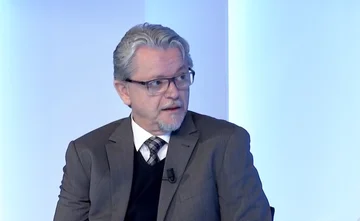
Education Sinani, from the Centre for International Studies and Balkan Surveys, tells Radio Free Europe that the Government should work much harder for implementing reforms, since this, in addition to the obligation before the international community as criteria in the integration process, also stands before citizens.
But, according to Sinan, reforms should be done with experts rather than with failed political personalities, in particular from the past period.
The citizens' verdict was such that Macedonia will change its approach to itself, reports within that is. Macedonians and Albanians, but also reports with neighbours and the international factor. There will be as many reforms as Government will be interested in having its agreement with citizens start living, not people who are profiled as political personalities, but experts who need society to make these reforms”, Sinani says.
As for the need for support in the adoption of reforms, even by the opposition VMRO DPMNE, as many laws must be adopted by two-thirds of the vote, which does not have the current parliamentary majority, he does not believe that VMRO, led by Nikola Gruevski, will lend support to their adoption.
“I don't think they will have VMRO's support until Nikola Gruevski led the party, which brought Macedonia into this situation. If VMRO blocks these processes, she appreciates that it will go towards a process of fragmenting it as a party and losing its weight as political party”, Sinani estimates.
But some experts are optimistic that, however, things can move forward, but with a slower dynamic. Simonida Kacarska from the Institute for European Affairs tells Radio Free Europe that by the end of the year the strategy for reform in the justice system and public administration can be adopted, but the adoption of laws takes much more time.
If we talk about it by the end of the year, besides adopting strategy in these areas, there can be no more because by the end of the year there is just a little more than a month. Laws that will be part of the strategy will not be adopted. It would be ideal if the strategy for reform in public administration was adopted in the coming months”, Kacarska says.
Acceleration of reforms was also sought by EU Enlargement Commissioner Johannes Hahn, during his visit Monday and Tuesday to Macedonia.
 6 hours ago
 8 hours ago