6 hours ago
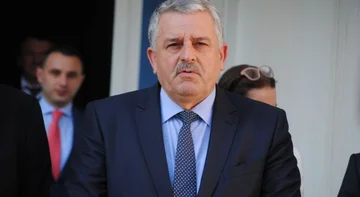
After pardoning the 60m-euro debt, Haradinaj comes with new favour to water producers

Periskopi(9 years ago)
(9 years ago)The Ministry of Environment and Spatial Planning is also doing a favour to water producers in Kosovo. After the 60m-euro pardon of debts, this minister is now preparing a new administrative guide with which it will lower the water use tariffs to a minimum. The Word newspaper has provided a copy of [...]
The Ministry of Environment and Spatial Planning is also doing a favour to water producers in Kosovo. After the 60m-euro pardon of debts, this minister is now preparing a new administrative guide with which it will lower the water use tariffs to a minimum.
The Word newspaper has provided a copy of the draft management directive for the water payment structure through which it is decided that more expensive will be paid to water use to a water farmer who waters the field than the water management companies.
Thus, land irrigation water users will pay 5 euros per hectares, while water management companies, for the amount of water used, will pay a fee of 0.01 euros per cubic metre.
This is 900 percent less than the rate that was on the 2006 administrative directive, which was in force until last year. With the latest, the tariffs for water booking was 0.09 euros per cubic metre.
“Producers who ambalse natural and mineral water will pay 0.01 euros per litre for sold water”, the new directive says.
The same fee for water will be paid to juice manufacturers, soft drinks, and alcoholic beverages.
The Word newspaper has compared this instruction to that preliminary even to tariffs for operators that damage rivers through sand and soil explosion.
Even in this category, there are drastic tariff reductions.
“Compensation for extracting stones, soil, sand and gravel from beds and banks of rivers that contain no other useful substances is determined in many of the 0.50 euros per cubic metre”, the new directive says.
At the same time, the previous tariff direction for the category was 1,50 euros per cubic metre.

Experts: These are ridiculous fees.
Water sector recognitions, currently located at Prime Minister Haradinaj's signing table, have called it extremely harmful to the Kosovo budget.
Besim Dobruna, engineer and former employee at the Ministry of Environment and Spatial Planning, says these fees are ridiculous if compared to countries in the region.
With this direction and with these tariffs, state resources are being forgiven. These fees are ridiculous and are many lower than those in the region”, Dobruna said.

According to him, the tax in Serbia for water use is 11 euros per cubic metre, plus environmentally damaging taxes. In Kosovo this tax with this instruction is 1 euros, meanwhile, no environmental damage tax.
“In Montenegro is 9 euros per cubic metre”, says Dobruna, who adds that another major problem with this instruction is also that it lacks a cost-benefi analysis, then an analysis of what competition is like in the region.
“-Tex after that should MMPH provide instructions and set real tariffs”.
Dobruna, who has worked in this sector for years, says the Kosovo water business is of great benefit to private operators. He even made a frightening comparison.
In Kosovo this business is perhaps better than drugs”.
Disputing Article in New Direction
This administrative guide, which is only the proposal at the moment, comes after pardoning debts of 60m euros to all water producers in Kosovo.
The pardoning of debts to water collectors is also mentioned in Article 13 of this instruction. This article, among other things, specifys the forgiveness of debts for water divers, but further states that the decision to forgive debts applies only to water bottlers but not to other water - consuming categories.
Except for the debt-free Ambaldagers with the government's decision no. 13/06 of the date: 03.10.2017; all the other conscripts who, until the introduction of this non-designed administrative directive, are charged that within the 1 year deadline, they perform their first obligations under the 12th administrative instruction article No.02/2016 for the water payment framework”, the article says. /Gazzeta Word