3 minutes ago
Minister of Economic Development: Spending floods in the north are paying every Kosovo house, business

Periskopi(9 years ago)
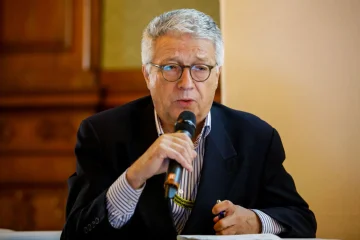
(9 years ago)Despite improvements in the energy system in recent years, technical and commercial electricity losses are still very high. This loss is about 32 per cent, but is costing each Kosovo family. Economic Development Minister Valdrin Luka in a speech held at the American University of Kosovo with [...]
Despite improvements in the energy system in recent years, technical and commercial electricity losses are still very high. This loss is about 32 per cent, but is costing each Kosovo family.
Economic Development Minister Valdrin Luka in a speech held at the American University of Kosovo on the subject of “energy sector policies”, said that for these losses there are various reasons, because northern Kosovo citizens do not pay and this is considered loss. As for the northern issue of the country, the minister said it is a political issue, which these moments are dealing with.
According to him, about 5 per cent of citizens in the north use electricity, but never pay their bills -- a amount that amounts to 11m euros. And these 11m euros, he said, are added to every citizen of Kosovo.
We've imported almost 550m euros in electricity since 2000, so since 2015. This is about the cost of the thermal power plant we talked about. Despite improvements in recent years, technical and commercial losses are still very high. This loss is about 32%. So for this 32%, there are different reasons. There are reasons Kosovo's northern citizens do not pay, and this is considered a loss. There is reason that the network is as old and as bad as the loss, or because of illegal connections. In any way, all these losses are added to each house and every business in this country”, said Minister Lluka.
The minister before the students also spoke of the 10-year strategy, the energy strategy adopted two weeks ago, which he said sets out the basic goals of the Government of Kosovo for the development of the energy sector.
I'm going to talk about the strategy we adopted two weeks ago. It is a 10-year strategy that defines the basic objectives of the Government of Kosovo for development of the energy sector in view of sustainable economic development, environmental protection, sustainable and reliable energy supply for consumers, in order to avoid energy cuts, efficient use of energy, development of new conventional and renewable generation capacities, the creation of competitive market, and the creation of new jobs in the energy system”, said Minister Luka.
According to him, as major projects remain construction of TC “Kosovo re” of 1 billion euros, rehabilitation of “Kosovo B” of 380m euros, decommission of TC “Kosova A” of 40m euros as EC requirement, and investments in mines of 250m to 350m euros. He also cited other energy co-operative projects with Albania.
The Minister of Economic Development has said that TC Kosovo will have to be closed so far because it is a very large pollutant, and that I cannot stay in this situation any longer.
The volume of thermal power plants is at the end of the period. We have T C Kosovo A, which has already been depreciated long ago. It should have been closed by now. It's a very heavy polluting and we want to make sure it doesn't last that way any longer. Also, because of these factors that I mentioned, we have had a lot of power cuts, we have had the ABC structure program, and this has caused many problems. There is an American study, which confirms there are about 300m euros in losses from these power cuts caused by businesses”, Luka stressed.
He has also said that Kosovo for 30 years has made no investments in power generation capacities, and that the country has consistently imported energy at very high prices to cover the maximum demands usually coming from businesses. He has taken an example of January of this year, which said the year has been among the most difficult months ever recorded, where energy has been imported at a price of almost 250 euros for megawatts, while the price produced in Kosovo has been 25 euros for megawatts. According to Luqa, it is a major or ten times more expensive difference.