18 hours ago
"Village People"vocator dies, Victor Willis
Periskopi(2 days ago)
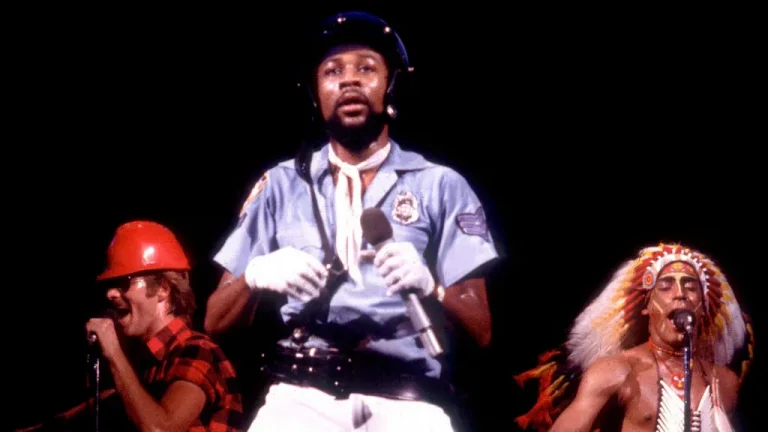
(2 days ago)Victor Willis, vocalist of the 1970s discotique group Village People, has died at the age of 74, the group's official social networking site reported.
Texas-born musician was the lead singer and co-author of the group's biggest hits, including YMCA, Go West and In The Navy, writes BBC, broadcast Periscope.
The group became an international star in the '70s, performing dressed as archeipe macho characters. Willis was alternative police and naval officer.
He left the group in 1980 and spent years fighting a legal battle for the copyright he had written. But it was reunited in 2017 and performed the YMCA at President Trump's pre-augurative rally in January 2025.
His death was announced on the group's official Facebook page.
With deep sorrow we announce the death of Victor Willis, the lead singer of Village People", said in the brief statement.
The Victor passed away on Monday, June 30th 2026, from a short but aggressive disease. Respect for privacy is required. "
His wife, Karen-Huff Willis, posted a similar statement on the Facebook musician's page.
The group had a series of hits in the late 1970s, but it collapsed after disco music lost popularity.
Willis grew up in San Francisco, singing gospel music at his father's church, Baptist pastor, before going to jazz and soul music.
His high school band, The Ballads, supported The Temples, and Willis attended the music sessions with Dizzie Gillespie, among other things.
After college, he won a role in the production of musical Hair in Las Vegas, which later provided him products in Broadway of “Two Gentlemen of Verona” and “The Wiz”.
It was in this last one that he met his first wife--the next star of Cosby Show, Phylicia Rasad. Willis later helped him write down and record Josephine Discover's disco album.
In 1977 he met French producer Jacques Morale, who hired Willis to sing vocals in the background in a new set of disco songs he had written.
The four - song Democrat named The Village People provided the group with a record contract, and Morale asked Willis to become the vocalist.
I dreamed that you sang the main in my album and things got very, very famous», he told the musician.
The group toured the whole world, but Viktor found it difficult to escape their shadow after leaving in 1979.
The group continued to publish the Cruisin' (1978), including YMCA, and Macho Man (also 1978), which included the title song and Key West.
After a live album, Live and Sleazy, they published Go West (1979), whose title song became a gay anthem - later interpreted by Pet Shop Boys. The album also included In The Navy and I wanna Shake Your Hand.
Billboard magazine described the group's work as"Some of the most non-invasive rhythms in today's pop/disco/disco entry". The New York Times singled out Willis for his non-x2-switched and sweaty".
However, he left the group in 1979 during the pre-production of a Village People movie, Can't Stop The Music. It turned out to be a wise move - the film resulted in a catastrophic financial failure that eventually led to the group's breakup.
Despite that, Willis found it difficult to distance himself from the image of the group and take it seriously as a solo artist. A 1979 solo album, Solo Man, remained unpublished for three decades before it was finally released in 2015.
The situation left the musician at his lowest point.
Drug Problems
I became very depressed over the years and decided to give up the relationship. So I started using drugs", he told the San Diego Union Tribune in 2015.
I passed the 1980s and 1990s... Well, I got a little high because I was disappointed with the way things were and I was frustrated, I gave up, and I decided I didn't want to be part of it.
I had been taken so many things that I just turned to drugs. "
He began to change things in 2006 after receiving court - ordered treatment for substance abuse and completed three years of parole freedom.
About the same time, he met his second wife, a lawyer who helped her fight the copyright issue against companies controlling the hit by Village People, Can't Stop Productions and Scorpio Music.
In 2015, a federal jury ruled that he was eligible for 50% ownership of the group's 13 songs, including YMCA.
This solution opened the way for him to return to the group in 2017.
"We asked Trump to stop playing our music", says the lead singer of Village People, Victor Willis.
At that point, President Trump had adopted the YMCA song as the main song at his political gatherings. Willis wasn't her fan and tried without success to stop the song.
I don't support Trump, I've never supported Trump, nor Village People", he told the BBC in 2020. "But because of copyright laws in the United States, he is able to play our music whenever he wishes. "
However, he surprised fans last year by agreeing to participate in the politician's second inauguration.
We know that this will not make some of you happy, yet we believe that music should be interpreted regardless of the"policy, he wrote on Facebook.
"Our YMCA song is a global anthem that we hope to help unite the country after a turbulent and divided campaign where our preferred candidate was lost. "
At the same time, Willis threatened to sue media describing the song as a gay hymn.
"Sic I've said many times in the past, this is a misconception based on the fact that my partner's writing was gay, and some (not all) by Village People were gay, and that the first Village People album was entirely for homosexual life", he said.
Instead, Willis claimed, the lyrics of the song were created by his observations on the YMCA branches at the <x0 urban subs of San Francisco", where young people were participating in"nott, basketball, athletics, food and rooms".
This was my interpretation of this,"he told the BBC in 2019. "I knew nothing about the life - style of other people who go there.
For me, the YMCA was, as the last line says, 'They can turn you in your way'. A person could go to Ritz Carlton or Hilton or these expensive hotels. But if you don't have that much money, you might have to go to Y."
Despite its origin, the YMCA remains Willis' biggest hit - reaching first place in 17 places after its publication in October 1978 and creating a dance routine that is a major element of wedding discotheques worldwide.
In 2020, it was preserved for generations to come from the National Library of Congress Recordings such as the cultural, historical or aesthetic"and entered the Grammy Fame Hall.