6 minutes ago
British lawyers answer to Special: Legality depends on the ability to implement standards in practice
Periskopi(2 months ago)
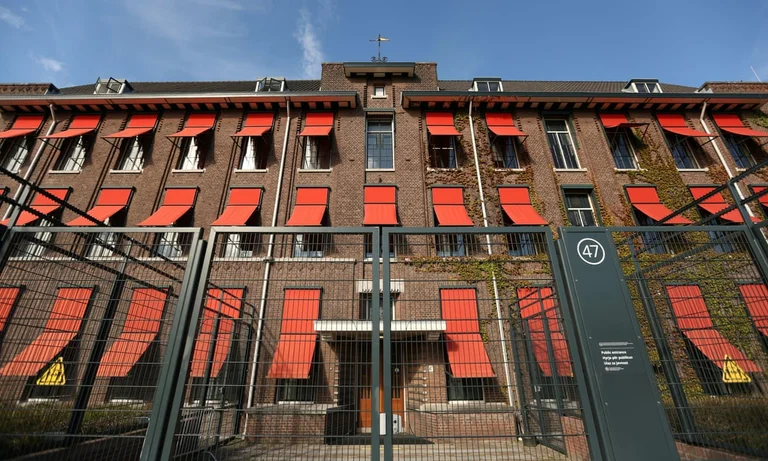
(2 months ago)The Committee for Human Rights for Lawyers of England and Wales (BHRC) has come up with a clarification following the Special Court's response to the report it released at the request of the ombudsman.
Specialised rooms have called some of the interpretations of the Human Rights Committee of the Chamber of Lawyers of England and Wales.
But, BHRC says this report offers an independent preliminary assessment of Kosovo's Specialised Chambers, which was designed in order to assess the degree to which this court agrees with respective human rights standards.
The committee says the report is realised by putting special emphasis on independence “without contributing from the institution that ordered it, uses a doctrinal methodology based on document review based on primary legal resources, jurisdiction and informed commitment with legal practice”.
“Although clearly described as exercise “pre-emptive”, the report identifies a series of core topics that are central to the legitimacy of contemporary international criminal justice, including the rights of the accused, judicial independence, trial justice and equality of the parties. In this way, he puts The Hague Specialised Chambers within the constitutional order of Kosovo and the wider international human rights framework, especially the European Convention on Human Rights and the International Pact for Civil and Political Rights, which are directly incorporated to the Kosovo Law”.
The BHRC says the report also “places the creation of the Special Court in the context of the conflict's controversial political and historical heritage in Kosovo 19981999 and later charges of crimes committed by members of the Kosovo Liberation Army. He emphasises the tribunal's sui generis nature: formally a local institution established under Kosovo law, but composed of international judges, financed and influenced by international actors, and the headquarters at The Hague. This hybrid design and in some ways a contradiction creates particular challenges, especially regarding legitimacy, accountability and the relationship between international standards and local judicial traditions. BHRC stresses that the KSC's close focus on former KLA leaders, the judicial body exclusively international and support in financing and external appointment mechanisms have become the source of ongoing debate, raising questions both about perception and the reality of independence and impartiality”.
In this context, the BHRC says the report provides a series of preliminary observations structured on key aspects of the legal framework and practice of specialised Chambers, including provisional release, judicial independence, confirmation of evidence and equality of parties.
It finds that, although the formal legal framework of Specialised Chambers is generally strong and in many respects compatible with international human rights standards, significant concerns emerge in practical implementation”.
These include structural barriers to temporary release, gaps in mechanisms for opposing judicial appointments and administrative decisions, tensions created by test practices (particularly related to unverified or obtained materials), as well as inequalities in resources and procedures affecting defence. The report is not intended to draw final conclusions, but it identifies areas with potential risk and recommends further consideration, stressing that the long-term legitimacy of the Specialised Chambers will depend not only on respect of legal standards but also on the ability to implement them in practice”.
In light of these findings, the report presents a series of recommendations aimed at strengthening justice, transparency and institutional legitimacy of the Specialised Chambers.
Among the main ones, according to BHRCH, are proposals for changing the procedure framework to allow meaningful objections to the president's administrative and judicial functions, as well as the introduction of clear protocols for communications '%sic are diplomatic information to ensure announcements, transparency and, when appropriate, defence participation.
BHRC also recommends more rigorous judicial consideration of provative materials, especially when the origin or chain of their preservation is disputed, as well as greater transparency over relations with the financing states and other foreign actors.
In the end, the report stresses the need for continued and independent monitoring of the judicial processes, identifying it as essential to assessing the quantum impact of procedural practices on the equality of parties and justice of evidence and for ensuring that specialised Chambers meet the high justice standards required by both Kosovo's constitutional framework and international human rights rights.