3 hours ago
Trump warns of further attacks on Iran's Kharg island, pressures allies to secure oil prevention point
Periskopi(4 months ago)
(4 months ago)US President Donald Trump threatened with further attacks at Iran's main oil export centre, Kharg Island, and said he was not ready for an agreement with Tehran to end the war that has closed Hormuz's vital plight and caused chaos in global energy markets. With [...]
US President Donald Trump threatened with further attacks at Iran's main oil export centre, Kharg Island, and said he was not ready for an agreement with Tehran to end the war that has closed Hormuz's vital plight and caused chaos in global energy markets.
With the US-Israel War against Iran in the third week, Trump said US attacks had “completely destroyed” most of the island and warned of more, saying NBC News on Saturday: “We can hit it several times just for fun”.
The comments marked a sharp escalation by Trump, who had earlier said that the US were targeting only military sites in Kharg, and dealt a blow to diplomatic efforts to end a war that has spread throughout the Middle East and killed more than 2,000 people, mostly in Iran and Lebanon.
Washington has put aside the efforts of Middle Eastern allies to open talks, three sources told Reuters and Iran's Revolutionary Guard said on Sunday that it had fired more rockets in Israel and three American bases in the region.
Trump, who has made a number of different requests, including the right to speak in choosing Iran's leader and cutting off his nuclear and ballistic programmes, told NBC News that Tehran seemed ready to make an agreement to end the fighting, but that “the conditions are not yet good enough”.
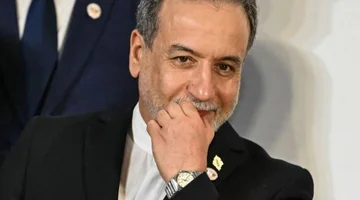
In his interview with NBC, Trump raised the possibility that Supreme Leader Moitaba Khamenei was killed, but Iranian Foreign Minister Abbas Aracchi said Khamene was fully healthy and managing the situation.
HAPPA FOOOD AND PLANTS DECUET CRIZA SEWATER
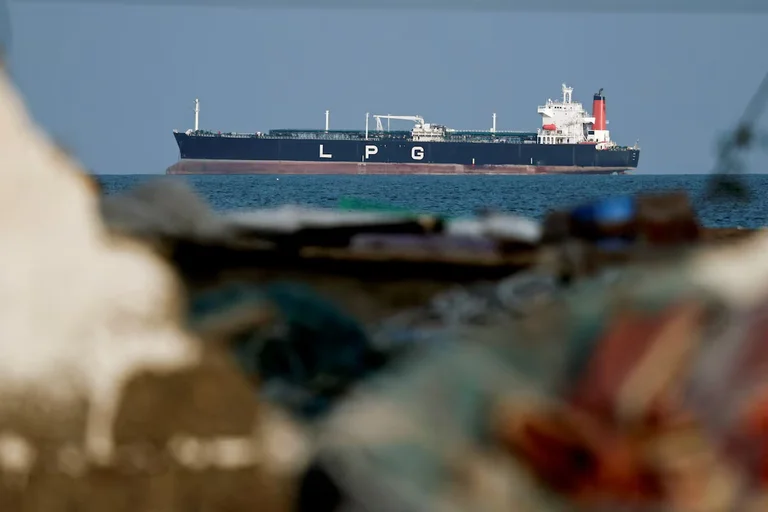
Without a clear ending on the horizon, Iran's ability to block traffic through the Strait of Hormuz, the channel for a fifth of global liquid oil and natural gas, has emerged with increased urgency as a crucial threat to the global economy.
Although some Iranian ships have continued to pass, the crossing has been effectively closed to most of the world's shipping since the United States and Israel attacked Iran on February 28th at the start of an intensive bombing campaign that has hit thousands of targets across the country.
Khamenei, who succeeded as supreme leader after his father, Aileollah Ali Khamenei, was killed on the first day of the attacks, has said Hormuz Strait must remain closed.
The International Energy Agency said last week that closing the narrow crossing along Iran's southern coast had caused the biggest disruption in global oil markets in history and was expected to cut about 8% of global supplies in March.
The global fuel supply centre at Fujairah in the United Arab Emirates resumed oil-loading operations Sunday, a source of the Fujairah-based industry said.
With crude oil prices more than $100 per barrel and expected to increase further next week, the issue has remained pending over the Republican Trump Party, which faces a major test in the mid-term elections in November.
Trump himself has dismissed concerns about rising prices for American consumers, saying they will drop quickly. But he has called on China, France, Japan, South Korea, Britain, and others to send warships to the Strait of Hormuz to ensure that ships can cross.
The countries of the world that take oil through the Strait of Hormuz should take care of that crossing, and we'll help many! “The US will also be co-ordinated with those countries so that everything will go fast, without problems and well. ”
France is seeking to establish a coalition to ensure the straits once the security situation stabilises, while Britain is discussing a series of options with allies to ensure sea transport safety, officials said.
But none of the countries mentioned gave any immediate signs of movement as the fighting continued.
Aracchi told his French counterpart that countries must refrain from anything that could escalate the conflict. He also said Iran would respond to any attacks on its energy facilities.
IZRAEL MOHOH BUSEDDING With LIBANIA
As the stalemate continued, Iran's Revolutionary Guard said it had fired more missiles and feared targets in Israel and at US military bases in the region, where Saudi Arabia said it had seized 10 attacks.
Aracchi denied that Iran was targeting civilian or residential areas in the Middle East and said it was ready to form a committee with its neighbours to investigate responsibility for such attacks. Gulf countries have suffered damage to energy facilities and residential areas during the two-week war.
An informed source of Israel's military strategy told Reuters that Israel had begun to target roadblocks and bridges that it believed the commanders of the Revolutionary Guard were using. Iranian security forces arrested dozens of people charged with sharing information with Israel, Iranian media reported.
Israeli Foreign Minister Gideon Saar dismissed claims that Israel had told the United States that the seized missiles were ending and rejected a report that it could soon hold direct talks with Lebanon, where it has resumed its campaign against Iran-backed Hezbollah movement.
In Iran, at least 15 people were killed when an air strike hit a refrigerator and heater factory in the central Iranian city of Isfahan, the semi-official Fars news agency said on Saturday.
Revolutionary Guard promised further revenge for workers killed in Iranian industrial zones.