3 hours ago
“Who hears a place that cannot find president?”
Periskopi(4 months ago)
(4 months ago)For those who follow politics in Kosovo, the latest developments look like the édéjà vu. Until a month ago, the country spent about a year with the incumbent government and with no functional Where. Today, the highest legislative institution remains blocked again, pending a Constitutional Court decision. Reasons may differ, [...]
The reasons may be different, but according to analyst Daniel Serwer, a crisis that lasts so long, “is not normal”, and undermines Kosovo's position in the international arena. He warns that, under these conditions, the country directly risks US support.
“I am talking about a real and lasting relationship between Washington and Pristina, and this relationship cannot be built with a government in office and without president. It just doesn't work that way”, says Serwer, from Johns Hopkins University, for the Radio Exchange Programme Free Europe.
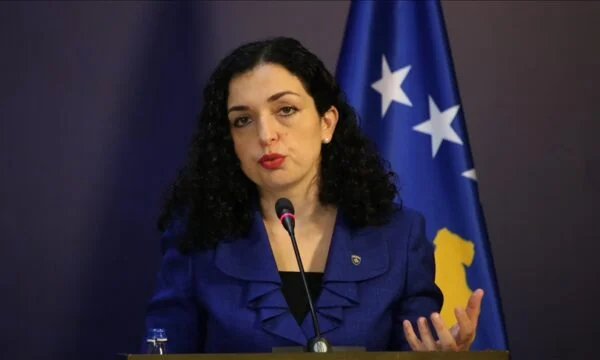
Tensions culminated on March 6th, when Kosovo President Vjosa Osmani issued a decree on the distribution of the Parliament only a day after it failed to elect the new president of the state.
This is where irresponsible people with dangerous intentions brought the country... In times of great uncertainty in the region and the world, Kosovo cannot have the luxury of endless exhumations and conflicting legitimacy”, Osman said at a news conference.
It did not mention concrete names, but its decree was challenged at the Constitutional Court by Prime Minister Albin Kurti's Vetevendosje Movement, with the argument that it conflicts with the Constitution.
“I don't believe we can talk about new elections without the Constitutional Court saying its word, since we have differences and we have a request before it”, Kurti told reporters.
The Constitutional Court imposed temporary measures until 31 March on the decree for the distribution of the Assembly. Until then, the institution cannot hold any parliamentary activity either to meet for the election of the new president, even though President Osmani's mandate expires on 5 April.
This whole situation also recalls the year 2025, when after the February elections, the Assembly was barely restored after dozens of attempts, while the government failed to form, and the country ended up in elections again.
Serwer warns that this cycle of crises has already surpassed the normal obstacles of a parliamentary system, making Kosovo appear uncompetive in the eyes of allies.
It's the problem with Gaza, it's the problem with war in Iran, it's the problem with war in Ukraine. Who's going to hear a place that can't find a president?
The European Union, probably not.
Enlargement Commissioner Marta Kos has postponed the planned visit to Kosovo this week, linking this decision directly to recent political developments.
In a proposal for an EU spokesman, he said the bloc is willing to support Kosovo's European agenda, but that it requires fully functional institutions.
The embassies of Quint countries, Britain, Germany, France and Italy were also asked how they view the political crisis in Kosovo and whether it can affect their commitment.
The answer was received only by the German Embassy, which said that “Germania continues to be a strong friend and partner on Kosovo's road towards Euro-Atlantic integration. To achieve progress on this road, we need fully consolidated and sustainable institutions”.
British Ambassador to Pristina Jonathan Hargreaves wrote on social networks that Kosovo urgently needs to restore political stability and make progress in domestic and international agendas, while calling it <x0-> thisic” constructive dialogue for finding a way forward.
Augustin Palockaj, a journalist with experience in European politics, says this crisis occurs at a key moment, when Kosovo had the chance to recover recent years' losses, caused by EU punitive measures and the lack of functional institutions.
He warns that if the crisis continues, and leads to an election party, the use of millions of euros from the EU Growth Plan and other international funds is at risk.
“Everyone wants to have reliable partners and partners in Kosovo who will have full legitimacy when they speak, negotiate and receive obligations on behalf of Kosovo. Therefore, there can be no reports with Kosovo if Kosovo does not have internal political stability and there are no structures of complete legitimacy”, Palockaj says.
Moreover, he adds, the political crisis could prevent Kosovo from entering the agenda for membership in the Council of Europe even this year, while making the fate of its application for EU membership more uncertain.
The “is the only country in Europe that has applied for EU membership, but the application has not been reviewed at all and has no plans to be considered. If Kosovo continues with such internal political crises and does not rush itself, why would the EU have to rush? States that are not even interested in helping Kosovo will use this situation to keep the country marginalised even in the future”, Palockaj says.
Just two weeks before the decree was issued for the distribution of the Assembly, President Osmani attended the first meeting of the Gaza Peace Board as founding member of the initiative undertaken by US President Donald Trump.
Serwer considers her decision to get involved in Bord wise. Although he does not support it himself, he says that for Kosovo it is a way to better position itself in relation to Washington.
In Kosovo, however, the signals have not been clear whether participation in the Peace Board enjoys full political support or not, while it remains unclear how the country's commitment to the future will continue.
Serwer says Kosovo should maintain US confidence, which has already shown disappointment with the political stalemate, suspending Strategic Dialogue last year.
He argues that NATO membership should be the country's most urgent strategic goal, as without Alliance support, Kosovo can only be protected for a short time. He warns that the long institutional crisis directly threatens this goal, hindering the construction of a stable relationship with the US, which is essential for successful NATO application.
You must have a very good relationship with NATO, but also a very good relationship with the United States, because the United States will have to say "yes" or "not for the protection of Kosovo from Serbia, if ever the need arises. Therefore, I would maintain a very good relationship with Americans”, says Serwer.
Serwer adds that resolving the crisis should come from Kosovo's own leaders and that compromise is the most natural requirement of a parliamentary system.
Even Palockaj stresses that overcoming the crisis requires compromises and concessions between the parties and that the solution should not be expected or imposed on the outside.
“Partners want to see Kosovo capable of deciding for itself. There can be no return to the past, when foreign ambassadors have decided how to overcome political blockades and, even, have expressed preference for the appointed candidate”, Palockaj says.
In recent days, a statement by a Vetevendosje Movement MP, who, through a post on social networks, called on several ambassadors without mentioning names, to not interfere in the work of the Constitutional Court of Kosovo, which is considering this party's complaint to President Osmani's decree on the distribution of the Parliament.
France's ambassador to Kosovo, Olivier Guerot, who visited the Constitutional Court about a month ago, was asked by reporters about this statement but refused to comment.
Last year, during the institutional crisis in Kosovo, Prime Minister Kurti himself accused the Constitutional Court of unjust bias and decision making. Former US Ambassador to Kosovo Jeffrey Havenier estimated at the time these criticisms were among the main factors leading the US to suspend the Strategic Dialogue with Kosovo.
In the words of Serwer, Kosovo was once a good “ ” in organising elections and in alternativeing power a proof of its democracy. But today, according to him, the country “has lost a little bit of talent” to turn the election outcome into a functional government.
How much for the culprits? I don't know. I'm not there when they talk to themselves”.