5 minutes ago
US Prepares for Historic Mission in March
Periskopi(5 months ago)
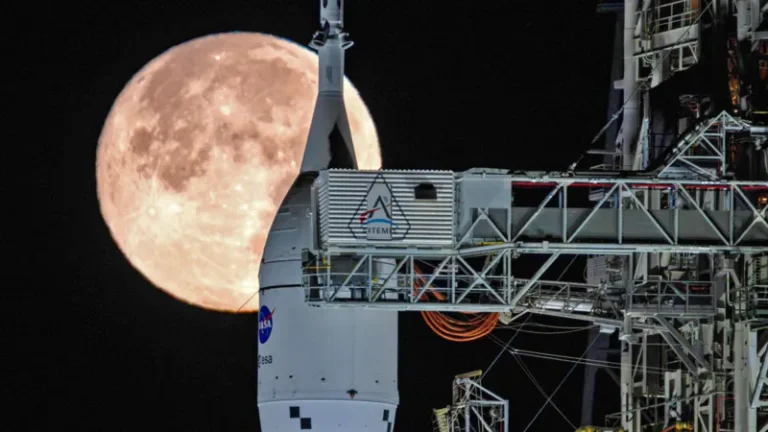
(5 months ago)NASA is aiming at the start of March to launch the Artemis II mission, which will send more than 50 astronauts around the moon for the first time. The earliest launch date is scheduled for March 6th (7th, according to the United Kingdom clock), following a successful technical test in [...]
The 10-day mission will take four astronauts three Americans and a Canadian on a journey around the far side of the moon and back to Earth. They will launch with the giant Space Launch System (SLS) missile, which has only flown once before, in 2022, but without crews aboard.
Astronauts will travel with Orion capsule, located on top of the missile, where they will live and work during the mission. First they'll stay in orbit around the Earth for testing, then they'll head for the moon a trip that takes about four days. They will pass a distance of between 6,500 and 9,500 miles on the lunar surface, studying and photographing the unseen side of Earth. Eventually, the capsule will land in the Pacific Ocean.
If the mission results in success, it will pave the way for Artemis III, aimed at restoring astronauts to the moon's surface by 2028 a deadline considered ambitious. The last time people broke into the moon was in 1972 with Apollo 17.
For the next mission, the SpaceX company, led by Elon Musk, has the contract for the construction of the landing module, while even the Jeff Bezos owned Blue Origin, is involved in the race for an alternative plan.
Meanwhile, the United States faces mounting pressure, as China aims to achieve a decrease on the moon by 2030. Both countries plan to focus on the southern lunar pole, where construction of future space bases is forecast.