18 minutes ago
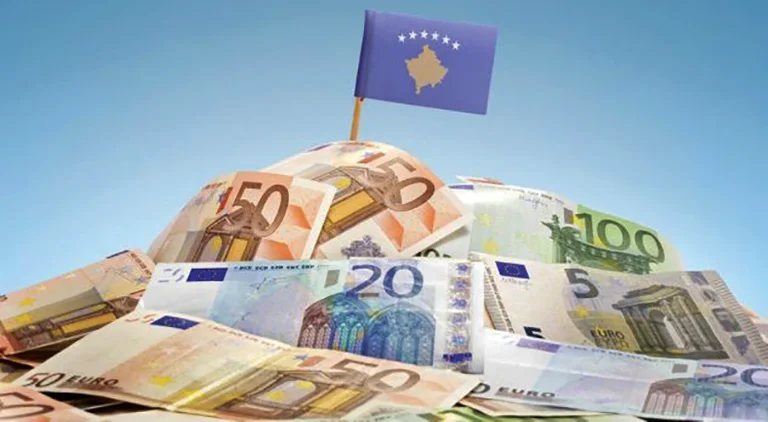
Where will Kosovo spend 4 billion euros?
Periskopi(5 months ago)
(5 months ago)The Kosovo Assembly has approved the law on the state budget worth about 4 billion euros on Friday, despite opposition and opposition complaints. The budget bill passed second reading with 62 votes for, 36 against and no abstentions, four days after it was approved in the first reading. The law will now be [...]
The Kosovo Assembly has approved the law on the state budget worth about 4 billion euros on Friday, despite opposition and opposition complaints.
The budget bill passed second reading with 62 votes for, 36 against and no abstentions, four days after it was approved in the first reading.
The law will now be sent to Kosovo President Vjosa Osmani for decree, before entering into force.
The vote came after the Commission for the Budget, Work and Transfer made changes and adopted them in the law on budgetary divisions for 2026.
Kosovo Prime Minister Albin Kurti said the MPs' remarks and criticisms will be addressed with this year's budget review case.
“However, the budget adopted today, worth about 4 billion euros, envisions 867m euros for municipalities; includes the 13th salary for public sector workers; it contains the necessary change that enables the doubles of work experience from 0.5 percent to 0.50 per cent for the first 15 years; as well as the extension of the deadline for implementing progressive property tax rates, until we adopt the Law on Return to Property Taxment, in consultation with our country's towns,<1).
Kurti added that support for essential drugs, culture, sports, entrepreneurs in the private sector, farmers and investment in public infrastructure increases in the budget as well.
During the plenary session, Finance Minister Iron Murati said this is a budget of “in advance and emergency”, adding that it will be revised.
For this reason, we, like Government, have not given space to the ministries to make changes, considering that we don't have much time to make the necessary and qualitative changes so that they don't then reflect on problems along the” road, Murati said.
Opposition parties complained that their recommendations had been ignored by the Commission and withdrew them on the eve of voting in the Assembly, so they also voted against passing the annual budget. Specific opposition MPs submitted amendments during the session, but did not get support.
PDK Parliamentary Group chief Arian Tahiri criticised the budget bill and announced that MPs from his party would vote against it.
“We withdraw all amendments and do not support this budget that does not reflect the composition of the government, it is not a professional document, it has many defects for 2026, but it will be harmful for the next few years --x1>, he said in the session.
The head of the Parliamentary Group from the Democratic League of Kosovo, Jehona Lushaku, said her party does not have a “vote for “the budget, as the Commission for the budget did not take into account the proposed amendments from it.
The 2026 budget was approved by several months late, and after the country had been forced to extend last year's budget for several months, due to the political and institutional crisis.
How will the 2026 budget be spent?
The 2026 budget is earmarked to reach about 4 billion euros. Of this amount, more than three billion euros have been earmarked for the central level, while 867m euros for the local level.
For capital investments, viewed as the main pillar for economic development, 998m euros are planned, or 7.2% more compared to 2025 (931m euros).
However, capital investments represent only 25.2% of the overall budget.
A GAP Institute analysis says 81 percent of the budget of capital projects in 2026 is for projects to continue over the past years, while new projects remain limited both in number and value, and are mainly small projects.
The distribution of capital investments, according to GAP, from the central level in municipalities continues to be unproportional to the population and the surface, though more balanced by a party aspect, highlighting inequality.
Subventions and Transfers
The largest growth category is that of subsidies and transfers, with an increase of 17.4%.
This year, over 1.3 billion euros have been allocated, compared to about 1.1 billion euros last year.
The increase comes from increasing several pension categories, supporting lechos and increasing social assistance.
Salaries and additions to over 911,000 public sector employees would cost over 980m euros, up from 916m euros in 2025.
Meanwhile, goods and services expenditures amount to 509m euros, or about 7m euros more than last year.
The budget has also earmarked 46m euros as state reserves for emergencies, the same amount as in the preliminary year, with the goal of preserving financial stability and liquidity.
For the first time, the draft also envisions the 13th salary for public sector employees, for those engaged in budgetary organisations at least 12 months before making the decision.
And the main burden for filling the state ark is expected to keep Kosovo Customs, from which it is envisioned to accumulate over two billion euros, and Kosovo Tax Administration (ATK), with about 1.2 billion euros in planned revenues. /Radio Free Europe