12 minutes ago
US hosts largest military force since 2003, pushing Iran for an agreement
Periskopi(5 months ago)
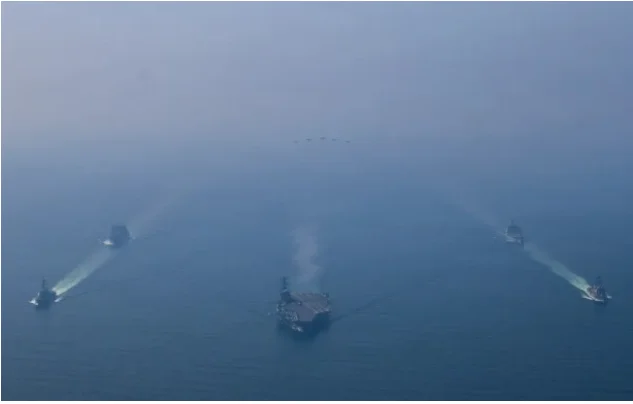
(5 months ago)The U.S. Army is stationing a wide range of forces in the Middle East, including two aircraft carriers, fighter aircraft and fuel tank, with President Donald Trump saying Iran has 10 to 15 days to reach an agreement on its nuclear programme. “
“Or we will reach an agreement, or it will be bad for them”, Trump told reporters Thursday on the Air Force One board. Regarding a deadline, Trump said he thought that 10 to 15 days was almost “mium” that he would allow negotiations to continue.
This exceeds the military gathering Trump ordered off the coast of Venezuela in the weeks before the collapse of President Nicolas Maduro, Bloomberg writes.
While the US is unlikely to send land troops, this gathering suggests Trump is giving itself discretion to launch a stable campaign that lasts many days, in co-operation with Israel. While discussions have focused on a stable campaign much more comprehensive than the US night attacks on Iran's nuclear programme last June, the president is also considering a limited early attack designed to push Tehran to the negotiating table, the Wall Street Journal reported on Thursday.
Maybe we'll make a deal. You'll find out during the next 10 days,”, Trump said in a speech Thursday morning.
Adding geopolitical concerns over US-Iran tensions caused the shares to sit down and expand an increase in oil prices, at the crude Brant price -- the global reference price -- that went up over $11 per barrel Thursday.
The open question is whether Iran can meet Trump's demands and if, by positioning so many military equipment in the region, Trump may feel obliged to use it instead of withdraw.
Data from the FlightRadar24 tracking site shows an increase in flight activity from American military transport, air tankers, surveillance planes and drones at bases in Qatar, Jordan, Crete, and Spain.
The aircraft, whose transponsors make it visible on earth to the place of pursuit, include air-air suppliers KC-46 and KC-135 and C-130J cargo planes used to move troops and heavy equipment.
It also includes combat aircraft E-3 Sentry equipped with radar of the warning and air control system, which provide “surveillance at all altitudes and in all weather conditions” of potential battle zones, as well as fears RQ-4 Global Hawk supervisory.
Thousands of American soldiers in the region are also within the range of Iranian ballistic missiles, and regime officials have pledged to respond fully to an American attack.
Beyond attacks on American military assets, Iran may try to close the Strait of Hormuz, the narrow waterway between Oman and Iran, where 25% of oil shipping traffic is covered