6 hours ago
Who was El Mencho, the most wanted man in Mexico?
Periskopi(5 months ago)
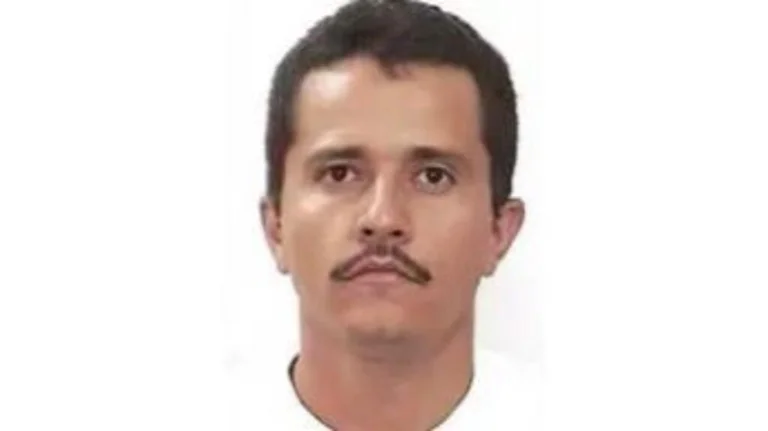
(5 months ago)There are only a few names that have left a lasting impact on the history of Mexican organised crime. Nemesio Orguera Cervantes, known as “El Mencho”, is one of them. With humble rural origins from the western state of Michoacán, the establishment at the top of one of the most feared and most [...] cartels
Nemesio Orguera Cervantes, known as “El Mencho”, is one of them. With humble rural origin from the western state of Michoacán, its establishment at the top of one of the most frightening and dangerous cartels in modern Mexico, Jalysco New Generation Cartel (CJNG), was quick. It was achieved through aggressiveness, ambition, brutality, and inadequacy.
His murder has been described as a victory in both Mexico and the United States.
Mexican and American authorities reported that American intelligence was involved in the collapse of “artite” cartel, giving the operation a cross-border co-operation dimension that can benefit both governments.
For the Mexican army, a cartel leader has been eliminated, weakening, at least theoretically and perhaps for a period of time, the criminal group he led.
El Mencho's reaction has been immediate. Road barricades have been set up, and violence has spread to up to eight different countries from Guerrero on the Pacific Coast to Tamaulipas in the northeast. Even the capital city Mexico City and the surrounding state have seen incidents.
Some of the worst violence has occurred in Jalisco, with hooded men setting fire to shops in the state capital, Guadaira, one of the host cities of the World Cup FIFA this summer. At the Puerto Valarta coastal resort, tourists and residents have taken refuge in safe places until the wave of violence passes.
This is a demonstration of loyalty from his soldiers and an expression of anger against authorities for eliminating their leader. But if barricades and burned cars are only demonic or if the violence will be eased or escalated, it will become clear in the coming days. The reaction of the rule forces will be crucial.
It is well - known that in such transnational criminal groups, even when a leader is as influential as Oguera, there are usually three or four well placed replacements to replace him. However, El Mencho was key to establishing the group.
When he moved to the US as a undocumented immigrant in the 1980s, there had already been the first clashes with the law cultivating marijuana in his native state. Various arrests followed as he became more involved in narcotics crime before being sentenced to several years in US prison.
Exiled in Mexico at the age of 30, he became fully involved in cartel activities. He worked for Cartelin Milenio in Michoacán and earned a reputation as an estimated and cruel boss.
He was in an ideal position when the cartel split and CJG was created, with El Mencho at the top.
Through territorial expansion and the ability to direct the cartel to new lucrative activities, he turned the group into what is today, perhaps the dominant criminal force in Mexico.
His Cartel also benefited from the weakening of Sinaloa Cartel after his leader's extradition, Joachim El Chapoé Guzmán, to the US. Inner warfare between rival factions in Sinaloa further broke up the group.
CJNG took advantage of the vacuum and took an important part of the phantyl trade after El Chapos's boys fell. One of them, Joachim Guzmán López, turned himself over to the American authorities and brought down his group's great rival, Ishmael El Mayo Zambada.
El Mencho took clear advantage of the vacuum created and the dramatic events in Sinaloa. But, as is often true in Mexico's drug crime, he did not hold on to this <x0-currerial”.
President Claudia Shanebaum's government will present the elimination of one of the most wanted people in Mexico as a victory, and that will echo in Washington. This shows progress on the main issue President Donald Trump has called for action from Mexico, following immigration: fetanic trafficking.
The involvement of American intelligence also underscores the Scheinbaum administration's readiness to co-operate with Washington for common goals. She hopes this will suffice to avoid discussions of unilateral American military action on Mexican territory.