16 minutes ago
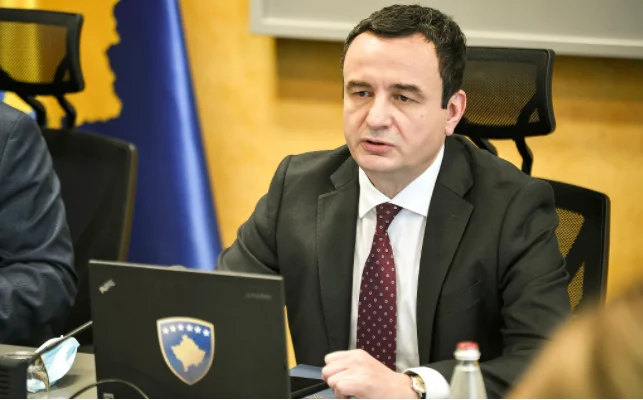
No dialogue, no EU? The Challenge of Termination Kurti 3
Periskopi(5 months ago)
(5 months ago)Albin Kurti won voter confidence with a strong discurs for Kosovo's sovereignty and equality as a state. But the new mandate as prime minister starts at a time when transatlantic relations are fragile and new geopolitical challenges. Watchers say it is essential for Kurt to bring him back [...]
Albin Kurti won voter confidence with a strong discurs for Kosovo's sovereignty and equality as a state.
But the new mandate as prime minister starts at a time when transatlantic relations are fragile and new geopolitical challenges. Those who observe it say it is essential for Kurt to restore the trust of the Allies and avoid surprise steps, otherwise, risks are serious.
Kurti's Vetevendosje movement won the December 28th elections, taking over 51% of the vote and breaking its record. After months of political blockade, because the February 2025 elections failed to produce the same success, Kurti was re-elected prime minister on February 11th and pledged that his new mandate would focus on concrete results and effective governance for citizens.
The “Mandati we're looking for is a work warrant, justice and dignity for everyone. Security mandates and prosperity for all”, Kurti said the night his government was voted in.
During the presentation of the new cabinet, Kurti made a balance of last term, stressing achievements in economy, security and democracy, and presented future priorities in education, social well-being and energy.
In foreign policy, he underlined that he will work with everyone on the basis of mutual respect, that alliances with the EU, the US and NATO remain steadfast, and that normalisation with Serbia will follow through constructive and creative dialogue.
“As we have been operating in the past four years, normalisation is a matter of regulating relations between the two states -- that is, as a bilatheral and external report, not intervention or involvement in internal issues”, Kurti said.
Kurt served for several weeks as prime minister even in 2020, but that government collapsed after disagreements between coalition partners over the management of COVID-19.
And his full mandate, which followed later, was deeply marked by the determination to extend the authority of Kosovo institutions to the north of the country's inhabited Serb majority area where official Pristina's decisions have not been implemented for years.
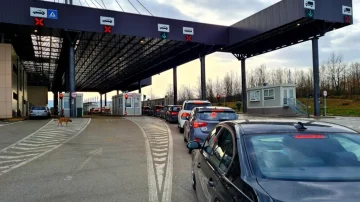
Despite objections and protests, his government managed to replace Serbian license plates with Kosovo license plates, remove the Serbian dinar's use and shut down most of Serbia's parallel institutions, which operated since post-war and employed thousands.
These decisions essential to his vision of a sovereign Kosovo significantly strained reports with allies. The EU and the US described it as uncoordinated steps, with consequences for the Serb community.
The clashes between them were accompanied by warnings from Washington for worsening the partnership and with Kosovo's punitive measures, even though, according to Kurt, they were simply friendly differences.
The United States Embassy in Kosovo said it hopes it will work with the new Government to advance common priorities, including regional peace, stability and bilateral economic prosperity, while EU foreign policy chief Kaya Kallas said a new moment has been created to advance relations between the EU and Kosovo and dialogue between Pristina and Belgrade.
Some observers estimate that dialogue with Serbia should be Kurti's top priority foreign agenda, as Kosovo's opening and its progress towards European integration depends on it.
Abbit Hoxha, legalist and researcher at Agder University in Norway, says sovereignty means not only the ability to preserve borders but also the ability to make decisions in the best interest of the country. According to him, dialogue should not be seen as the process that favours Serbia, but as a strategic tool to strengthen Kosovo's international position.
The unilateral implementation of agreements would put Kosovo in a position of advantage, even in relation to the EU, but also with Serbia. Kosovo, so far, has followed what Serbia has done -- failure to implement agreements”, Hoxha says of Radio Free Europe's Expose programme.
The two countries did not hold any summit since September 2023. The continuation of the dialogue was blocked after the attack on Banjska, as Kurti linked it to the handover of the suspected author, Milan Radoicicicq action Serbia did not make.
Lulzim Peci, from the Kosovar Institute for Research and Development of Politics, says implementation of Kosovo's obligations in dialogue is not for Serbia, but to gain the trust of the international community. Only thus, according to him, Kosovo can pave the way for membership in the Council of Europe and then towards EU candidacy issues for which EU countries themselves decide, not Belgrade.
“We need to know that with Serbia, experience shows that you can reach agreement and start implementing, but should not be expected by it to implement all points as agreed, because Serbia has Russia's negotiating style in relation to Kosovo. So you think you've reached a deal and suddenly you see yourself in the middle of the ocean”, says Peci about the Expose.
Peci underlines that, in this context, the first steps should be to send the draft Asociation Act of Serb majority municipalities for consideration at the Constitutional Court of Kosovo and regulate the status of the Serbian Orthodox Church ʹ issues that are internal, but with direct impact on international relations, according to him.
Kosovo now needs not to take action behind the allies' backs, especially on the northern issues and the Serb community. Reconstruction of trust with the West will take time, as his position after losing confidence in the Government of Kosovo will be tested in the coming months”, says Peci.
Transatlantic reports are at a low point, strained by a series of issues of uncertainty about support for Ukraine and the situation in Gaza, American interests for Greenland.
Therefore, Kurt Bassuener, of the Council for Democratic Policy in Berlin, suggests that Kosovo carefully manage relations with the US and strengthen its position in Europe, aiming at recognition by the five countries that have not yet recognised and presented itself as an asset to a more unified and stable EU.
Kosovo should see its long-term interests, in the function of ensuring its independence and the ability to be democratic state and self-government. And now... I would say that this is more likely across Europe even though it's painful to accept it than through the United States, under current management”, says Bassuener for Expose.
He adds that Kosovo should be open to new partners that can strengthen its independence and security, but always maintaining compliance with European aspirations.
Hoxha, on the other hand, insists that Kosovo be more active with the US, initiating issues in her own interest.
Kosovo should not refuse attitudes coming from the White House in Kosovo's interest. She must look beyond. We have had a series of interventions by the U.S. State Department during the past mandate, which were flatly rejected and caused divisions between the two countries”, Hoxha says.
And as politicians discuss international strategies and relations, for priorities and decisions, ordinary citizens pursue life with all other concerns: from pensions and health insurance to daily services that affect their pocket. They want the policy of the new government Kurti to translate into concrete improvements, but hope, unfortunately, is weaker than desire.
We have many things that need to be adjusted, but I think one of the priorities should be health insurance, the pension issue, to be activated and Trepca, to give young people an opportunity to stay here, not to view evacuation”, says Albulen Billal from Pristina.
“The job first, to create more jobs for new frameworks, because we are stuck in terms of employment”, says Albanian Klink.
Jeremije Aksentivic of Northern Mitrovica says the new government should take more care of the elderly population, which “mezi manages by the end of the month”.
We all have Kosovo documents, IDs, passports, all...”, he says.
In the most optimistic scenario, the term of the Kurti 3 government lasts until 2030, when some neighbouring countries may have joined the EU at least according to Brussels signals for Albania and Montenegro.
Kosovo remains the only one in the Western Balkans without EU candidate status, even though Kurti describes the country as the most democratic “in the region”, with the passport “stronger than ever since”.
For experts like Lulzim Peci, this is not enough they warn that without close co-ordination with international partners, Kosovo risks remaining isolated a dangerous consequence on an unstable international scene. /Rel/Periscopi/