2 hours ago
Eight days to the president: What was discussed at the Kurti Hamza and Kurti '%s' meetings?
Periskopi(5 months ago)
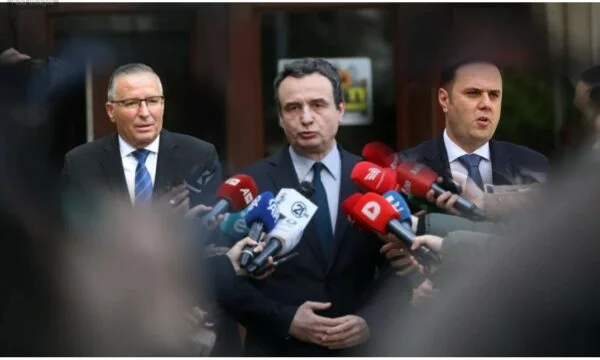
(5 months ago)Kosovo Prime Minister Albin Kurti has started consultations with leaders of the main opposition parties to find a solution regarding the election of the new president, as the constitutional deadline approaches and eight days remain. Initially, Kurti met with PDK chairman Bedri Hamza, while the following day he also held a meeting [...]
Kosovo Prime Minister Albin Kurti has started consultations with leaders of the main opposition parties to find a solution regarding the election of the new president, as the constitutional deadline approaches and eight days remain.
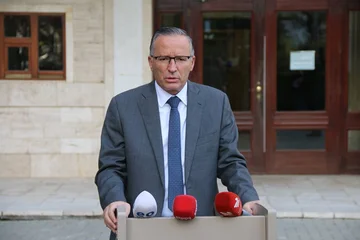
Initially, Kurti met with PDK chairman Bedri Hamza, while the following day he also held a meeting with LDK leader Lumir Abdixhiku. According to public statements, the possibility of reaching a political agreement that would avoid the country from new parliamentary elections has been discussed at both meetings.
Kurti has stressed that the solution should come from the country's three largest parties HINA Vetevendosje, The PDK and the LDK, hinting that without an agreement between them, the process could fail. He has also made it clear that the current president, Vjosa Osmani, aimed at a second term, is not his candidate for the president's post.
After the meetings, Kurti said he would intensify talks in the coming days, with the aim of avoiding new elections in 2026. He acknowledged that parliamentary arithmetic is challenging and that not even an agreement between Vetevendosje and LDK alone guarantees safe solutions.
On the other hand, Bedri Hamza said that electing the president is the common responsibility of all political forces. He stressed that the PDK would not become an obstacle to state processes, but would not support candidacy, which, according to him, does not represent civic unity and constitutional spirit.
Meanwhile, Lumir Abdixhiku announced that two scenarios have been reviewed at the meeting: reaching a broad political consensus within the remaining deadline, or a classic political agreement between parties. In both cases, the election of the president requires two-thirds of the vote in the Assembly.
President Osmani's mandate expires in early April, while under constitutional terms, the new president must be elected by 4 March. In the first two rounds, 80 votes from 120 deputies are required, while 61 votes are required in the third round. Each candidate must provide in advance at least 30 signatures to enter the race.