6 minutes ago
Colonel Wojcik: Unexpected withdrawal of US troops would cause uncertainty in Kosovo
Periskopi(5 months ago)
(5 months ago)Radio Free Europe ♫ The United States remains the main pillar of stability in Kosovo, and any sudden change in American troops' position in the country can create uncertainty and increase the space for external impacts, warns retired American Colonel Ray Wojcik, who earlier served as leader of [...]
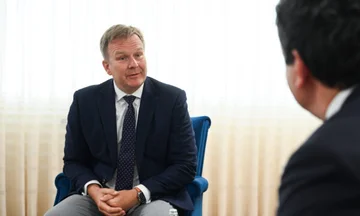
Radio Free Europe The United States remains the main pillar of stability in Kosovo, and any sudden change in positioning American troops in the country can create uncertainty and increase the space for external influence, warns retired American Colonel Ray Wojcik, who earlier served as head of the Defence Co-operation Office at the American Embassy in Pristina.
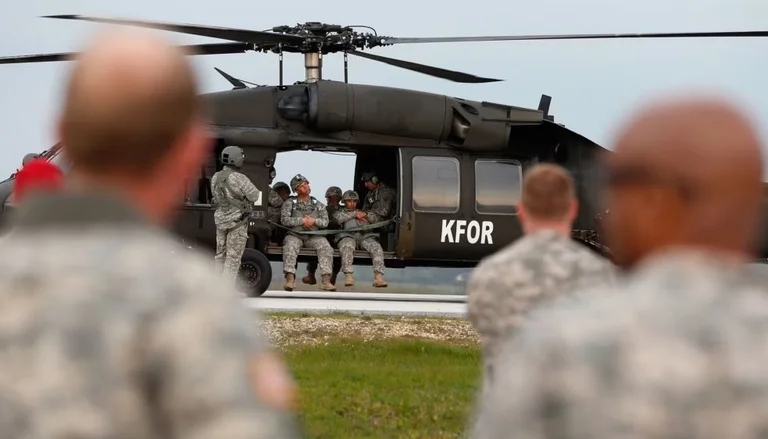
The debate on the issue was initiated this week, when the American newspaper Polytico, citing four NATO diplomats, said the US is asking the alliance to reduce its external activity, including in the Kosovo peacekeeping mission KFOR.
Currently, about 590 American forces serve in KFOR.
In a response to Radio Free Europe on February 19th, a Pentagon official said that “sot, we do not have to announce any changes in the delocation of forces”.
Colonel Wojcik, what are the chances that the US will reduce its military presence in Kosovo, under a broader NATO restructuring, and what factors would determine such a decision?
Ray Wojcik: The United States is reviewing their global military position with emphasis on NATO European allies to focus on collective protection in Europe, while the US prioritizes its role in the Pacific and Western Hemisphere.
In this context, changes are expected in the delocation of American forces in Europe. This is also why the capacity of European allies to assume greater responsibilities in Europe is extremely important.
The European Union's leading role in political normalisation between Kosovo and Serbia could help in a transition towards increasing security responsibilities from Europe.
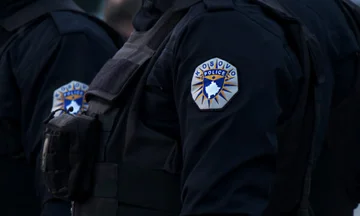
At the same time, the capacity, professionalism and legitimacy of Kosovo's internal security institutions -- including the Kosovo Police (PK) and the Kosovo Security Force (FSK) -- should also be taken into account when decisions are made regarding NATO deployment.
Since declaring independence, Kosovo has made visible progress in building democratic institutions, including very positive developments in the KK and KSF.
These advances enable NATO to gradually shift from a stabilising force to the front line towards a focused monitoring role in curbing risks, while Kosovo security institutions become increasingly capable of maintaining order and stability.
In the end, the broader assessment of regional stability will affect making decisions. Because instability in Kosovo can spread to Bosnia and Herzegovina, Montenegro or Northern Macedonia, increasing strategic risk and potentially pushing decisions to withdraw forces.
What would be the immediate consequences for security in Kosovo if the US significantly reduced its troop contribution to KFOR?
Ray Wojcik: Any sudden change in the position of American troops or other Allied forces in KFOR would be wrong and would create uncertainty.
We always have to keep in mind what a radical change in the dislocation of forces seems like, and just remember the chaotic attraction, orchestrated by America to Afghanistan in 2021.
We should also remember that even in 2023, Serb paramilitaries attacked the Kosovo police forces.
Historically, we should never forget that instability in the Balkans led to the outbreak of World War I and the death of 20 million people across Europe.
Remembering That Plan Is Important NATO has always been, in time, to become a reduction in the phase of forces in Kosovo (including American ones). But this plan must be based on ensuring proper security conditions before troops are reduced.
If the U.S. signals that it's reducing its presence, then European allies should think about how to fill in gaps, making sure that any general attraction is made only when security conditions are met.
A major reduction of American troops in KFOR would have more impact on the ability to prevent crises and react quickly to them than on daily security.
If US cuts include important capacities such as intelligence and supervision, medical aviation and evacuation, transportation or command personnel, then KFOR may be slower in detecting risks, making decisions and sending forces in case of an unexpected crisis, especially in sensitive areas.
This could create a fragile period during the transition, which destabilising actors can try to test.
Even if European countries compensate for this absence, changes in warnings and national rules of engagement can make the response seem less rapid and less decisive.
Kosovo police are capable of day-to-day security and long-term bilateral efforts like the Aeva-Kosovo State Partnership Programme and ties between twin cities will continue, but these are no substitute for the immediate prevention of KFOR armed, NATO command authority, and quick response to crises.
Can the possible attraction of American troops create opportunities for Russia or China to expand their influence in the Western Balkans?
Rady Wojcik: Yes. The withdrawal of American troops from Kosovo could create opportunities for Russia and China to expand their influence in the Western Balkans in all areas of politics, intelligence, military and economic.
We must keep in mind that Russia and China are weapons suppliers and are conducting training with the Serbian armed forces. Russia, of course, is a leading political supporter of Serbia.
Be assured that Belgrade is carefully following the outcome of Russia's war in Ukraine. If this outcome rewards Russian aggression and its atrocities, it could encourage Serbia to be less concerned if it develops or supports aggressive behaviour against Kosovo.
The same logic applies to China. Positive results for Russia in its war in Ukraine will undoubtedly increase the possibilities for China to attack Taiwan and strengthen its harmful global impact, including in the Western Balkans.
Russia would probably exploit any reduction of American military presence in Kosovo, and wider Europe, to present it NATO as weak. Russia would feel there is more freedom to undermine confidence in Western institutions in the Balkans.
Although China has expanded economic and infrastructure impact in other parts of the region, and across Europe, Kosovo has consistently shown a strong compliance with the United States and Euro-Atlantic institutions. However, China has made some strategic investments in Kosovo a pattern that is repeated in other parts of Europe.
Therefore, the U.S. has to consider how the global position of our forces can be used not only to limit China's aggression in the Pacific but also to counter China's aggressive efforts to expand its influence in Europe and elsewhere, as these fronts are directly linked.
Our global display of forces should also be taken into account that if we really want to curb China, then we need a global approach, including China's prevention in Europe.
This type of global access to prevention is essential for America's comprehensive strategy “Peace through Power”.
We should remember that Russia and China have declared “borderless partnership” between themselves.
China, meanwhile, continues its efforts through the Belt and Road project across Europe. America must remain engaged in counter-profession projects, such as the Poland-led Three Seas Initiative, which already includes two Western Balkan countries: Croatia and Slovenia.
Kosovo should be invited to join this group as an associate member (at present), to strengthen its political and economic ties in the region and Europe. This strengthens Kosovo's stability and increases stability in the Balkans and Europe.
As for the fear of many people for America's continued engagement in Europe, including the Western Balkans, it's good to repeat what US Secretary of State Marco Rubio said at the Security Conference in Munich: “I'm here today to make it clear that America is drawing a path to a new century of prosperity and that, once again, we want to do this together with you, our precious allies and the oldest friends of<1>. This is a good signal for Europe.
To what extent does the US military presence in Kosovo serve as a preventative factor against possible instability?
Ray Wojcik: The US military presence in Kosovo has a very large preemptive value, far greater than the number of troops it has on the ground. It sends a clear signal to America's strategic and direct commitment and strengthens NATO's credibility and unity.
Regional actors know that any serious incident involving American forces would cause a rapid and sustained diplomatic, economic and potentially military response from Washington, significantly increasing the cost and consequences of any destabilizing action.
Beyond operational capacities, the US presence strengthens alliance unity, reduces the risk of miscalculators, and ensures the local population that NATO remains committed to regional stability. This combination represents a key pillar for preventing instability in Kosovo and throughout the Western Balkans.
If the US reduces troops, can and should other NATO countries strengthen their presence in Kosovo?
Ray Wojcik: Without a doubt, yes. If the United States reduces its contribution to KFOR, other NATO allies must strengthen their presence to maintain the reliability of prevention and operational effectiveness. Even this presence, over time, can be reduced, but only if security conditions allow it.
And one of the most important conditions, which would be a crucial change for the region, would be Kosovo's NATO membership. How can Kosovo use the geopolitical moment to get closer to NATO?
How real is it to expect Kosovo's NATO membership in a near future?
Ray Wojcik: Kosovo's membership in NATO is very important, but will take time to realise. Kosovo in NATO would offer the strongest long-term guarantee for stability in the Western Balkans, expanding collective protection according to Article 5 and strongly anchored within Euro-Atlantic security architecture.
From a strategic point of view, this would make it more clear where Kosovo stands for its security and limit opportunities for foreign actors to exploit uncertainty in the region.
Expanding NATO requires consensus from all member states, and political recognition issues, along with broader geopolitical factors, make membership in the short term impossible.
However, the process towards NATO membership will encourage continued positive political, economic and security developments for Kosovo, and thus for the entire region.
Meanwhile, extended opportunities for the KSF to participate in NATO exercises, structured interaction programmes, continued defence capacity development, and sustainable bilateral initiatives, such as the Atava-Kosovo State Partnership Programme, have a stabilising impact and contribute to Kosovo's long-term prospects for NATO integration.