5 minutes ago
Bosnia sanctions 11 of its citizens for their ties to IS and Al-Nusra
Periskopi(5 months ago)
(5 months ago)Bosnia and Herzegovina's Council of Ministers has frozen the wealth and financial means of 11 Bosnian citizens associated with terrorist organisations, Islamic State (IS) and Al-Nusra, implementing obligations stemming from the UN Security Council resolution. Red reporting [...] has also been issued to most sanctioned persons.
Bosnia and Herzegovina's Council of Ministers has frozen the wealth and financial means of 11 Bosnian citizens associated with terrorist organisations, Islamic State (IS) and Al-Nusra, implementing obligations stemming from the UN Security Council resolution.
For most sanctioned persons the INTERPOL red announcement has also been issued at the request of Bosnia and Herzegovina authorities.
The decisions concern freezing economic resources and financial means of those related to criminal acts related to terrorism and its financing and are published on February 19th.
Also listed is Nusret Imamovic, radical leader Selefs, who had been put on the list of the world's top ten terrorists and is under UN sanctions, the United States of America and the European Union. According to information available, he and his family live in Syria for more than ten years.
Among those sanctioned are Muradiff Hamzabegovic, who allegedly is in Syria, as well as his wife, Sena Hamzabegovic, who was prosecuted for sending money to Syria, but was acquitted, as the prosecution failed to prove that she knew what purpose the money was being used.
The court of Bosnia and Herzegovina sentenced Hamzabegovic in absentia in 2013 to six years in prison for smuggling human beings.
Also listed is Hariz Meshanovic, as well as his two sons, Adam and Meho, who are also supposed to be in Syria.
Wealth has also been frozen for Azzur Karasuljiqi, Edin Zukicin and Emir Celamo, as well as for Aleksandar Ruzhiqi, who reportedly joined terrorist groups in Syria.
The measures also apply to Jasmin Grabus, who is also in Syria.
Bosnia and Herzegovina's Council of Ministers has indicated that the decisions have pre-emptive character and are oriented towards protecting Bosnia and Herzegovina's security, as well as meeting international state obligations, including obligations to MONEYVAL (the Committee of Anti-laundering Experts and Funding the Council of Europe's terrorism) concerning the establishment of financial sanctions for terrorism.
It is stressed that the measures do not represent the definition of criminal responsibility, nor do they prejudge the outcome of any procedure before competent courts or Prosecution.
According to intelligence and security agencies data, from Bosnia and Herzegovina during the conflict in Syria and Iraq, in the period 2012-2016, there were some 300 Bosnian citizens, including men, women and minors, while more children were born in these areas.
Much of the evacuation has been recorded in early years of conflict.
Of this number, it is estimated that between 80 and more than 100 people have been killed or died in war zones, while several dozen have returned to Bosnia and Herzegovina, either privately or through organised repatriations.
According to 2025 data, more than 100 Bosnia and Herzegovina citizens, mainly women and children, have stayed in detention camps and objects north of Syria without a clear time to return.
Bosnia and Herzegovina in 2014 has introduced specific criminal provisions condemning the removal of its citizens to foreign war sites for terrorist organisations, including the organisation of terrorist groups, joining foreign paramilitary formations and other inter-connected works.
So far, more than 30 people have been sentenced to decisive criminal decisions related to Syria and terrorism, with prison sentences of up to eight years in many cases.
Most have been sentenced to about three years in prison, in cases of plea deals or due to lack of evidence on more serious charges.
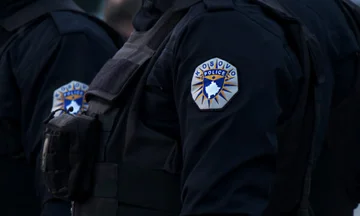
Other countries of the region, including Kosovo, also have laws condemning attachment to terrorist groups, and several citizens who had gone to Syria have been repatriated to Kosovo as well.
The IS was defeated in 2017 by an international coalition led by the United States. Meanwhile, Front Al-Nusra in the meantime changed its name and is now known as Hayat Tarhir al-Sham (HTS). The warriors of this group
Many of the pronounced sentences relate to Kosovars who have joined the Hayat Tahrir al-Sham (HTS) organisation, also known as Front Al-Nusra. This organisation had been declared terrorist by the United States in 2013, but in 2025 it was removed from the list.
HTS has once been the branch of Al Qaeda in Syria, but has severed ties with the jihadist group in 2016, and has tried to create another image in public.
Until 2017, HTS has had control of a large part of Syria's northwest and has established civil administration in that area, amid charges of brutal abuse against those who oppose the regime.
At the end of 2024, the warriors of this group overthrew Bashar al-Assad's regime in Syria. / REL/