6 minutes ago
Serbia's import ban raises prices in Kosovo
Periskopi(2 years ago)
(2 years ago)Bualku, who manages the commercial centre “Jora Center”, says that this company, besides local products, already provides direct products from countries of origin in the European Union, which earlier provided Serbia or foreign company representatives in Serbia. Since transportation is longer and costs more, some prices have been required [...]
Since transportation is longer and costs more, some prices have had to increase, he says of Radio Free Europe.
Bubaku takes as an example the juices “Bravo” of the Austrian company “Rauch”.
“Lands produced by this company have been expensive to 20 percent, as we are supplied by Austria ) country of origin”, says Bubaku.
A bottle of 0.5 liters of this fluid has cost 55 cents in September 2023; currently it is 79 cents.
Radio Free Europe addressed the company's subsidiary “Rauch” in Serbia about the losses it may have suffered from Kosovo's stop, but received no response.
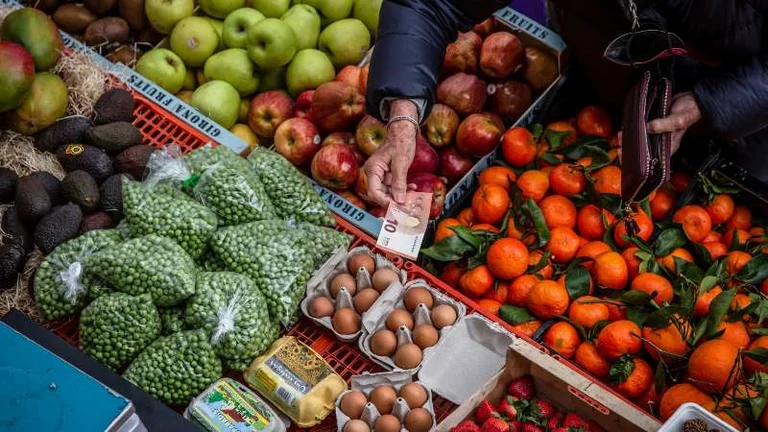
In the past seven months, more expensive prices have several other products, citizens surveyed by Radio Free Europe in Pristina say.
“Versus, ingurt, sugar and tea, in recent months, have been very expensive. We are barely making ends meet, says Lumnije Berisha, who works at a maintenance company and pays 320 euros a month.
In June last year, according to the Kosovo Statistics Agency, one kilogram of sugar has been sold for 1.10 euros, while currently totaling 1.40. A liter of milk depending on the manufacturer has cost up to 1.20 while costing up to 1.35.
The prices of certain toilet articles have also increased, says Albana.
“Detergent, shampoo, other cleaning articles...”, it counts.
These statements also echo Africa Hyseni, owner of the <x0 company. Sharri Center”, which deals with the sale of food, sanitation, and textile products.
Speaking to Radio Free Europe, it shows that most products imported from Serbia have been replaced by products from the country, the region and the EU.
The further the supply destination, the more expensive the transportation and then the price of the product on the market, he says.
In addition to Kosovo, “we are most supplied in Germany, Croatia and Albania”, Hyseni says.
What do official records show?
Kosovo Customs data shows that over the past year, the value of imports from countries such as Turkey, Germany and so on has increased compared to 2022.
Kosovo, for years, faces a high trade deficit, which means it imports much more than it exports. On average annually, it imports goods worth 5 billion euros, while exporting below 1 billion.
For a long time, Serbia was among the states with the largest presence of its products in Kosovo, which are now incompatible.
Within a day, this country exported over one million euros of goods to Kosovo.
From June to December last year when it was in effect stoppages imposed by the Kosovo government ʹ Serbia exported goods worth 75m euros to the Kosovo market, compared to about 240m euros as it was in the same period of 2022.
“to remove stop”
Economic talks in Kosovo call on the Government to lift the ban on final products from Serbia.
Their representatives say the cost of transportation has affected some prices to be higher, but do not specify more.
The executive director of the American Chamber of Economics, Arian Zeka, tells Radio Free Europe than stoppages, in addition to affecting prices, “also determines the interests of international companies, which production plants have in the state of Serbia”.
“E, therefore, are also vulnerable to the interests of the partner states of the Republic of Kosovo, including the United States of America, but also the states of the European Union”, he says.
The chairman of the Kosovo Economic House, Lulzim Rafuna, says the stop should have a certain period of time.
There can't be a one year stop for security reasons”, according to him.
Rafuna, who is also the leader of the Western Balkans Odays, warns that the situation created with trade exchanges between Kosovo and Serbia also affects attracting foreign investment to Kosovo.
The potential investors, according to him, view the Western Balkans market as a single market and the obstacles Kosovo presents, can cause investors to hesitate to extend their capital to Kosovo.
“A qualitative, serious investor, a known world insider, which is the best marketing to prove that a state is stable for investments, views the Balkan market as a single market. Kosovo has not had to place obstacles to the circulation of”, Rafuna tells Radio Free Europe.
In a statement given REL last year, Kosovo Minister for Communities and Return Nenad Rassic said the government, in the coming period, would have to annul the decision to ban import of Serbian goods, but that it expects the European Union to cancel its punitive measures against Kosovo.
The EU undertook punitive measures against Kosovo, including the annulment of several funds and high-level meetings, because Kosovo failed to comply with some of its demands to stress the situation in the country's Serb-run north. Those measures still remain in force.
Business alliances, both in Kosovo and Serbia, constantly drew the warning that the unstable political situation negatively affects both countries' economies. The REL reported in October of last year.
For various reasons, Kosovo -- even in the past -- undertook restrictive measures against products from Serbia, which then resulted in price hikes.
For example, at the end of 2018, the Kosovo government imposed taxes, initially 10% and then 100%, on products of Serbia and Bosnia and Herzegovina, which remained in force until February 2020.
Four months after the tax was imposed, Kosovo Statistics Agency data showed that the inflation rate had increased in March 2019 was 3.3 percent compared with March 2018.
The current data of the Kosovo Statistics Agency shows that the prices of consumption on the Kosovo market in 2023 amounted to 4.9 percent higher, compared to 2022. According to them, food products were expensive for 11.3 percent last year.
The price increases, however, also affected inflation that began to rise from the pandemic of the Coronavirus and took off after Russia began its war in Ukraine in 2022.