8 minutes ago
Munich Conference: Many rhetoric, few actions, and some bad news in the middle
Periskopi(2 years ago)
(2 years ago)If Munich's Security Conference had a dose of optimism last year, with the idea that Ukraine could not only resist the war in Ukraine, but also remove it from its borders, in the hope that the 2023 summer counterensiance would mark success this year's organisation in [...]
If Munich's Security Conference had a dose of optimism last year, with the idea that Ukraine could not only resist the war in Ukraine but also remove it from its borders in the hope that this year's 2023 summer counterensiva would mark success this year's organization in the capital of Bravaria has taken a different turn.
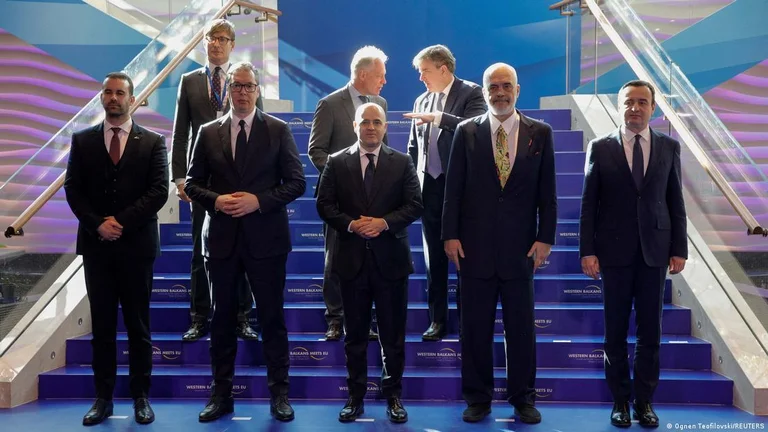
Taking place on the weekend of 16-18 February, the conference -- considered the platform of world leaders to discuss security policies -- was supposed to enjoy the greatness of the 60th edition.
However, bad news has not ended.
The entire discussion before the launch of the conference is dominated by former President Donald Trump, who aims to win the republican nomination for another presidential mandate.
Finally, he has questioned the decision to protect NATO's Allied states, which do not spend enough on defence from a potential Russian invasion.
This topic, coupled with the inability of the House of Representatives in the United States to approve a 60 billion-dollar aid to Ukraine, has made participants wonder whether Washington is still committed to Ukraine and transatlantic relations in general.
But that was just the beginning.
Bad News - One After Another
During that weekend, Ukraine has made a decision on strategic withdrawal of Avdivkas troops, the city that has protected it from Russian attacks for several months.
Furthermore, on the first day of the conference, news has been made known that imprisoned opposition politician Alexei Navajo has died in a Arctic prison.
The wife of the Kremlin's opponent, Yulia Navalnaya, was present in Munich.
Just hours after the news was made known, she was on stage and blamed Russian President Vladimir Putin for her husband's death.
“Putin, and each one around him, friends and government, should know that they will be held responsible for what they did to our state, my family and my husband”, she said, adding that the “that day will soon come”.
From that moment on, it seems that most of the discussion was made about two men who weren't present: Putin and Trump.
Therefore, it has been the work of each conference participant to gather forces, including Ukrainian President Voldymyr Zelensky, who seems to have been referring to the American Congress when he said that “dictators don't go on vacation”.
Speaking of those who want to see Kiev discussing with Moscow, he has said that “should not ask Ukraine when the war will end, you should ask yourself why Putin can continue”.
Later, he has mentioned a host of steps that could help Ukraine a good part that cannot be accomplished quickly.
Example, West sanctions in Russia's nuclear industry.
Although the EU is expected to impose more sanctions on the Kremlin in the coming days, they are expected to be more symbolic, as they will not crack down on the Russian economic sectors.
Another example is the seizure of frozen Russian assets in the West.
Although it is working for certain assets to be used to help Ukraine, it is unlikely that much work will be done in this regard.
Belgian Prime Minister Alexander De Croo, whose state has much of the frozen Russian assets at the level of the European bloc, has said in Munich that his state cannot operate alone, and that a framework of the world's seven most industrialized nations must be drawn up.
An EU official has later told Radio Free Europe that there is no willingness of the G7 countries to deal with the job now. /rel/