The doctor for the 27-year-old knife attack in Prizren: We couldn't save him. He had chest injuries.
 2 minutes ago
 (2 years ago)
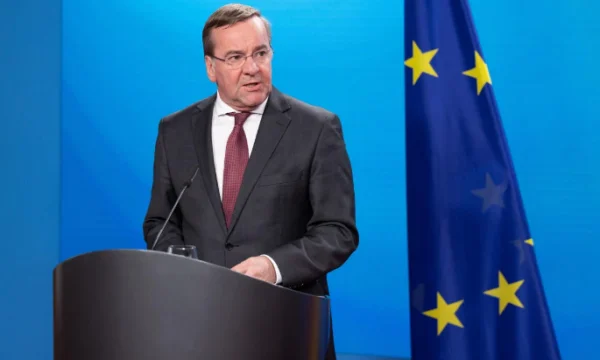
Germany's Defence Minister, Boris Pistorius, called for lowering tensions between Kosovo and Serbia and for the return of parties to dialogue on normalising reports, mediated by the European Union. Those statements he made after a meeting he held in Belgrade with Serbian President Aleksandar Vuciq on 7 February. Commenting [...]
Germany's Defence Minister, Boris Pistorius, called for lowering tensions between Kosovo and Serbia and for the return of parties to dialogue on normalising reports, mediated by the European Union.
Those statements he made after a meeting he held in Belgrade with Serbian President Aleksandar Vuciq on 7 February.
Commenting on the decision to ban the Serbian payment dinar in Kosovo, Pistorius said implementation of the country “should be organised and should no one be harmed”, demanding a “transition period” for implementation of the Kosovo Central Bank regulation.
The “is in no one's interest for the reports to strain further”, the German Defence Minister said.
Since 1 February, a Kosovo Central Bank regulation has entered into force in Kosovo. This regulation envisions the euro as the only payment currency in Kosovo, halting the use of the Serbian dinar.
Kosovo has said that implementing the BEC regulation for cash operations will take place through a transition period during the month of February.
Serbia pays Kosovo Serbs through a parallel system of salaries, pensions, social aid, and other benefits.
According to data presented by Serbian President Aleksandar Vuciq, in Kosovo his state employs 31,831 people, 29,115 pensioners from whom 4,700 receive pensions in hand, as well as 31.586 social aid users.
The international community has called on Kosovo to postpone enforcement of the regulation, as they have argued it entered into force without preliminary consultations. The United States and the European Union have expressed fears that the regulation could have a negative impact on the Serb population living in Kosovo.
German Defence Minister Pistorius during the media conference in Belgrade told of topics he has discussed with Serbian President Vucic. He said he has talked about it so that Serbia does not support the sensist trends in Bosnia and Herzegovina and to support Bosnia and Herzegovina's territorial integrity.
“We start by the fact that Serbia will not support possible sceensions in Republika Srpska [Serbian citizenship in Bosnia and Herzegovina], but will support Bosnia and Herzegovina's integrity and sovereignty”, said Pistorius.
The top German official again urged Serbia to approve Western sanctions on Russia due to Ukraine's invasion.
Asked about the Russian influence, Serbian President Aleksandar Vuciq said Russia's economic impact in Serbia is even smaller than Germany's.
Meanwhile, in terms of political influence, Vucic said he cannot speak for all actors, but stressed that perhaps Russia can influence some, and some cannot. The Serbian leader said only the people of Serbia have influence on the prime minister, the president, the state parliament.
No one can give me orders from Washington or Moscow, Berlin, or anywhere else. Serbia makes its own decisions without anyone's influence”, he said.
10 minutes ago14 minutes ago
 3 hours ago