a few seconds ago
Joseph: Kurti and Vuciq benefit from the crisis in the north
Periskopi(3 years ago)
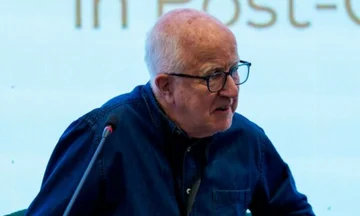
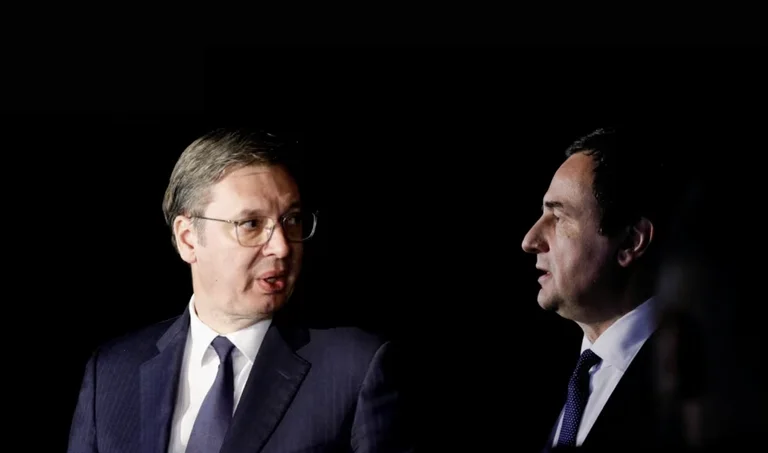
(3 years ago)Edward Joseph, talker at Johns Hopkins University in Washington, says there are no high expectations of this week's meeting between Kosovo Prime Minister Albin Kurti, and Serbian President Aleksandar Vuciq dealt first after more than four months. According to him, it would be a pleasant “befasis” if there were any [...]
Edward Joseph, talker at Johns Hopkins University in Washington, says there are no high expectations of this week's meeting between Kosovo Prime Minister Albin Kurti, and Serbian President Aleksandar Vuciq dealt first after more than four months.
According to him, it would be a pleasant “befasis” if there were any progress.
Speaking in an interview for Radio Free Europe, JOrph says the European Union, as a mediator of dialogue, should remind both countries that they have an agreement to implement.
For resolving the situation in northern Kosovo, he says all sides must play their own roles.
But, says Joseph, the crisis fits both Vuchy and Kurti.
“Vuciq takes advantage of everything that prevents him from implementing the agreement that the US and EU say has accepted [for normalising relations with Kosovo]... Kurt certainly benefits, because the pressure now is only for the steps of suspension [of the situation in the north], and not the issue of association...”, says Joseph.
According to him, Vuciq is not a US partner, but even Kurti “has been extremely difficult and irresponsible in his approach to the north” and “this is not in line with being a good partner with the United States and West”.
Radio Free Europe: A meeting between Kosovo Prime Minister Albin Kurti and Serbia's president, Aleksandar Vuciq, will take place on 14 September. For the last time, they have met on May 2nd. What do you expect? The next meeting?
Edward Joseph: I don't think we can expect much progress. This does not mean that there is no possibility of any progress, but we simply need not have very high expectations. We will be pleasantly surprised if there is progress.
What's important to get out of this meeting, It is for Brussels to remind everyone that there is an agreement between Kosovo and Serbia. It is important for the EU to stop talking about dialogue, because there is an agreement, an agreement that Brussels has offered and has been reached in February. There is, too, an annex that addresses all issues of its application, [which is agreed on in Ohrid]. And it's important that the EU returns to her and reminds the parties that according to the EU itself and the US are obliged to comply.
Radio Free Europe: The situation in northern Kosovo remains unresolved. Whose field is the ball now?
Edward Joseph: The ball is in the field of the EU and the US to get out of this [situy].
We can point the finger at the wrong Albin Kurti, Which is also sharply criticised in Kosovo, by its opposition, for reckless actions, for straining relations with the US and the EU, for rejecting the EU plan to postpone [the situation in the north] and for punishing Kosovo because of its actions. Well, obviously, Kurt is to blame. But this does not mean that Aleksandar Vuciq is innocent and that the ball is not, too, in his field. Because, Vuciq has a big role in creating this crisis.
When we talk about ball in the field, it's thought only an actor should act, but that's not true.
Vuciq has had an extremely large role in creating this crisis, doing nothing against boycotting the elections [in northern Kosovo on the part of local Serbs]. He has done so after the Ohrid Agreement, which Kurti has agreed to in principle for the creation of association [of Serb majority municipalities] which he has said he would never do.
So it can't be said that the ball is in Kurt's court and it's not in Vucciki's court. It's really in the field of the EU and the US. They must be serious about this, ensure they have an agreement and take steps to keep the parties committed to implementing that agreement.
Radio Free Europe: So who do you think benefits from the ongoing crises in the north?
Edward Joseph: I'm telling you who doesn't benefit and they are all Kosovo citizens living in the north -- Serbs, Albanians, Bosniaks... They certainly don't benefit. But they benefit all who are beneficiaries of the status quo. They include structures in the north, which benefit from the fact that there is no lasting rule of law in the area.
Politically, I would say that Aleksandar Vucic takes advantage of everything that prevents him from implementing the agreement that the US and EU say has accepted. Kurt certainly benefits, because the pressure now is only for the steps of suspension [of the situation in the north], rather than the issue of association.
Radio Free Europe: You're talking about suspension... Kosovo authorities have expressed their readiness to hold new elections in the north. Do you think local Serbs would participate in that process?
Edward Joseph: Vuciq has backed the boycott of the elections [in April] even after the [ Ohrid] Agreement in March. It has been time to change politics, to see if they are in a new era. I don't know the answer to your question.
Radio Free Europe: Consider European and American politics. A group of European and American politicians has sent a letter to US and EU leaders, asking them to examine their approach to reducing tensions between Kosovo and Serbia. They have criticised “the lack of pressure on Serbia”. What do you think of these criticisms?
Edward Joseph: The letter has echoed many criticisms I've released in my article, published in June in the Foreign Policy newspaper, entitled “The US is creating crisis in Kosovo”. It has reflected the criticisms I have raised for EU and US access after the May 29th violence [in Zvecan, northern Kosovo]. Serbs' attacks against KFOR soldiers [NATO Commission in Kosovo] have been very serious. And the reaction, as I said in that article, has been almost entirely biased.
Only Kurt is to blame for this, while the violence is committed by Serbs. Violence has involved Molotov cocktails, which clearly had to be prepared in advance. That means this kind of violence has been planned. This strongly suggests that Belgrade has been aware, that its sources have been, in all likelihood, aware, and President Vuciq has done nothing to stop it. He certainly knew of the threat of violence and has taken no steps to prevent it. And, the US and the EU have reacted considerably against Kurt and praised Vucinqi, considering him a partner.
So the letter echoes my concerns about this and of understanding more broadly that this is not just Albin Kurti's problem, which is opportunist and populist and acts recklessly, ignoring his responsibilities to co-ordinate, to respect what NATO says about dislocation in the north, but reflects also the unwillingness to deal with the role of Aleksandar Vucciqi in Kosovo and the fact that he does not want a solution.
Radio Free Europe: Who, then, can be considered a close partner of the West, Kurti or Vuciq, and why?
Edward Joseph: This raises a broader question. Albin Kurti has been extremely difficult and irresponsible in his approach to the north. This is not in line with being a good partner with the United States and the West. But Kosovo is in line with the US and supports the US in terms of the biggest security threat in Europe in this century, which is the invasion of Ukraine by Russia.
Aleksandar Vuciq is not, he is not a US partner, despite the fact that some American officials continue to say he is an increasingly good partner in the US. He's not. He continues to be Vladimir Putin's partner. He has witnessed this in some respects. He refuses to dismiss Aleksandar Vulin [Director of the Security and Information Agency in Serbia], even though it has been sanctioned by the United States. The seal is Russia's open associate, not Vuciq, who is the most delicate associate.
Serbia supports and is a host of [Russian media] Russia Today, Sputnik, promotes pro-Russian Narativa, has wide trade, has flights with Russia. So Aleksandar Vuciq is not a partner of the United States in our most important foreign policy issues, and he is not a partner even in achieving true democratic stability in the region.
Radio Free Europe: Until when do you think the West will tolerate Serbian authorities not sanction Russia [because of the invasion of Ukraine]?
Edward Joseph: I think there's still an open question in administration. I think some officials are under the illusion that Aleksandar Vuciq may be a partner or is already a partner of the United States, while others do not have this illusion and see Vucinqi as he is.
Radio Free Europe: Even one more question, Kurti has said it is urgent to regulate relations with Serbia, ahead of the US elections [in 2024]. Why would that matter?
Edward Joseph: He is not the only one who is aware of the fact that next year there will be US presidential elections. Next year are the European Parliament elections.
[The elections] will be a major distraction for the US and will make it less inclined to take initiatives or offer high-level attention to these issues. Many say so, not just Kurt. So there's some time pressure. And that, in fact, can be a good thing, because it can focus efforts and make the US and the EU more serious.